View from Paris: Visit of the President of Uzbekistan to Jordan strengthens the Country’s Standing as a Significant Actor in International Relations
November 26, 2026. 17:30 • 2 min
• 89
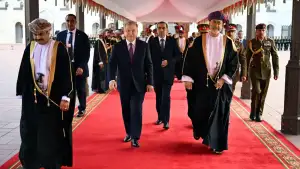
PARIS, November 26. /Dunyo IA/. French International Journalist, Columnist for the Daily newspaper “L'Opinion” and Specialist in geopolitics and International Relations Claude Leblanc commented for Dunyo IA on the State Visit of the President of Uzbekistan, Shavkat Mirziyoyev, to Jordan:
– Visit of the President Shavkat Mirziyoyev to Jordan can be viewed as a logical continuation of the foreign policy course of recent years, aimed at strengthening Uzbekistan’s position as a significant actor in international relations. This strategy reflects Tashkent’s aspiration to expand its diplomatic presence, diversify partnerships, and establish the country as a reliable and constructive partner.
Although the economic component comes to the forefront within the framework of the visit, its significance is broader. Uzbekistan seeks to take a worthy place in the Middle East, a region of exceptional geopolitical importance, yet characterized by numerous contradictions and tensions.
In this context, Uzbekistan’s participation in the Board of Peace, established at the initiative of U.S. President Donald Trump, serves as a vivid example of Tashkent’s aspiration to expand its involvement in international processes.
Significance of the visit also extends beyond national interests. It contributes to asserting the growing role of Central Asia as one of the most important transport and logistics hubs connecting the Far East and the Middle East. Amid the transformation of international trade routes and heightened geopolitical instability, development of interregional transport links takes on particular urgency.
Events related to the Strait of Hormuz have demonstrated the vulnerability of traditional maritime communications and the dependence of international trade on the situation in strategically vital transport corridors. Consequently, importance of alternative logistics routes capable of ensuring more resilient trade and economic ties between regions is increasing.
In my view, the policy of developing transport and logistics “connectivity” promoted by Tashkent can find a positive response among the states of the Middle East facing risks along maritime routes. Strengthening such ties opens up additional opportunities for interregional cooperation and enhances the strategic significance of Central Asia within the system of international trade communications.

Latest News



See all
Read also

Denis Mancevič: Cooperation Between Uzbekistan and Jordan holds Significant Economic Opportunities

View from Belgrade: Efforts of Uzbekistan to ensure Environmental Sustainability deserve Recognition
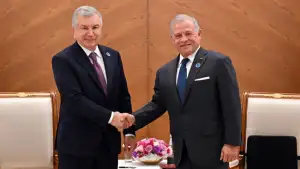
Uzbekistan – Jordan: From Historical Traditions of Friendship to a Strategic Partnership Based on Mutual Trust
Presentation of the Book “Modernity and New Uzbekistan” by the President of Uzbekistan to be held in Jordan