Kairat Sarybay: Concept of New Uzbekistan aligns closely with the Philosophy of the Conference on Interaction and Confidence-Building Measures in Asia
September 25, 2026. 08:10 • 9 min
• 935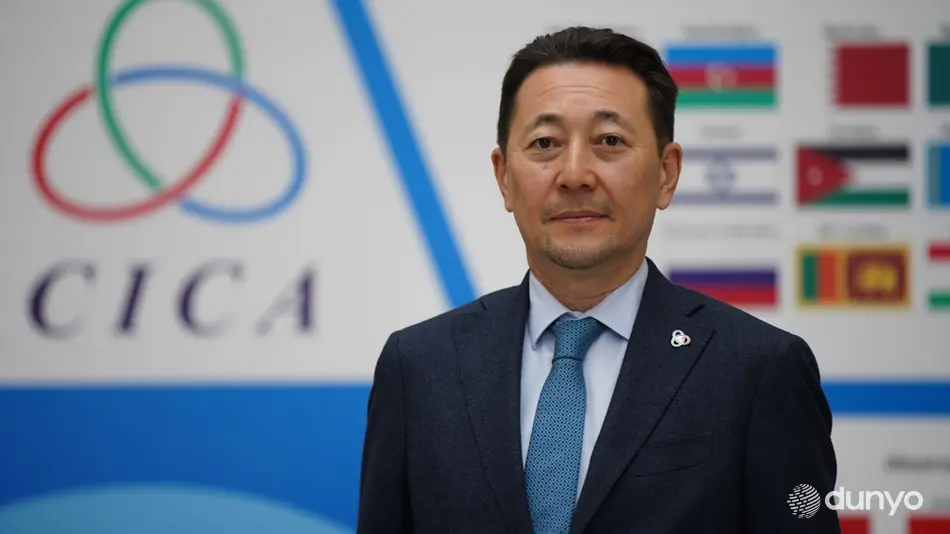
ASTANA, September 25. /Dunyo IA/. On the eve of the 10th Anniversary of the launch of large-scale reforms in Uzbekistan, Secretary General of the Conference on Interaction and Confidence-Building Measures in Asia (CICA) Kairat Sarybay, gave an interview to Dunyo IA.
– This year marks the 10th Anniversary of the commencement of the large-scale reforms of New Uzbekistan. How do you assess the impact of these transformations on strengthening trust, good-neighbourliness and expanding regional cooperation in Central Asia and across the Asian continent?
– First of all, I would like to congratulate the leadership of Uzbekistan on the tenth anniversary of the launch of the reforms that laid the foundation for the concept of “New Uzbekistan”.
For CICA, openness, pragmatism, and constructive dialogue are of particular importance, which collectively have served as a driver for strengthening regional cooperation in Central Asia. Thanks to the reciprocal efforts of Uzbekistan's neighbouring countries and the consolidated political will of the leaders, Central Asia is currently experiencing a genuine renaissance of good-neighbourliness and development.
Steady positive dynamic is evident: mutual trust is strengthening, the level of regional interaction has qualitatively improved, and mutual trade is growing. A particular catalyst for this process has been the regular Consultative Meetings of the Heads of State of Central Asia.
Confirmation of the effectiveness of this approach is reflected in the search for consensus on the most complex issues, including the resolution of border matters and integrated water resources management.
Concept of New Uzbekistan is organically combined with the philosophy of CICA. Confidence-building measures and the strengthening of a unified security architecture align with the principles of our organization.
I am convinced that the modern model of building relations in Central Asia, where mutual respect and readiness for compromise are prioritized, serves as an inspiring example for expanding confidence-building measures across the entire Asian continent.
– Over the past decade, Uzbekistan has initiated a number of important international projects. Which of Tashkent's implemented initiatives, in your opinion, are of the greatest importance for strengthening multilateral dialogue and security in Asia?
– Uzbekistan consistently acts as a generator of important initiatives, the significance of which extends beyond a single region. Among them, two key directions deserve special attention, which have had the most noticeable impact on strengthening stability in Central Asia and beyond.
Firstly, peacekeeping initiatives aimed at strengthening trust within the region itself play a major role.
A milestone was the Fergana Peace Forum 2025, which reflected the general trend toward regional solidarity. It is symbolic that this forum was held in the Fergana Valley, located at the junction of three states – Uzbekistan, Tajikistan and Kyrgyzstan. The forum continued the vector set by the historic Khujand summit, on the sidelines of which the leaders of these countries signed an important border treaty and a Declaration of Eternal Friendship.
Agreements reached laid a solid model of good-neighborliness and demonstrated that with political will and open dialogue, mutually acceptable solutions to the most complex issues can be found.
Successful implementation of these steps confirms the relevance of the constructive concept that Uzbekistan consistently promotes on the international stage.
Secondly, in continuation of this strategic line, Tashkent's efforts to develop interconnectedness, inextricably linked with ensuring security, are of great importance.
A significant impetus to this process was provided by the high-level international conference “Central and South Asia: Regional Interconnectedness. Challenges and Opportunities”, which was held in July 2021 in Tashkent at the initiative of President Shavkat Mirziyoyev. The large-scale forum laid a solid conceptual foundation for discussing strategic transport and logistics projects and opening new corridors to seaports, consolidating a complex of major initiatives.
While participating in this forum, I noted with satisfaction that many of the ideas voiced could be successfully implemented within the CICA platform, as our organization represents a megaproject of interconnectedness that unites various corners of the Asian continent – from the Pacific Ocean to the Mediterranean Sea and from the Arctic to the Indian Ocean.
A logical continuation and practical implementation of the initiatives of the President of Uzbekistan at the global level was the adoption in 2022 of a special UN General Assembly resolution on strengthening interconnectedness between Central and South Asia, with the support of a large number of CICA member states. This document emphasizes the importance of strengthening economic, transport and cultural ties between the two strategically important regions.
Comprehensive approach of the leadership of Uzbekistan to the processes of interconnectedness is highly consonant with the philosophy of the goals and objectives of CICA.
A clear practical embodiment of such synergy is the “Termez Dialogue on Interconnectedness between Central and South Asia” Forum, initiated by the Uzbek side. This unique and highly demanded platform has enabled the integration of trade promotion issues with discussions on security in adjacent zones.
Hosting of the second meeting of the Termez Dialogue in Tashkent under the theme “Peace, Connectivity and Sustainability: Shaping the Foundation of Shared Prosperity” under the auspices of CICA visibly confirmed Uzbekistan's commitment to transforming the two regions into a unified, stable zone of economic growth.
Interconnectedness should be viewed in a broad context: it must encompass not only economic and financial integration, but to an equal extent, the humanitarian dimension of connectivity and the mutual enrichment of cultures.
– Today, Uzbekistan is building an open economy and actively promoting the agenda of sustainable development, digitalization, and human capital development. How do you assess Uzbekistan's practical contribution and initiatives to develop these areas within the CICA platform, and what prospects does this experience open for the region?
– The economic and technological achievements of New Uzbekistan are inextricably linked with the priority attention given to the development of human capital. This approach is completely in line with the priorities of CICA, which are built on the understanding that the sustainable development of states relies not only on economic indicators but also on the potential of society – quality education, social support and inclusive dialogue.
Serving as a co-coordinator of the Human Dimension since 2020, Uzbekistan has been making a significant contribution to the collective work.
Firstly, within the framework of the recent update of the CICA Catalogue of Confidence-Building Measures, Uzbek side presented a number of meaningful initiatives in the humanitarian sphere, which were successfully incorporated into it.
A particular emphasis was placed on universal human values, specifically on the protection and empowerment of women and girls, which is of great importance for the whole of Asia. This strategic focus of Uzbekistan subsequently contributed significantly to the fact that the Azerbaijani Chairmanship of CICA proposed an initiative to establish the Women's Council. Today, the CICA Women's Council serves as a reliable platform for the exchange of best practices and the participation of women in regional development processes at a qualitatively new level.
Secondly, it is important to note Uzbekistan's substantial impetus in the field of youth policy. As the co-chair of the CICA Youth Council, Tashkent actively contributes to unleashing the creative potential of youth across the CICA space. I recall with satisfaction the Sixth meeting of the Youth Council held in Samarkand in 2023, which reaffirmed that prioritizing youth, science, and education is a reliable investment in a stable future.
Continuation of this work involves the expansion of educational opportunities and the engagement of civil society. In this direction, Uzbekistan supports academic cooperation through the Bukhara State Medical Institute – a member of the Coordination Council of the Partner Network of Leading Universities (PNLU), which unites around 200 higher education institutions from 13 CICA member states.
Furthermore, the country consistently promotes a culture of volunteerism as an effective tool for social cohesion. Clear proof of this is the active participation of the Uzbek delegation in two volunteer rallies held in Astana and Baku in 2024-2025. Moreover, an exhibition on volunteerism in CICA countries was successfully presented on the sidelines of the UN this year, which also demonstrated Uzbekistan's achievements in this sphere.
As far as digitalization is concerned, there are also significant prospects for cooperation. A major step forward is expected to be the high-level CICA Human Rights Forum titled “Building a Secure and Inclusive Digital Future”, proposed by Tashkent and scheduled for late September in Tashkent and Samarkand. It is anticipated that this platform will facilitate the formulation of joint approaches toward building an inclusive digital future, as well as striking the necessary balance between the rapid advancement of artificial intelligence and the protection of human rights.
Theme of sustainable development, to which the President of Uzbekistan Shavkat Mirziyoyev, attaches priority importance, deserves special attention.
Given that Central Asia is one of the regions most vulnerable to climate change on the planet, the acute necessity to unite efforts to minimize such environmental threats becomes evident against the backdrop of the anthropogenic impact on the Aral Sea ecosystem. Afforestation stands as a crucial step on this path. In this context, the creation of a CICA Alley in the cities of Uzbekistan appears to be an excellent initiative and this constructive process could commence in New Tashkent.
Uzbekistan possesses a potent demographic resource, and the integration of talented youth into modern technological processes, the development of a 'green' economy, and the expansion of educational exchanges remain absolute priorities of our partnership within the framework of CICA.
A symbolic contribution of Uzbekistan to the landscape of our organization's headquarters is the unique gazebo installed in “Asia Park”.
Consistently inspiring guests with its aesthetics, this creation by Samarkand craftsmen reflects the rich culture of the Uzbek people and serves as a visible testament to Tashkent's active engagement in CICA.
– Speaking about the next decade, which areas of international cooperation will contribute to further strengthening Uzbekistan's position on the world stage? And in connection with this significant milestone, what would you like to wish the leadership and the people of the country?
– Development strategy of New Uzbekistan has a clear vector – it is integration into global processes while preserving a rich national identity and ensuring sustainable peace. I am confident that in the next decade, the continuation of the course toward openness, the expansion of trade and economic ties and active participation in multilateral structures will remain the key drivers of success.
I am deeply impressed by the main message of President Shavkat Mirziyoyev, which precisely reflects the essence of his political course: the individual is placed at the forefront. When the human being is at the center of state policy any tasks set will be successfully resolved and all challenges will be overcome.
On behalf of the CICA Secretariat and on my own behalf, I would like to wish the leadership of the country and the entire fraternal people of Uzbekistan peace, prosperity and inexhaustible creative energy.
Confident advancement of New Uzbekistan along the path of prosperity serves as a reliable foundation for the stability of the entire Central Asian region. In turn, the well-being of the region is of key importance for the security of the entire Asian continent.
I am convinced that the constructive ideas generated by Central Asia will undoubtedly find their proper reflection in strengthening the architecture of trust across our entire wide space.

Latest News

See all
Read also

Edgars Rinkēvičs: Uzbekistan is a reliable partner of Latvia in Central Asia
Won Do Yeon: The state visit of the President of Uzbekistan to the Republic of Korea is of special significance