Kubanychbek Omuraliev: New Uzbekistan has become a model of successful systemic transformation
July 19, 2026. 09:00 • 10 min
• 1219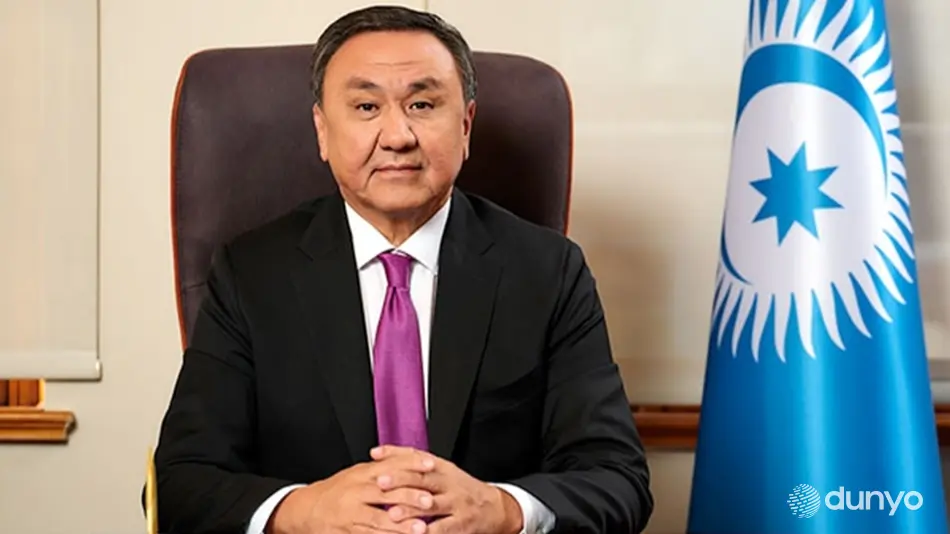
ISTANBUL, July 19. /Dunyo IA/. In an exclusive interview with Dunyo IA, Secretary General of the Organization of Turkic States (OTS) Kubanychbek Omuraliev commented on Uzbekistan's role within the organization:
– This year marks the 10th anniversary of the large-scale reforms launched under the New Uzbekistan agenda. How do you assess the results of this decade, and which changes do you consider the most significant?
– Over the past decade, under the leadership of the President of Uzbekistan, Shavkat Mirziyoyev, the country has undergone sweeping reforms across virtually every sphere of public administration and social life. Their results are now evident in Uzbekistan's socio-economic development, the improvement of living standards, the country's growing international standing, and the modernization of its system of governance. In my view, the most significant achievements of this period include the following.
First, the country's openness. Uzbekistan has significantly intensified its foreign policy, strengthened relations with neighbouring countries and international partners, and enhanced both its investment attractiveness and its reputation on the global stage.
Second, economic reforms. The liberalization of the foreign exchange market, substantial improvements to the investment climate, the creation of favorable conditions for private enterprise, and expanded support mechanisms for small and medium-sized businesses have made the economy more resilient and diversified.
Third, social development. Considerable resources have been allocated to the construction of modern schools, kindergartens, healthcare facilities, and infrastructure. Comprehensive programs are being implemented to support young people, women, and socially vulnerable groups.
– Cooperation between Uzbekistan and the Organization of Turkic States has intensified considerably in recent years. Which outcomes of this partnership do you regard as the most successful, and what joint projects should become priorities in the future?
– Uzbekistan became a full member of the Organization of Turkic States in 2019 and assumed the organization's chairmanship for the first time in 2022–2023. During this period, Uzbekistan successfully led the organization and made a significant contribution to its further institutional development.
For the first time in the history of the OTS, Uzbekistan developed a Chairmanship Concept outlining a comprehensive set of priorities and initiatives. The document introduced a number of new proposals aimed at strengthening cooperation among member states and enhancing the effectiveness of the organization. It was presented to all OTS member states and received broad recognition. Notably, the practice initiated by Uzbekistan of adopting a Chairmanship Concept has since become an established tradition within the organization.
Uzbekistan's cooperation with the OTS can be regarded as one of the most promising directions of the country's foreign policy. Among the most notable achievements are the strengthening of political dialogue, the expansion of trade and economic ties, the development of transport connectivity along the Middle Corridor, and the deepening of cultural and humanitarian exchanges. Today, the OTS places particular emphasis on transport, energy, digitalization, and the green agenda.
The economic potential of the OTS region is becoming increasingly evident. In 2025, the combined gross domestic product of the organization's member and observer states exceeded US$2.4 trillion, while their total trade volume reached US$1.27 trillion. With an average economic growth rate of 6.86 percent—more than double the global forecast of 3.2 percent—our region continues to demonstrate remarkable resilience and sustained economic momentum. These figures are more than just statistics; they reflect the strength of our cooperation and the tremendous potential of our shared future.
It is particularly important that, within the framework of the OTS, Uzbekistan has emerged not only as an active participant but also as an initiator of practical projects. These include initiatives in logistics, trade facilitation, the digital economy, as well as youth and education programs.
– One of the key pillars of Uzbekistan's reform agenda has been the adoption of a more open foreign policy. In your view, how have these changes contributed to strengthening the confidence of the international community?
– These reforms have significantly enhanced the international community's confidence in Uzbekistan. The country's open foreign policy has enabled it to move beyond its previous isolation, establish constructive dialogue with neighbouring states, international organizations, and leading global partners.
Perhaps the most important outcome is that Uzbekistan is now widely regarded as a predictable, open, and responsible partner. This is reflected in the expansion of high-level political contacts, broader economic cooperation, growing interest from foreign investors, and deeper engagement with the United Nations, the Organization for Security and Co-operation in Europe (OSCE), the Organization of Turkic States (OTS), the Shanghai Cooperation Organization (SCO), the European Union (EU), and other international organizations.
A particularly significant achievement has been the elevation of Uzbekistan's relations with the countries of Central Asia to the level of strategic partnership. The policy of good-neighbourliness, together with progress in resolving border, transport, and water and energy issues, has created a new atmosphere of trust across the region. Uzbekistan has become one of the driving forces behind regional dialogue and an important platform for discussing major international issues.
At the same time, domestic reforms—including economic liberalization, the strengthening of human rights protections, judicial and legal reforms, and greater transparency in public administration—have also enhanced the country's international image. The international community evaluates not only foreign policy declarations but also tangible reforms implemented within the country.
– Today, Uzbekistan is actively promoting initiatives in sustainable development, the green economy, digital transformation, science, education, and human capital development. What opportunities do you see for expanding cooperation within the OTS in these areas?
– In my view, these areas will shape the OTS cooperation agenda in the years ahead. Today's challenges require not only stronger economic ties but also the pooling of the intellectual, technological, and scientific potential of the Turkic states.
The green economy offers particularly promising opportunities. These include the joint implementation of solar and wind energy projects, the introduction of energy-efficient technologies, sustainable water resource management, efforts to address the impacts of climate change, and the development of environmentally friendly transport systems.
Our countries are already implementing strategically important joint projects in this field. In particular, Uzbekistan, Kazakhstan, and Kyrgyzstan are jointly developing the Kambarata-1 Hydropower Plant in Kyrgyzstan. With a planned generating capacity of 1,860 MW, the project will significantly strengthen the region's energy security, expand the use of renewable energy sources, and establish a solid foundation for deeper regional cooperation and integration.
By combining experience and investment, our countries can accelerate the transition toward sustainable development.
Another priority area is digital transformation. OTS member states have considerable potential to further develop digital infrastructure, expand e-government services, promote artificial intelligence technologies, strengthen cybersecurity, and facilitate digital trade. The creation of a common digital space would significantly simplify interaction between businesses and public institutions.
In May this year, the Organization held its latest informal summit in Turkistan under the theme "Artificial Intelligence and Digital Development," fully reflecting current global and regional development trends. In this context, I would particularly like to highlight the importance of the initiative put forward by the President of Uzbekistan to adopt the Digital Turkic World Concept. This concept provides a comprehensive and systematic framework for strengthening cooperation among the Turkic states in line with today's realities, technological transformation, and shared digital development priorities.
– Over the past decade of reforms, Uzbekistan has launched a number of international and regional initiatives. Which of these do you believe will have the greatest long-term significance not only for the country itself, but also for Central Asia and the international community as a whole?
– Among the most important initiatives, I would highlight the Consultative Meetings of the Heads of State of Central Asia. This format has enabled the countries of the region to independently address issues related to security, trade, transport, water resources, energy, and environmental protection without unnecessary external confrontation. Its long-term value lies in strengthening the region's strategic autonomy and regional ownership.
A second key priority is the development of transport and logistics connectivity. Projects related to the Trans-Caspian International Transport Route (Middle Corridor), as well as railway and highway corridors providing access to seaports and new markets, are of strategic importance not only for Uzbekistan but for Central Asia as a whole, positioning the region as a vital bridge between East and West.
A third significant initiative is the promotion of peace, stability, and humanitarian cooperation with regard to Afghanistan. Uzbekistan has consistently advocated integrating Afghanistan into regional economic processes through infrastructure development, trade, and energy cooperation. This is essential for the security and stability of the entire Central Asian region.
In this regard, all Turkic states demonstrated solidarity with Uzbekistan's approach by adopting the Joint Statement on Afghanistan at the OTS Budapest Summit held in May 2025. This served as clear evidence of the member states' shared commitment to strengthening regional security, promoting stability, and advancing constructive cooperation on issues of strategic importance to the region.
Initiatives in the fields of environmental protection and sustainable development also carry long-term significance, particularly those addressing the Aral Sea, water conservation, climate change, and the green economy. These challenges transcend national borders and require coordinated regional solutions.
– Many international experts describe the reforms of New Uzbekistan as one of the most remarkable examples of large-scale transformation in the region. Which elements of this experience do you believe are of particular interest to other countries?
– The experience of New Uzbekistan is particularly noteworthy because the reforms were implemented in a comprehensive manner, encompassing the political, economic, social, legal, and foreign policy spheres simultaneously. For other countries, the key lesson is precisely this holistic approach—not isolated reforms, but the systematic transformation of the development model.
Of particular interest is the principle of "the state serving the people." The reforms have focused on improving the quality of life, expanding access to education, healthcare, and public services, and strengthening support for young people, women, and socially vulnerable groups. This people-centered approach could serve as a valuable model for many developing countries.
– Digitalization and greater transparency in public administration are equally important. The digitalization of public services, the reduction of bureaucratic procedures, and the development of effective public feedback mechanisms are creating a more efficient and modern system of governance.
Finally, Uzbekistan's ability to pursue ambitious reforms while preserving stability is of particular interest. It demonstrates that large-scale transformation can be carried out in an evolutionary, consistent, and nationally tailored manner.
Overall, the experience of New Uzbekistan offers an important example for other countries of how political will, openness, a people-centered approach, and a pragmatic foreign policy can serve as the foundation for profound and sustainable transformation.
– On the occasion of the 10th anniversary of the New Uzbekistan reforms, what message would you like to convey to the country's leadership and people? What are your expectations for Uzbekistan's future development in the years ahead?
– On the occasion of the 10th anniversary of the reforms and the upcoming 35th anniversary of Uzbekistan's independence, I would like to extend my sincere wishes to the leadership and the brotherly people of New Uzbekistan for peace, stability, unity, and prosperity, as well as continued success in implementing far-reaching reforms and transformative initiatives aimed at laying a solid foundation for the New Renaissance.
May the reforms already underway continue to serve their principal purpose—improving people's well-being, strengthening justice, and advancing a modern economy, science, education, and human capital. It is essential that the momentum of renewal built over recent years be sustained and continue to deliver tangible benefits to every family, every region, and every citizen.
I have great confidence in and high expectations for Uzbekistan's future development. I am convinced that the country will continue to strengthen its position as an open, modern, and dynamically developing state, making a meaningful contribution to deepening cooperation among the Turkic states, reinforcing regional partnership, and promoting broader international collaboration.

Latest News
See all
Read also

Alpár Kató: The most important change in New Uzbekistan - renewal of people's mindset

Attitude from UN: Resolution adopted at the Initiative of Uzbekistan has important strategic significance