Uzbekistan’s initiatives open new opportunities for cooperation among Turkic states
November 02, 2026. 12:00 • 10 min
• 268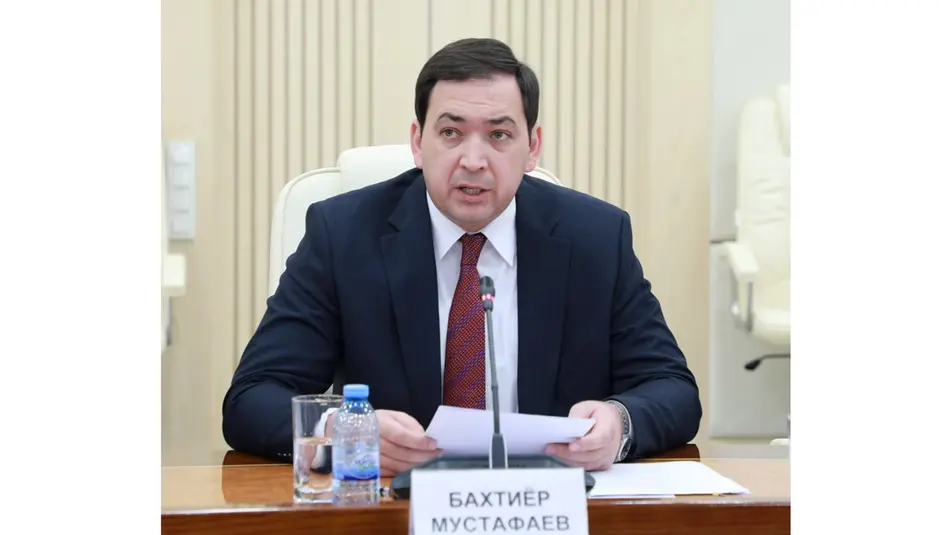
TASHKENT, November 2. /Dunyo IA/. Bakhtiyor Mustafayev, Deputy Director of the Institute for Strategic and Regional Studies (ISRS) under the President of Uzbekistan, in an interview with Dunyo IA commented on the outcomes of President Shavkat Mirziyoyev’s participation in the summit of the Organization of Turkic States (OTS), held in Ankara on 30 October 2026.
Uzbekistan became a full member in 2019. What place does the OTS occupy in our country’s foreign policy today, and how has the economic dimension of cooperation evolved?
— The importance of this area of cooperation is clearly reflected in trade trends. According to various estimates, Uzbekistan’s trade with OTS countries, including observer states Turkmenistan and Hungary, increased from US$4.13 billion in 2017 to US$10.82 billion in 2025, approximately a 2.6-fold increase. Growth continued in January–July 2026, reaching 19.8% compared with the same period of the previous year. This shows that historical and cultural affinities are increasingly reinforced by economic ties. At the same time, expanding trade increases the need for joint manufacturing ventures, affordable financing, and coordinated transport and legal procedures.
The initiatives put forward by the President of Uzbekistan in Ankara address precisely these needs. For Tashkent, the OTS is becoming a platform for combining the capabilities of national economies and jointly addressing challenges that are difficult for any one country to tackle alone. The next stage requires more advanced processing of raw materials, the adoption of technologies, and joint efforts to enter international markets with finished products. The Organization’s practical value will grow as expanding trade is accompanied by the development of lasting production chains and new jobs.
The President proposed launching cooperation in the “OTS Plus” format, beginning with meetings of sectoral ministers. To what extent can the economic scale of the Turkic states attract interest from external partners?
— According to the 2025 annual edition of the Turkic Economic Review, the combined GDP of member and observer states amounted to US$2.11 trillion, while their combined foreign trade turnover with countries worldwide stood at US$1.12 trillion. Potential partners are interested in the combination of market size, the resource base, and the countries’ location along transport routes.
Engagement at the sectoral level can translate this interest into concrete agreements. Ministers can agree on the terms for external investors’ participation in a manufacturing project, the development of a transport route, or the provision of technology. For Uzbekistan, it is particularly important that cooperation with third countries should help increase the technological sophistication of production and expand export markets. An open format also makes it possible to combine OTS countries’ raw material resources and manufacturing capabilities with external partners’ technology, equipment, and financing. In this way, demand for joint projects will strengthen the Organization’s international standing.
The President proposed the “Turkic World – 100” programme, covering one hundred strategic investment and industrial projects. What financial resources are already available to support its implementation?
— The Organization is already developing its own financial infrastructure. According to information published on the Turkic Investment Fund’s official website, its authorised capital amounts to US$600 million. The agreement establishing the Fund was signed in 2023, and it announced the launch of its operations in 2025. Its priorities include industry, infrastructure, renewable energy, and support for entrepreneurship. The programme of one hundred projects can therefore draw on an existing institution capable of combining its own resources with financing from international banks and private investors.
However, the Fund’s capital should not be regarded as the budget for the entire programme. Its most useful role is to help develop sound projects, reduce risks at the initial financing stage, and attract co-investors. The areas proposed by the President, including the processing of rare and strategic minerals and the domestic production of equipment for green energy, require precisely this approach. Project selection must involve assessments of demand, technology costs, and investment returns. For Uzbekistan, the outcomes should be new capabilities and more advanced processing; for its partners, economically viable participation in shared production chains.
Why has the President proposed a treaty on mutual legal assistance in commercial matters as business ties expand? How large is the business community whose interests it would protect?
— We are already talking about thousands of enterprises. According to the National Statistics Committee of the Republic of Uzbekistan, as of 1 January 2026, there were 2,137 enterprises with Turkish capital and 1,212 with Kazakh capital operating in our country. These two OTS states alone accounted for 3,349 enterprises. Behind these figures are supply contracts, loans, investment commitments, and property relations.
As business relationships become more complex, the cost of legal uncertainty rises. Entrepreneurs need to understand how to protect their right to pursue a claim, obtain the necessary documents, and enforce a court judgment when a counterparty or its assets are abroad. The proposed treaty could make these procedures more predictable, while the digital exchange of requests could reduce the time needed for cooperation between the competent authorities. This would be particularly significant for small and medium-sized businesses, which find it difficult to maintain legal teams in several countries. Reliable legal protection can support further investment and reduce the costs of cross-border transactions.
What could the proposed Network of Logistics Complexes of Turkic States offer as traffic along the Middle Corridor increases? Why is joint management necessary?
— Growing freight volumes are already making coordination an economic necessity. According to the report by the Organisation for Economic Co-operation and Development, Enhancing the Competitiveness of the Trans-Caspian Transport Corridor in Central Asia, freight volumes along the Middle Corridor exceeded 4.7 million tonnes in 2025. The report also highlights persistent infrastructure and organisational constraints. As volumes increase, the effects of poorly coordinated schedules, terminal congestion, and duplicate paperwork become more pronounced. A delay on one section disrupts the entire route.
Joint management of the network could ensure coordinated service standards, the exchange of cargo data, and advance booking of terminal capacity. For businesses, the results are measured in the overall cost and predictability of delivery. Uzbekistan has an interest in ensuring that logistics complexes connect domestic enterprises to international markets and provide additional services, including storage, packaging, sorting, and product processing. This would generate revenue at different stages of transportation. Under this model, the Middle Corridor and connecting routes become a basis for locating production facilities and supporting regional development, rather than serving solely as transit routes.
What tourism potential underpins the proposal for a Turkic Tourism Alliance? How significant are travel flows between Uzbekistan and other OTS countries?
— At the summit, the President noted that the Turkic states welcomed more than 100 million international tourists in 2025. Uzbekistan is also recording rapid growth. According to the National Statistics Committee of the Republic of Uzbekistan, the number of foreign visitors arriving for tourism purposes reached 11.7 million in 2025, an increase of 46.8% over the previous year. Of these, 3.3 million came from Kyrgyzstan, 2.7 million from Kazakhstan, and 174,900 from Türkiye. These three countries alone accounted for approximately 6.2 million visits. In the other direction, citizens of Uzbekistan made 3.3 million trips for tourism purposes to Kyrgyzstan, 1.3 million to Kazakhstan, and 268,900 to Türkiye.
These flows provide a substantial basis for cooperation, although statistics on travel for tourism purposes also include visits to relatives and other types of trips. The alliance’s task is to expand demand for comprehensive tourism itineraries spanning several countries and to promote them jointly in international markets. The proposed agreement on mutual travel by citizens and the wider use of ID cards could make travel easier to arrange. For Uzbekistan, this offers an opportunity to encourage longer stays and increase demand for hotels, guide services, handicrafts, and local cuisine. It is important that growth in visitor numbers should generate more income for businesses in the regions.
The President expressed readiness to provide 200 scholarships annually to young people from the Turkic states. What existing cooperation does this initiative build on?
— Educational cooperation already involves concrete activities. According to Uzbekistan’s Ministry of Higher Education, Science and Innovation, four universities in Uzbekistan, together with two Turkish universities, are delivering six bachelor’s degree programmes in the 2025/2026 academic year, with 718 students enrolled. Nearly 300 lecturers and researchers have participated in exchanges over the past five years. Of more than 400 applications submitted to joint research calls with TÜBİTAK, 53 projects have been recommended for funding. The proposed 200 annual scholarships under the “New Uzbekistan Scholarship” programme are intended to extend this work to young people across the Turkic states.
It is now important to connect the training of specialists more closely with industrial and technological priorities. The scholarships can support the training of engineers, researchers, and logistics specialists needed for joint projects. Internships at enterprises and business involvement in defining research tasks will help graduates apply their knowledge in production. The value of exchanges also extends beyond an individual degree. They create a professional community whose members are familiar with their partners’ languages and business cultures. These ties facilitate subsequent cooperation between universities and enterprises and provide a skilled workforce for long-term collaboration.
The Ankara summit supported the initiative to declare 2027 the Year of Nature Protection, and a Dictionary of Common Turkic Words was proposed. How can environmental and cultural cooperation deliver practical results?
— Uzbekistan can share its experience in environmental protection with its partners. According to information released by the Press Service of the President of the Republic of Uzbekistan on 6 July 2026, new forest plantations covering more than 2 million hectares have been established on the dried bed of the Aral Sea. The country’s green cover increased from 8% in 2020 to 14.3% in 2025. Work on this scale provides a basis for discussing specific technologies for land restoration, the cultivation of drought-tolerant plants, and the monitoring of planted areas. The Year of Nature Protection could provide a framework for joint pilot sites, the exchange of scientific data, and specialist training in climate adaptation.
Cultural cooperation can also build on existing ties. For example, Uzbekistan’s Ministry of Higher Education, Science and Innovation has reported that more than 5,000 students in Uzbekistan have chosen Turkish as their second foreign language. A Dictionary of Common Turkic Words could be a useful resource for these students, as well as for teachers and translators. A digital edition, examples of usage, and accessible learning materials would enhance its practical value. The scholarly task is to reflect shared roots and differences in meaning accurately. This would combine the preservation of heritage with easier everyday communication and educational exchanges.
How do you assess the overall outcomes of the Ankara summit? What should be the main criterion for judging the effectiveness of the mechanisms proposed by Uzbekistan?
— The Ankara Declaration adopted at the summit set out shared priorities for further cooperation. The initiatives build on a substantial existing portfolio of investment projects. In 2026, work is under way on 280 projects involving partners from OTS countries, including Turkmenistan and Hungary, with a total value of US$17.24 billion. Investment in these projects amounted to US$3.84 billion in January–August. The proposed mechanisms are therefore important primarily as a means of supporting the preparation and implementation of concrete projects.
The main criterion will be how the conditions for cooperation change for businesses and citizens. In industry, this means launching production and adopting technologies; in transport, lower costs and reliable deliveries; and in the legal sphere, access to protection for commercial interests. Educational and tourism initiatives should expand opportunities for people and increase business income. Implementing the proposals put forward in Ankara will require agreement on project parameters and sources of financing. Their common purpose is to create institutions that enable more reliable investment, production, and trade. It is these practical benefits that will strengthen the resilience of the partnership within the OTS.

Latest News

See all
Read also
Akramjon Nematov: Future of Central Asia and Azerbaijan is not something that simply awaits us; it is something we are building together today
Turkish expert names Uzbekistan one of the most important destinations for cultural and pilgrimage tourism