Akramjon Nematov: A changing world demands higher media standards and greater responsibility for how societies perceive one another
November 10, 2026. 11:00 • 3 min
• 36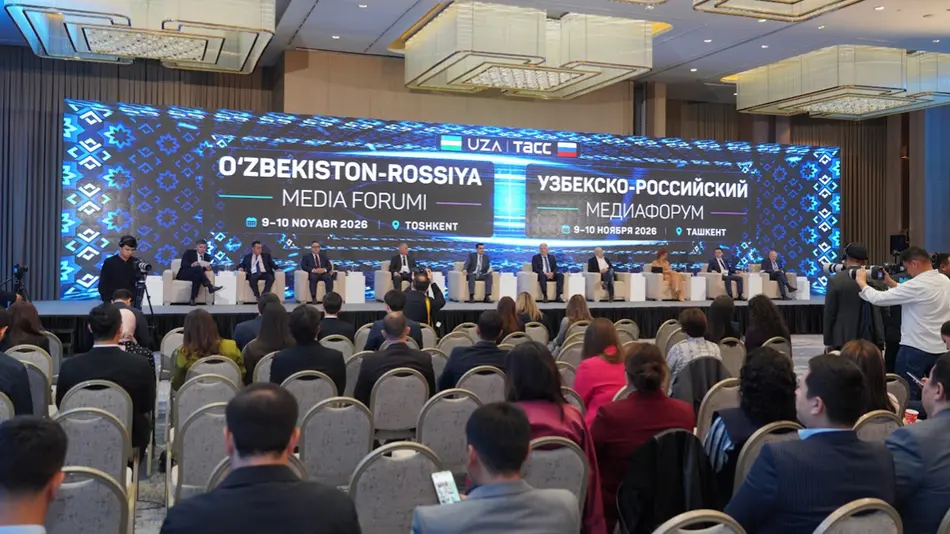
TASHKENT, November 10. /Dunyo IA/. Uzbekistan-Russia Media Forum commenced its work in Tashkent yesterday, bringing together representatives of leading media outlets, cultural institutions, theater, cinema, the museum sector, digital platforms, creative industries, and the expert community of the two countries, reports Dunyo IA correspondent.
Discussions addressed not only the development of the media market but also a broader question: how to preserve cultural identity, strengthen mutual understanding and develop a contemporary culture of dialogue amid rapid technological and social change.
Moderating the session “National Cultural Codes in the Media: Combining Traditional Values with a Forward-Looking Perspective”, Akramjon Nematov, First Deputy Director of the Institute for Strategic and Regional Studies under the President of Uzbekistan (ISRS), highlighted the direct impact of global change on the information landscape.
He noted that both the technologies used to communicate information and the ways people consume it are changing. Traditional media now operate alongside social networks, digital platforms, short-form video, bloggers, recommendation algorithms and artificial intelligence. In this environment, the media must also evolve, becoming faster, more substantive and more technologically advanced while maintaining professional standards, historical perspective and responsibility to society.
Akramjon Nematov stressed that the media community now bears considerable responsibility for ensuring that societies have a comprehensive and objective understanding of one another.
He explained that the task is to present a balanced, contemporary picture that reflects both cultural and historical heritage and the realities of ongoing development, rather than to create an idealized image.
Modern Uzbekistan draws on an ancient civilisational heritage and rich cultural traditions while developing dynamically, with new industries, universities, technologies and a vibrant young creative community. It is equally important for audiences in Uzbekistan to appreciate the full diversity of contemporary Russia, including its cultural, scientific, educational, social and regional life.
In Akramjon Nematov’s view, this makes pragmatic professional dialogue between the media and cultural institutions of the two countries particularly important. Such dialogue should go beyond exchanging information to encompass the joint creation of substantive content and collaborative initiatives, including films, theatre projects, digital archives, translations, youth initiatives and professional exchanges.
He noted that cultural codes should not be treated merely as a legacy of the past. They must be communicated in contemporary terms, particularly to younger generations who live in a new digital environment.
At the same time, new technologies should enrich the substance of culture rather than displace it. The central consideration is the meaning being conveyed, rather than the format used to convey it.
Akramjon Nematov emphasized that preserving national identity, promoting shared traditional values and developing objective, professional dialogue between the media of both countries can make an important contribution to further strengthening mutual understanding and trust between the peoples of Uzbekistan and Russia.

Latest News
See all
Read also