Samarkand becomes an International Hub for Dialogue on Talent and Human Capital
November 03, 2026. 18:00 • 4 min
• 62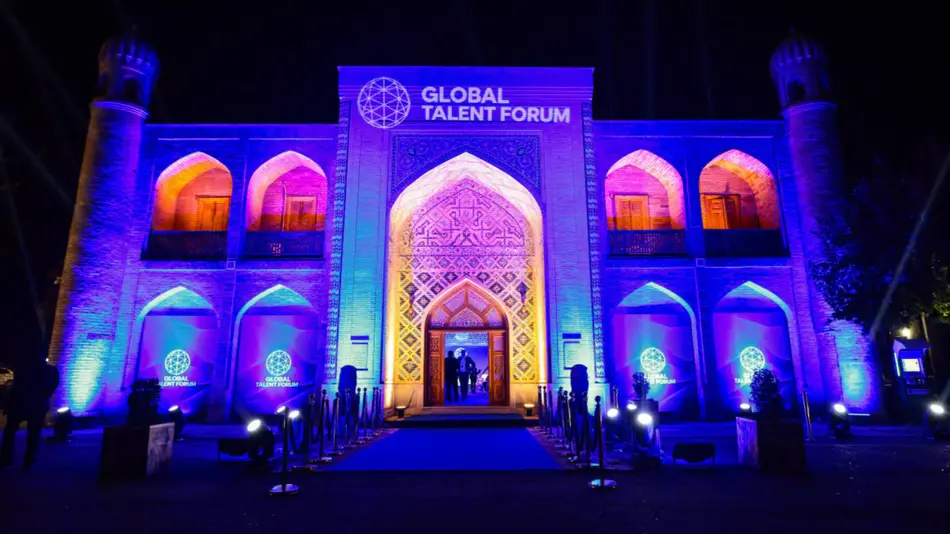
SAMARKAND, November 3. /Dunyo IA/. On October 29-30th, Samarkand hosted the international Global Talent Forum, held under the theme “Shaping Human Capital for a Changing World” and organized by the “El-yurt umidi” Foundation for the Training of Prospective Personnel under the President of Uzbekistan, reports Dunyo IA correspondent.
Forum brought together around 100 experts and representatives of international organizations, government institutions, educational establishments and scholarship programs from more than 15 countries, including the United States, Türkiye, the United Kingdom, China, Kazakhstan, Malaysia, Singapore, Germany, Japan and Azerbaijan. Central question addressed at the meeting was how international education, academic ties and professional experience could be translated into tangible benefits for the economy and society.
International non-governmental non-profit organization “Uzbekistan’s Club”, which places particular emphasis on human capital development in Uzbekistan, contributed to the Forum as a strategic partner. National Bank of Uzbekistan served as the General Partner, while MKBANK, “Xalq Bank”, “Agrobank”, “Uzbekistan Airways” and Westminster International University in Tashkent also supported the Forum as partners.
Meeting in Samarkand was held at a time when technological change is forcing countries to reassess their approaches to workforce development. Artificial intelligence, digitalisation and the energy transition are reshaping the nature of work and the skills required of professionals. According to the World Economic Forum’s Future of Jobs Report 2025, an average of 39 per cent of workers’ existing skill sets were expected to change or become outdated by 2030. Alongside technological expertise, analytical thinking, adaptability and the ability to engage in lifelong learning were becoming increasingly important.
For Uzbekistan, this global agenda is closely linked to the reforms pursued under President Shavkat Mirziyoyev. Expanding access to education has been accompanied by a growing focus on quality, research and partnerships with leading universities around the world. Over the past eight years, higher education enrolment has risen from 9 to 44 percent. The next challenge is to connect this expanding talent base more closely with the needs of the economy and the future labour market.
In October this year, President once again emphasised the importance of ensuring continuity across all levels of education, aligning curricula with labour market demands and putting scientific developments into practice. In this context, international educational cooperation played a particularly important role, helping to modernise curricula, foster a stronger research environment and prepare professionals to drive change within the country.
Practical challenge is clear: investment in education must respond to the country’s long-term priorities. Emerging industries require engineers and technologists; the digital economy needs specialists in data science and cybersecurity; agriculture increasingly depends on expertise in water management and biotechnology. Healthcare and public administration likewise need professionals capable of adapting international knowledge and best practices to local realities.
This connection was at the centre of the Forum’s discussion on global talent mobility. Participants explored how international education contributes to professional growth and, crucially, what conditions enable graduates to put their knowledge and experience to work when they return home. Cooperation with employers, participation in research and access to meaningful career opportunities were among the key factors discussed.
A dedicated panel examined scholarships as long-term investments in national competitiveness. The conversation focused on how countries identify priority fields, support high-potential talent and ensure that scholarship programs ultimately contribute to broader national development.
For the “El-Yurt Umidi” Foundation, these questions are particularly relevant. Across three open scholarship competitions held in 2025–2026, nearly 500 young people were awarded the Presidential “El-Yurt Umidi” Scholarship. Eighty per cent of the scholarship recipients were admitted to universities ranked among the world’s top 100. The next challenge is equally important: ensuring that the knowledge, skills and international networks they gain translate into long-term value for Uzbekistan.
Forum participants include representatives of the OECD, the Council of Higher Education of Türkiye (YÖK), Institute of International Education (IIE), Kazakhstan’s Center for International Programs, which administers the Bolashak Scholarship, DAAD, British Council, JICA and EducationUSA. Their participation provides an opportunity to compare different approaches to talent development, education financing and international academic cooperation.
Programme also included a dedicated session on the role of financial institutions in human capital development, discussions on partnerships for the coming decade and bilateral meetings aimed at turning dialogue into practical cooperation.
On October 30th, Foundation held “Samarkand Tea Time”, its annual alumni gathering. The event complemented the international discussion with the first-hand experiences of scholarship recipients and graduates, including their professional journeys, networks and initiatives. Program also featured direct dialogue with employers and human resources representatives from banks, ministries and government agencies. Participants discussed organisations’ workforce needs, in-demand skills, employment and professional development opportunities, as well as opportunities to contribute to promising projects.
Samarkand, a city that has historically brought together cultures and scholarly traditions, once again served as a platform for dialogue on the future, in which the quality of knowledge and the ability to put it into practice determine a country’s development opportunities.

Latest News

See all
Read also