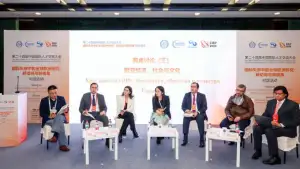
View from Dushanbe: Uzbek-Omani Strategic Partnership acquires a Broader Regional Dimension
November 19, 2026. 16:30 • 3 min
• 37
DUSHANBE, November 19. /Dunyo IA/. In an interview with a Dunyo IA correspondent, Guzel Maitdinova, Professor at the Department of Foreign Regional Studies and Foreign Policy of the Russian-Tajik (Slavonic) University, Director of the Center for Geopolitical Studies at RTSU and Doctor of Historical Sciences, commented on the outcomes of the state visit of the President of Uzbekistan, Shavkat Mirziyoyev, to Oman on November 16–17th:
- State visit of the President of Uzbekistan, Shavkat Mirziyoyev, to Oman marked an important milestone not only in the development of bilateral relations, but also in expanding Central Asia's geo-economic opportunities and strengthening its ties with the Persian Gulf countries. The particular significance of the visit lies in elevating Uzbek–Omani cooperation to a qualitatively new level encompassing investments, transport, industry, energy, digital technologies and humanitarian exchanges.
Key outcome of the talks was the signing of the Agreement on Strategic Partnership between the two countries. Over 30 bilateral documents, along with agreements on establishing a Coordination Council and developing a “roadmap” for their implementation, form the institutional foundation for long-term interaction. Furthermore, a portfolio of joint projects valued at approximately $5 billion and the goal of increasing mutual trade turnover to $1 billion attest to the parties' focus on tangible economic results.
Transport and logistics cooperation holds particular geo-economic significance. For landlocked Uzbekistan, interaction with Oman opens up prospects for utilizing the ports of Sohar, Salalah and Duqm to access the markets of the Persian Gulf, South Asia, and East Africa. The prerequisites for this have already been established: negotiations on integrating transport systems took place in February 2026, direct Muscat–Tashkent air service was launched in July, and Oman's “Asyad Group” acquired controlling stakes in two Uzbek logistics companies.
An important continuation of this process was the trilateral meeting of the Ministers of Foreign Affairs of Uzbekistan, Oman, and Iran on November 17th in Muscat, dedicated to the development of transport corridors, transit, and logistics services. This format demonstrates a commitment to transitioning from individual bilateral initiatives to broader regional coordination.
Industrial cooperation represents an equally promising area. Agreements on the joint production of cable and transformer products with subsequent export to neighbouring states create prerequisites for the formation of regional production chains. Overall, the identified priorities - industry, logistics, urban development, tourism, mineral resources, finance, and digital technologies - align with the objectives of modernizing the economies of Central Asia.
Outcomes of the visit are also significant for other states in the region, in particular Tajikistan, which is likewise interested in diversifying transport routes and expanding access to maritime communications. Utilizing Uzbek logistics platforms and Oman's port infrastructure will help open up additional opportunities for exporting Tajik aluminium, textile, agricultural and processed products to the markets of the Persian Gulf countries, South Asia, and East Africa.
Thus, Uzbek–Omani strategic partnership acquires a broader regional dimension, creating new opportunities for strengthening transport connectivity, industrial cooperation and economic interaction across all of Central Asia.

Latest News

See all
Read also

View from Moscow: Agreements reached in Muscat can ensure an inflow of stable long-term investments to Uzbekistan and expand access to Oman’s Port Infrastructure