View from Warsaw: Significance of the Uzbekistan-Jordan High-Level Summit goes beyond the Bilateral Agenda
November 25, 2026. 15:00 • 3 min
• 27
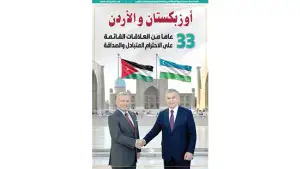
WARSAW, November 25. /Dunyo IA/. Former Ambassador of Poland to Pakistan and Director of the “Asia” Department at the Centre for International Relations Piotr Opaliński commented in an interview with a Dunyo IA correspondent on the outcomes of the state visit of President of Uzbekistan Shavkat Mirziyoyev to Jordan held on November 23–24th:
– Visit took place against the backdrop of notable progress in Uzbek-Jordanian relations. In August 2025, King Abdullah II visited Uzbekistan for the first time in the history of bilateral relations. At that time, the leaders agreed to elevate relations to the level of a comprehensive partnership. Subsequently, 15 bilateral documents were signed covering investment, trade, agriculture, education, tourism and scientific cooperation. The meeting of the heads of state on the sidelines of the “Aqaba Process” in Astana on November 6 reaffirmed the consistency of political dialogue.
Current visit to Amman is aimed at translating the agreements reached into practical terms. The establishment of the Joint Intergovernmental Commission and the Business Council, the development of air connections, and regular contacts between state institutions form the institutional foundation for further cooperation.
One of the key areas of the visit was the expansion of trade and economic ties. According to the Jordan News Agency “Petra”, trade turnover between the two countries grew by 79 percent in 2025. Eighteen enterprises with Jordanian capital are already operating in Uzbekistan.
Promising areas of cooperation have been identified as the textile, mining, chemical and pharmaceutical industries, as well as agriculture. Uzbekistan possesses significant industrial and agricultural potential and opens access to the markets of Central Asia. Jordan, in turn, has experience in pharmaceuticals, chemical production and the service sector.
Particular prospects are associated with the pharmaceutical industry, where cooperation can contribute to the establishment of joint production facilities, technology transfer and expanded access to regional markets.
An important practical outcome of the visit was the signing of the Preferential Trade Agreement covering 300 product lines. The document is aimed at simplifying mutual access of products to the markets of the two countries and expanding export opportunities. Uzbek-Jordanian Business Forum is designed to give additional impetus to business contacts.
“Made in Uzbekistan” exhibition also became an important part of the visit’s economic program, presenting Uzbekistan’s industrial products and export capabilities to Jordanian entrepreneurs.
Transport connectivity also contributes to the development of ties. The launch of a direct Amman–Tashkent flight by Royal Jordanian in July 2026 has expanded opportunities for business trips, tourism and people-to-people contacts between the two countries.
Another promising area is educational cooperation. The First Uzbek-Jordanian Rectors’ Forum, held in Tashkent on November 17–18th, brought together representatives of more than 35 universities and concluded with the signing of over 65 memoranda of understanding.
Significance of the visit extends beyond the bilateral agenda. Uzbekistan is consistently expanding the geography of its foreign economic ties and strengthening cooperation with Middle Eastern states within the framework of its multi-vector foreign policy.

Latest News



See all
Read also

View from Dushanbe: Rapprochement with Jordan should be viewed as part of Uzbekistan’s broader strategy to expand transport and economic connectivity

View from Ankara: State Visit of the President of Uzbekistan to Jordan opens Additional Opportunities for Developing Ties between Central Asia and the Middle East