Under the chairmanship of the President of Uzbekistan, priority tasks for developing entrepreneurship and increasing public income have been defined
November 25, 2026. 19:10 • 4 min
• 116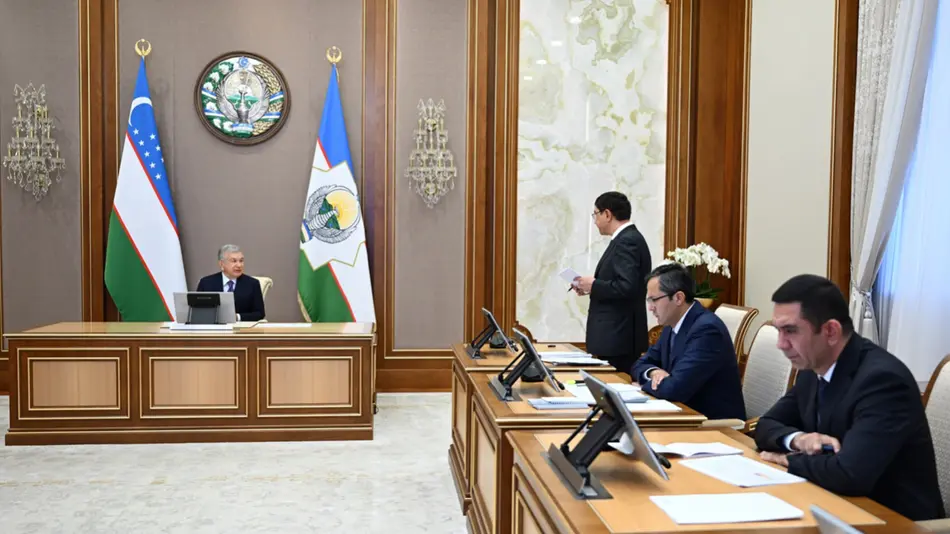
ТАSHKENT, November 25. /Dunyo IA/. Today, President Shavkat Mirziyoyev reviewed proposals to further advance reforms aimed at promoting entrepreneurship and expanding employment opportunities, reports Dunyo IA correspondent.
According to the press service of the Head of our State, in recent years, Uzbekistan has made significant progress in reducing poverty, boosting the economic activity of the population, and providing broad support for entrepreneurship. In particular, 11 million people have been lifted out of poverty since 2017.
This lays a solid foundation for moving to a qualitatively new stage of reforms aimed at ensuring stable and high incomes for the population, as well as further expanding the middle class.
At the same time, the President noted that considerable untapped potential remains in this area.
Today, micro, small, and medium-sized businesses account for 75 percent of total employment in the economy, while their share of gross domestic product stands at 55 percent. This indicates the need to increase labour productivity and production efficiency at enterprises.
The share of microenterprises moving into larger business categories stands at just 4 percent, roughly a quarter of the international benchmark. The impact of lending on enterprise growth also remains insufficient.
In high-income sectors such as information technology, logistics, finance, and insurance, the share of small businesses stands at just 8 percent.
In this regard, the presentation covered proposals to establish a comprehensive institutional framework for business development and ensuring quality employment, as well as to introduce modern financial and non-financial support mechanisms for businesses.
In particular, entrepreneurs will receive comprehensive services at all stages of business development – from launch to expansion and entry into foreign markets. The President instructed officials to expand the use of financial instruments such as lending, guarantees and sureties, leasing, factoring, venture financing, and equity investments, taking into account the stage of development and the needs of each enterprise.
The proposed measures also envisage providing entrepreneurs with training and advisory services, assisting them in managing their businesses, implementing modern technologies, attracting investors, and entering export markets.
The presentation also covered the Central Bank’s proposals aimed at encouraging commercial lending, strengthening competition among banks and other financial institutions, and expanding entrepreneurs’ access to financial services.
In particular, plans include introducing alternative methods of assessing creditworthiness, establishing secure data exchange between banks and fintech companies, and enabling entrepreneurs to receive loan offers from multiple banks simultaneously through a single application. The proposals also include new mechanisms for resolving financial disputes out of court and managing financial risks.
The presentation emphasized the importance of establishing an effective business support system at all levels, from the national level down to the mahalla.
The proposals envisage setting up business incubators and project offices in the regions, establishing support centers for micro, small, and medium-sized businesses in districts, and providing services to entrepreneurs through a single-window system.
The assessment of the performance of hokims’ assistants will shift from quantitative to qualitative indicators. The main criteria will be the sustainability of newly established enterprises, job retention, and growth in business turnover.
The President was also presented with information on projects directly aimed at raising household incomes. In particular, plans include creating 320,000 jobs through the implementation of 1,000 projects in the regions worth a total of 81 trillion soums, developing cooperation based on the specialization of mahallas, and growing high-value crops on household plots and leased land.
Through the implementation of the proposed measures, it is planned to double the rate at which micro, small, and medium-sized businesses move into larger business categories by 2030, increase the sector’s share of total employment to 80 percent, raise the share of the middle class to 90 percent, and continue reducing informal employment.
The plans also envisage increasing the share of loans backed by guarantees and sureties in total business lending from 1 to 12 percent, and the share of funds from international financial institutions and market borrowings from 17 to 35 percent.
The presentation also emphasized the need to prioritize balancing supply and demand in the labour market, fully digitizing employment services, developing a system for assessing and internationally certifying professional qualifications, and increasing the number of formal jobs.
Instructions were issued to submit proposals to improve legislation governing labour relations, foster mutually beneficial relations between employers and employees, simplify procedures for formalizing employment relationships, and improve the state labour inspection system.
The Head of State instructed responsible officials to further refine the initiatives and clearly define the responsibilities of ministries and agencies, as well as the mechanisms for their coordination at the new stage of reforms aimed at developing entrepreneurship and raising household incomes.

Latest News


See all