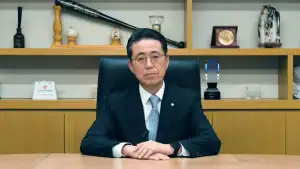
Alexandra Perminova: Russia-Uzbekistan relations have grown significantly in both scale and substance in recent years
September 01, 2026. 08:00 • 4 min
• 183
MOSCOW, September 1. /Dunyo IA/. Alexandra Perminova, Head of the Center for Central Asian Studies of the Institute of China and Contemporary Asia of the Russian Academy of Sciences, sent sincere congratulations and best wishes to the people of Uzbekistan through Dunyo IA on the eve of the country’s 35th anniversary of independence:
— We congratulate Uzbekistan and its people on the national holiday – Independence Day!
For Russian-Uzbek relations, this date is a good occasion to speak not so much about history as about what connects our countries today. In recent years, relations between Russia and Uzbekistan have grown significantly both in scale and substance. Politically, they are officially defined as relations of comprehensive strategic partnership and alliance. In the economy, these words are backed by concrete figures, enterprises and projects. In July 2026, the presidents of our countries once again reaffirmed their commitment to developing Russian-Uzbek relations at a high level.
Speaking about the place Russia occupies in Uzbekistan’s policy, President Shavkat Mirziyoyev stated clearly at the St. Petersburg International Economic Forum in June 2026: ‘Russia is more than a regional neighbor for Uzbekistan. It is our time-tested strategic partner and ally.’
Statistics confirm this assessment. According to the Uzbek side, bilateral trade increased by 10 percent in 2025, reaching $13 billion. Over a longer period, the scale of change is even more significant: as President Shavkat Mirziyoyev noted, bilateral trade more than tripled over ten years, from $4 billion to $13 billion. Growth continued in 2026.
Russian-Uzbek economic cooperation today goes far beyond trade. Industrial cooperation, investment and joint production are becoming increasingly important. More than 3,200 enterprises with Russian capital operate in Uzbekistan. Companies from the two countries cooperate in mining and metallurgy, energy, the chemical industry, agriculture, textiles, electrical engineering, digitalization and other sectors.
The scale of joint projects is also growing. According to an assessment cited by Shavkat Mirziyoyev at SPIEF 2026, Uzbekistan’s current portfolio of joint projects with Russia exceeds $50 billion. Specific areas include the establishment of joint industrial parks in five regions of Uzbekistan and a railcar manufacturing cluster in Tashkent. The volume of ongoing interregional projects is estimated at $5 billion, while another $5 billion investment package is being prepared.
Joint production is expanding, localization is deepening, new cooperation ties are emerging, and major infrastructure and technology projects are being implemented. The next target has already been set: the presidents of the two countries aim to increase bilateral trade to $30 billion by 2030.
Energy cooperation holds a special place. On June 4, 2026, Vladimir Putin and Shavkat Mirziyoyev launched construction of the first power unit of an integrated nuclear power plant in Uzbekistan. The project combines small modular nuclear generation with large-scale baseload power generation and lays the foundation for the development of a new sector for Uzbekistan – nuclear energy.
However, Russian-Uzbek relations cannot be reduced to billions of dollars and industrial facilities. Education, culture, language, scientific and professional ties are equally important.
Today, 15 branches of Russian universities operate in Uzbekistan. In total, 32 branches of foreign universities operate in the country, meaning almost half are Russian educational institutions – the largest network of Russian universities abroad. The first joint engineering schools in Almalyk and Tashkent are already operating.
Such ties largely determine the sustainability of relations for years to come. Economic conditions and individual priorities of states may change, while constant interaction among universities, research organizations, enterprises, regions and, most importantly, people creates a strong foundation for further cooperation.
Direct ties between the regions of the two countries also play a significant role. According to 2025 data, around 80 Russian regions actively cooperated with Uzbekistan. In July 2026, the presidents of Russia and Uzbekistan once again highlighted the expansion of interregional cooperation as an important area of the bilateral agenda.
Therefore, on Uzbekistan’s Independence Day, I would like to say a very simple thing, behind which stand decades of relations and very concrete results today: it is good that Russia and Uzbekistan have each other.
Our countries have much in common. They remain important partners for one another, are able to find common interests and agree on major projects designed for years ahead.
We wish Uzbekistan peace, prosperity and further development, and Russian-Uzbek relations – to preserve what is particularly valuable in them: trust, mutual respect and the ability to achieve concrete results together.

Latest News


See all
Read also
Turon Brings Together 35 Countries on Uzbekistan’s 35th Independence Anniversary
Numan Kurtulmuş: The Third Renaissance in New Uzbekistan is a shared achievement of the Turkic and Islamic worlds
September 1st Proclaimed as Uzbekistan Independence Day throughout the U.S. State of Oregon