COP31 in Antalya to focus on Implementing Climate Commitments and International Cooperation
November 11, 2026. 08:10 • 5 min
• 324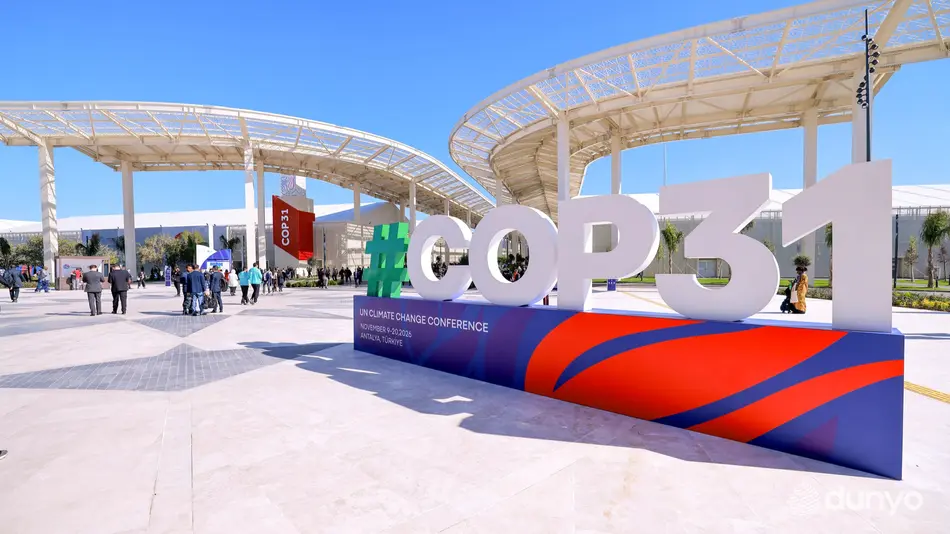
ANTALYA, November 11. /Dunyo IA/. Yesterday, President of Uzbekistan Shavkat Mirziyoyev arrived on a two-day working visit to Türkiye to participate in the World Leaders Climate Action Summit of the 31st session of the Conference of the Parties to the UN Framework Convention on Climate Change (COP31), which is being held in Antalya, reports Dunyo IA correspondent.
Global Forum will be presided over by the President of Türkiye, Recep Tayyip Erdoğan. The conference program also includes ministerial dialogues, business forums, youth events and thematic sessions on key areas of the climate agenda.
Conference will bring together representatives of states, international organizations, business, and financial institutions to discuss global climate challenges and seek practical solutions.
Main priority of the conference will be the transition from political commitments to concrete actions. At the center of the agenda are climate finance, reducing greenhouse gas emissions, tenergy transition, adaptation to global warming and supporting the most vulnerable nations.
Special attention, as expected, will be paid to the implementation of the Paris Agreement, which aims to keep global warming well below 2°C and limit it to 1.5°C. One of the most challenging issues remains climate finance: at COP29 in Baku, countries agreed to mobilize at least 300 billion dollars annually for developing nations by 2035, as well as to increase the total volume of financing from public and private sources to $1.3 trillion.
Concurrently, countries continue to discuss the optimal balance between public and private financing, including grants and concessional loans. The issues of adaptation to climate change, emissions reduction, and the distribution of responsibility among states also remain at the center of attention.
Turkish presidency has defined ten priority areas for COP31, including clean energy, waste and methane reduction, sustainable cities, green industrialization, food security, healthcare and ecosystem conservation. A separate emphasis is placed on the preparation of investment projects capable of turning national climate plans into tangible results.
For Central Asia, climate negotiations carry special significance: the region faces accelerated land degradation, shrinking water resources and melting glaciers.
Speaking at COP30 in Belém, Brazil, Chairman of the National Committee for Ecology and Climate Change of Uzbekistan Aziz Abdukhakimov, stated that more than 20% of Central Asian lands have undergone degradation, and the temperature in the region has already increased by 2.2°C. According to him, available amount of water per capita in Uzbekistan has decreased nearly twofold, and the region has lost approximately 30% of its glacier volume.
Scale of these challenges underscores the necessity for coordinated actions among the countries of the region. Conserving water resources, restoring land, protecting biodiversity and expanding access to international climate finance are becoming not only environmental tasks but also vital conditions for the sustainable development of Central Asia.
Uzbekistan has been participating in the international climate process for several decades. Country joined the UN Framework Convention on Climate Change, ratifying the Kyoto Protocol in 1999 and the Paris Agreement in 2018. Over this period, national climate policy has received new vectors and concrete indicators.
Thus, in November 2025, country presented its Third Nationally Determined Contribution (NDC), committing to reduce specific greenhouse gas emissions per unit of GDP by 50% by 2035 compared to the 2010 level.
Among the national priorities is the development of renewable energy. Its installed capacity is planned to be increased to 25 thousand MW, and its share is to be brought to 54% in the next five years. Within the framework of the “Yashil Makon” program, it is also envisaged to expand forest areas to 6.1 million hectares, including 2.3 million hectares in the Aral Sea region.
At COP29 in Baku, President Shavkat Mirziyoyev put forward a number of important international initiatives aimed at strengthening global cooperation in the fight against climate change, conserving water and genetic resources, developing sustainable agriculture and cities, as well as promoting youth “green” initiatives.
In particular, the country has set a target to increase the share of “green” energy in the economy to 40%, and intends to expand its climate commitments by 2050.
Leader of Uzbekistan emphasized during the conference the importance of developing electric vehicle and “green” hydrogen clusters, as well as solar and wind energy. President noted the joint work of the countries of the region on the Regional Climate Strategy and the initiative to supply “green” electricity to Europe.
An important direction of Uzbekistan's international interaction remains its cooperation with the Global Environment Facility (GEF). In May-June 2026, Samarkand hosted the eighth Assembly of the facility, following which Uzbekistan became one of the donor countries for the first time. This marked a new stage in the country's participation in international environmental cooperation.
Projects developed jointly with UN structures serve as a practical continuation of such interaction. Within the framework of the ninth programming cycle of the GEF for 2026-2030, a project to improve ambient air quality in Tashkent and Samarkand is being elaborated with the participation of the United Nations Environment Programme (UNEP).
Another direction of cooperation with the United Nations Development Programme (UNDP) is associated with the conservation of the snow leopard and mountain ecosystems of Central Asia. Concurrently, in cooperation with the United Nations Industrial Development Organization (UNIDO), the development of energy-efficient cooling systems is being considered. These initiatives cover several crucial areas simultaneously - from biodiversity protection to rational energy use and climate change adaptation.
Thus, World Leaders Climate Action Summit can and must become an important platform for defining further steps in the implementation of global climate commitments and strengthening international cooperation. For Central Asia, it is particularly essential that the decisions made take into account regional environmental challenges, and for Uzbekistan, the conference will provide an opportunity to advance its own initiatives and expand partnerships in the search for joint solutions.

Latest News
See all
Read also

Central Asia strengthens its role in Regional and International Security Issues