In Khujand, the leaders of Uzbekistan, Kyrgyzstan and Tajikistan will put an end to the delimitation of borders between the three countries
March 31, 2025. 11:01 • 5 min
• 3179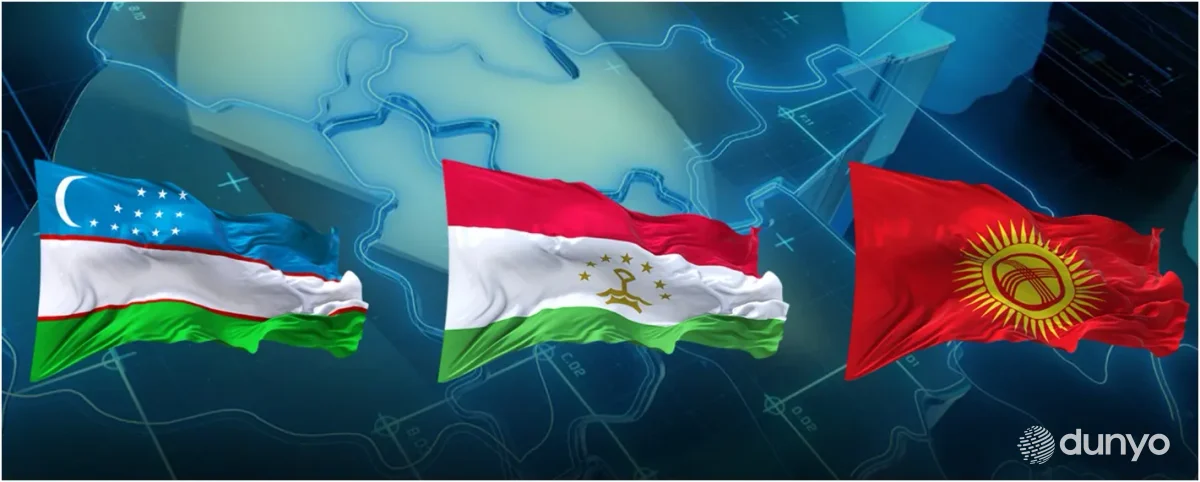
TASHKENT, March 31. /"Dunyo" IA/. Today President of Uzbekistan Shavkat Mirziyoyev will hold a trilateral meeting with President of Kyrgyzstan Sadyr Zhaparov and President of Tajikistan Emomali Rakhmon in Khujand (Tajikistan), "Dunyo" information agency's correspondent reports.

This meeting will mark the completion of the process of delimitation of state borders between the three states. In honor of this, a "Friendship Stella" is expected to be erected at the junction point of the state borders of the three neighboring republics, which will become a symbol of strong friendship, good-neighborliness and harmony between Uzbekistan, Kyrgyzstan and Tajikistan.
The junction point of the state borders is located at the adjacent section of Uzbekistan district of Fergana province (Uzbekistan), Batken district of Batken province (Kyrgyzstan) and Isfara district of Sughd province (Tajikistan).
Tripartite negotiations on the junction point of the borders of Uzbekistan, Kyrgyzstan and Tajikistan were initiated in 2007. Taking into account the agreements at the highest level, reached on December 25, 2024 in St. Petersburg, on January 8, 2025, the heads of government of Uzbekistan, Kyrgyzstan and Tajikistan met in the proposed area of the junction point of the borders of the three countries. The presentation of the Uzbek side's proposals for the installation of a stella at the junction point of the borders and its sketch was held there. This initiative was supported by all parties.
The forthcoming event will undoubtedly be a milestone in the history of Central Asia, as the issue of borders, which is a fundamental feature of statehood and directly linked to the sovereignty of a country, has remained unresolved since the states of the region gained independence.
Negotiations on border delimitation with neighboring countries began in 2000 and were based on the Alma-Ata Declaration of December 21, 1991, treaties of eternal friendship and other bilateral documents. The documents of national-territorial delimitation of 1924-1928 and subsequent documents adopted at the level of the Councils of Ministers and Supreme Soviets of the republics were taken as the legal basis.
Intensive negotiations were conducted in 2000-2002, resulting in the signing of the following documents:
- Treaty on the Uzbek-Kazakh State Border of November 16, 2001 and Treaty on Certain Sections of the Uzbek-Kazakh State Border of September 9, 2002, which fully delimited the border with Kazakhstan;
- Treaty between the Republic of Uzbekistan and Turkmenistan on the Delimitation of the State Border of September 21, 2000;
- Treaty on the Uzbek-Tajik State Border of October 5, 2002 for a length of 1104 km.
After 2002, negotiations on delimitation of the remaining sections of the Uzbek-Tajik border were virtually frozen.
Meetings at various levels to describe the border with Kyrgyzstan in 2000-2016 also failed to yield concrete results.
Open and transparent new policy of the Republic of Uzbekistan after 2016, creation of an atmosphere of trust and good-neighborliness in the region allowed the parties to make political decisions to intensify the negotiation process with all neighboring countries.
In the Strategy of Actions for the Development of Uzbekistan in 2017-2021, the issue of international legal formalization of the border was reflected as one of the priority directions in the sphere of state building.
The negotiation process with neighboring countries was built on the basis of the main principles - strict consideration of mutual interests, deeply considered reasonable compromise and equivalent exchange of land plots.
Thanks to the radical change of Uzbekistan's regional policy towards openness, political will of President Shavkat Mirziyoyev, the Treaty on the Uzbek-Kyrgyz State Border of September 5, 2017 for the length of 1170.5 km and the Treaty between the Republic of Uzbekistan and the Kyrgyz Republic on Certain Sections of the Uzbek-Kyrgyz State Border of November 3, 2022 were signed. The total length of the delimited border was 1,476 kilometers. Since February 2023, the parties have started negotiations on border demarcation.
The strong impetus given in 2016 to the negotiation process, the policy of friendship and good-neighborliness, and the launched trustful dialogue also made it possible to resolve the issues on the remaining undemarcated three sections of the 192.3 km long Uzbek-Tajik border. As a result, on March 9, 2018, the Treaty on Certain Sections of the Uzbek-Tajik Border was signed.
In turn, the work on determining the passage of the border line between Kyrgyzstan and Tajikistan was initiated in 2002. The total length of the Kyrgyz-Tajik border is 1,006.84 kilometers. Border incidents have periodically occurred between the two countries due to the unestablished borders.
The settlement of relations between Kyrgyzstan and Tajikistan was also largely made possible by Uzbekistan's new regional policy. After the delimitation of borders between Uzbekistan and with all neighboring countries, neighbors have become convinced that the resolution of the border issue is a powerful driver for the development of comprehensive and multifaceted cooperation, removes barriers to the establishment of trusting, friendly relations.
On March 13, 2025, during the state visit of the President of Tajikistan Emomali Rahmon to Kyrgyzstan, a bilateral Border Treaty was signed, as well as agreements on water, energy, road and transport infrastructure.
It is expected that during the trilateral summit in Khujand, the leaders will remotely participate in the opening of the "Friendship Stella" at the junction of the state border of Uzbekistan, Kyrgyzstan and Tajikistan, as well as hold negotiations in narrow and extended formats. The cultural part of the program will include exhibitions of folk crafts, national cuisine and costumes, as well as a concert of artists from Uzbekistan, Kyrgyzstan and Tajikistan.
Latest News
See all
Read also
Tashkent to Host Second Meeting of Termez Dialogue on Connectivity Between Central and South Asia on June 4–6