View from Dushanbe: The United States is increasingly taking into account the new regional reality in Central Asia
October 21, 2026. 08:55 • 3 min
• 146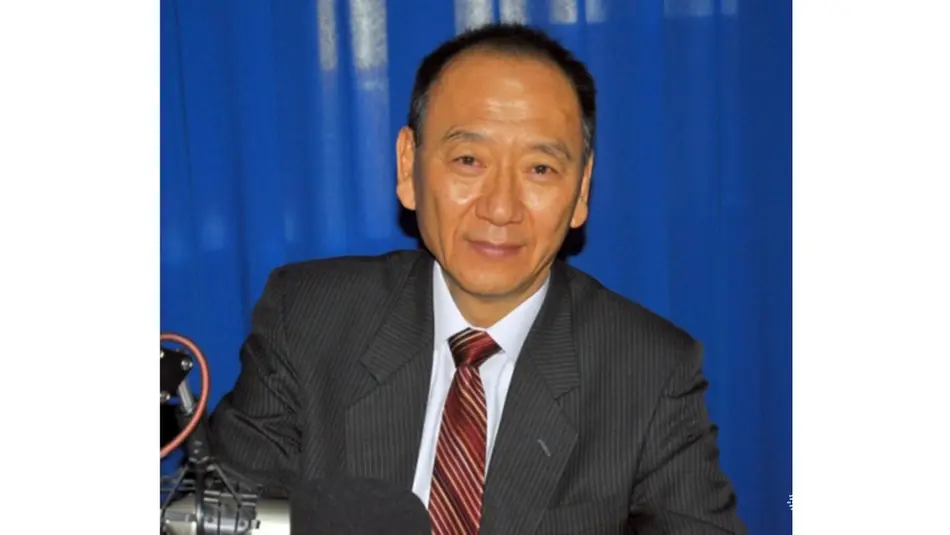
DUSHANBE, October 21. /Dunyo IA/. Viktor Kim, Research Fellow at the Institute of Philosophy, Political Science and Law of the National Academy of Sciences of Tajikistan, commented in an interview with Dunyo IA on the outcomes of the visit of U.S. Secretary of State Marco Rubio to Uzbekistan, which took place on October 18–20th:
- “C5+1” ministerial meeting held in Samarkand with the participation of U.S. Secretary of State Marco Rubio, along with the arrival of a prominent American business delegation in the region, carries historical significance.
In the autumn of 2015, this format emerged against the backdrop of the U.S. military withdrawal from Afghanistan as a limited consultative tool. At that time, Washington viewed the region primarily through the prism of security risks and threats.
Eleven years later, the situation has fundamentally changed. Today, it is not merely a matter of resuming dialogue, but rather the return of the United States to a New Central Asia in a fundamentally new capacity. The narrow anti-terrorism agenda is being replaced by a pragmatic “commercial diplomacy”, reinforced by the genuine interest of American capital.
Arrival in Samarkand of heads of more than two hundred major American corporations demonstrates that Washington views the region not as an unstable periphery, but as a promising trade hub, for whose presence global players compete.
These changes have become possible due to internal transformations within Central Asia. Since 2017, Uzbekistan has emerged as one of the main drivers of regional consolidation. The resolution of long-standing water, border and transport disputes with neighbours, as well as the launch of regular Consultative Meetings of the Heads of State, have transformed Central Asia from a geographical concept into a politically more cohesive region.
Today, the significance of the meeting lies in reinforcing the status of Central Asia as an independent hub of the global geoeconomics. Against the backdrop of geopolitical instability, the region is becoming a vital bridge between East and West, North and South. The United States seeks to participate in the formation of new logistical chains and to ensure access to critical minerals, technologies and energy resources.
A special role in this process belongs to Uzbekistan. The selection of Samarkand as the venue for high-level negotiations confirms the country's significance as a diplomatic and logistical center of the region. Due to its substantial demographic potential and shared borders with all Central Asian nations and Afghanistan, Uzbekistan possesses favourable conditions for hosting major international investment and production hubs.
Thus, “C5+1” meeting in Samarkand in 2026 could become a major milestone in relations between the United States and Central Asia. Washington increasingly takes into account the new regional reality, in which Central Asia is strengthening its independence, while Uzbekistan plays a significant role in advancing cooperation and economic integration across Eurasia.

Latest News


See all
Read also
View from Dushanbe: Uzbekistan serves as the connecting link of this new Eurasia
View from Japan: Initiatives of Uzbekistan put forward at the CICA Summit will contribute to the further development of cooperation in Asia