Uzbekistan and Kazakhstan: New opportunities to align Strategic Agendas and Deepen Allied Relations
November 07, 2026. 16:30 • 5 min
• 125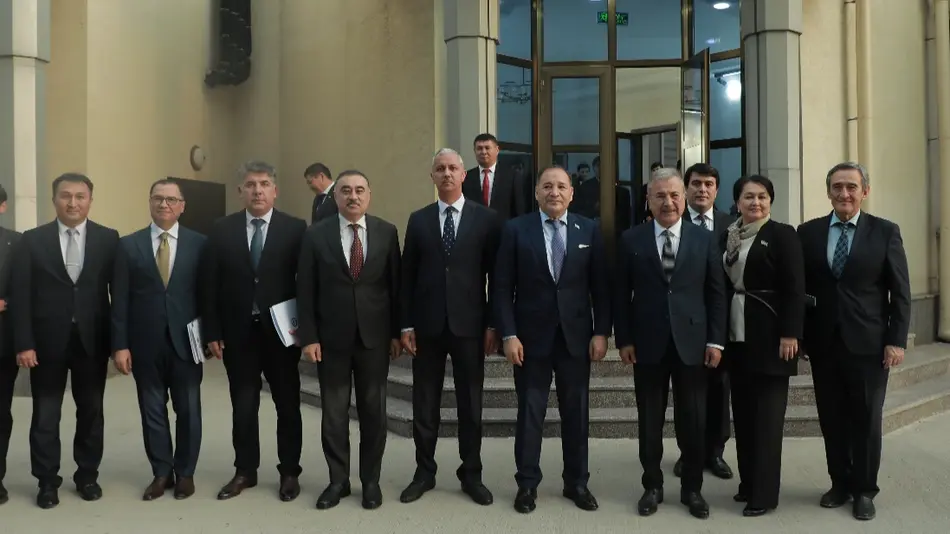
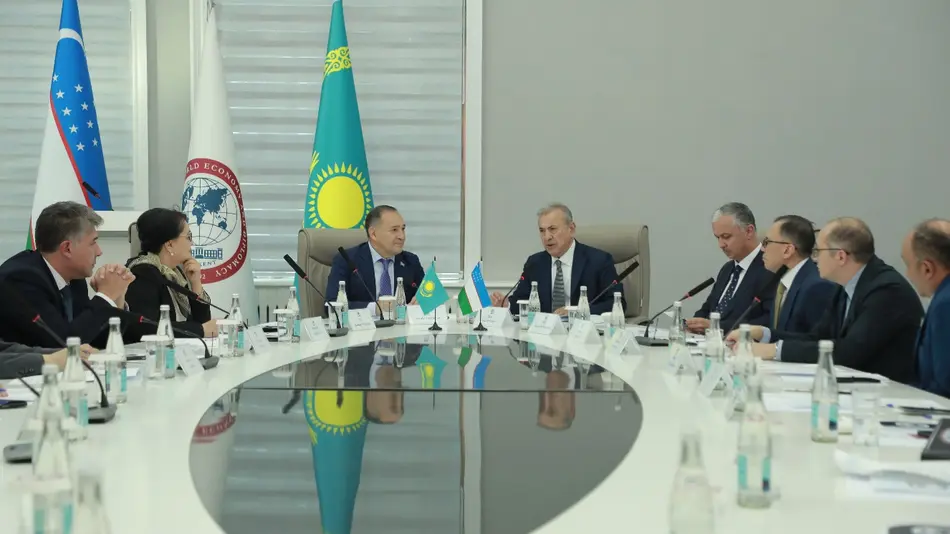
TASHKENT, November 7. /Dunyo IA/. A series of expert meetings and discussions was held in Tashkent to analyse the Address to the People of Kazakhstan delivered by President Kassym-Jomart Tokayev on October 28th 2026, titled “Current Challenges Facing Kazakhstan in a New Historical Cycle”, identify its key political and socio-economic priorities, and explore prospects for further developing cooperation between Uzbekistan and Kazakhstan, reports Dunyo IA correspondent.
In particular, meetings were held at the International Institute for Central Asia (IICA) and the University of World Economy and Diplomacy (UWED), bringing together representatives of expert and analytical circles, academic community, scholars, researchers, political scientists, parliamentarians and diplomats.
Events, organized jointly with the Embassy of Kazakhstan in Uzbekistan, were also attended by the leadership and experts of the Institute for Strategic and Regional Studies under the President of Uzbekistan (ISRS), who presented their assessments of the main provisions of the Address and their significance for further deepening bilateral and regional cooperation.
Participants focused on Kazakhstan’s political and economic modernization priorities, prospects for implementing the strategic objectives outlined in the Address and opportunities to align the national development programs of Uzbekistan and Kazakhstan.
During the discussions, it was noted that President Kassym-Jomart Tokayev’s Address represents an important political event, setting Kazakhstan’s strategic priorities for a new stage of development. It reflects a shift from large-scale institutional renewal towards the consistent implementation of practical objectives in economic, technological and social modernisation.
Particular attention was paid to the alignment between the priorities outlined in the Address and the reform agenda being implemented in Uzbekistan under the leadership of President Shavkat Mirziyoyev.
Participants stressed that both countries are consistently pursuing the development of modern, competitive and technologically advanced economies, large-scale infrastructure renewal, industrial and energy development, stronger transport and logistics links, digitalisation and improvements in human capital.
In this context, it was noted that the similarity of the two countries’ strategic approaches creates additional opportunities to align their modernisation agendas, pool investment and technological resources and establish new regional value chains.
Speaking at the events, First Deputy Director of the ISRS Akramjon Ne'matov emphasized the strategic significance of the Address and its fundamental alignment with the course of large-scale transformations being carried out in Uzbekistan.
According to him, Kazakhstan and Uzbekistan face largely similar challenges: ensuring sustainable economic growth, accelerating industrial and technological modernization, developing infrastructure and increasing economic productivity.
Priorities outlined by the President of Kazakhstan - energy, transport, industrial cooperation, critical minerals, artificial intelligence and human capital - form an interconnected long-term development agenda and offer broad opportunities for deeper cooperation between Uzbekistan and Kazakhstan.
“For Uzbekistan, what is of particular interest is not only the content of individual initiatives but also the overall logic of the transformation process. Kazakhstan’s strategic priorities largely coincide with those of the Uzbekistan–2030 Strategy. This creates favourable conditions for moving from the parallel implementation of national programms towards their practical alignment”, Akramjon Ne'matov noted.
He identified several promising areas of cooperation, including expanding industrial ties, developing joint transport, logistics and production chains, cooperation in critical minerals, energy and water resources, and combining efforts in artificial intelligence, digital technologies and engineering education.
Particular emphasis was placed on the need to move beyond the development of individual transport routes towards the creation of fully fledged economic corridors, along which new production facilities, logistics centres, processing enterprises and service infrastructure could be established.
Among the practical proposals put forward was the development of a joint roadmap to align the modernization programs of Kazakhstan and Uzbekistan through 2030, identifying priority projects of mutual economic interest.
Participants also proposed making greater use of the potential of the Central Asia International Industrial Cooperation Centre to establish sustainable production chains, expand links between enterprises and attract new investment.
Importance of coordinating approaches to water and energy security, localising the processing of critical minerals, and implementing joint technology and education projects was also highlighted.
Participants in the discussions noted that these areas are consistent with the shared vision of the leaders of both countries, aimed at deepening Central Asia’s economic interconnectedness, expanding industrial cooperation and creating new centers of regional growth.
In this regard, the allied nature of relations between Uzbekistan and Kazakhstan is of particular importance, underpinned by a high level of political trust, an extensive legal framework and sustained dialogue at the highest level.
Consistent development of cooperation between the two countries creates favourable conditions not only for implementing bilateral initiatives but also for advancing projects across the wider region.
Participants broadly agreed that aligning the modernization agendas of Uzbekistan and Kazakhstan could become one of the key factors in strengthening Central Asia’s economic resilience and enhancing its international competitiveness.
Implementation of joint initiatives would help expand the regional market, develop additional production and technological capabilities, attract investment, create new jobs and improve the well-being of the population.
At the same time, benefits of deeper cooperation between Uzbekistan and Kazakhstan would extend beyond bilateral relations, creating additional opportunities for all Central Asian countries and strengthening the region’s position in global economic and production chains.
Discussions confirmed the mutual interest of expert, analytical and academic communities in Uzbekistan and Kazakhstan in further developing substantive dialogue, exchanging assessments of strategic priorities and formulating practical proposals aimed at strengthening allied relations and promoting sustainable development in Central Asia.

Latest News


See all
Read also
IICA: Next Decade could mark a new era of economic cooperation in Central Asia

Joint Industrial Projects and Investment Opportunities in Central Asia discussed in Bishkek
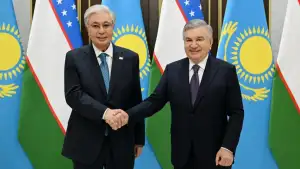
Akramjon Nematov: Modernization agendas of Kazakhstan and Uzbekistan - Foundation for Sustainable Development in Central Asia