Ursula von der Leyen: We highly appreciate Uzbekistan's role in closer regional cooperation within Central Asia
September 01, 2026. 16:30 • 7 min
• 1083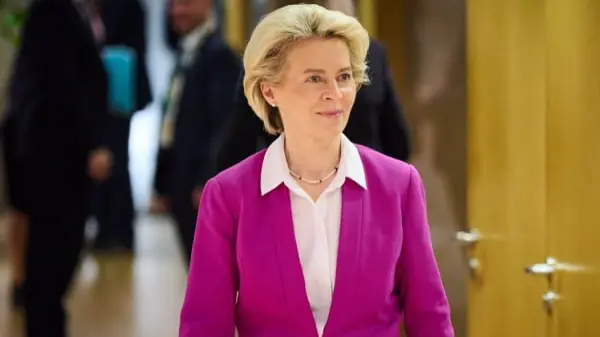
BRUSSELS, September 1. /Dunyo IA/. Ahead of Uzbekistan’s Independence Day, President of the European Commission Ursula von der Leyen gave an interview to Dunyо Information Agency.
This year, Uzbekistan celebrates the 35th anniversary of its independence. Over the past decades, the country has undergone a profound process of development. In your view, what have been the country’s most significant achievements, and what distinguishes its current stage of development?
— Uzbekistan has undergone a profound transformation, particularly since 2016. The country has opened up economically and internationally, undertaken reforms and strengthened cooperation with its neighbours and international partners.
Uzbekistan has also played a key role in bringing the countries of Central Asia closer together. This renewed regional cooperation is one of the most important developments of recent years.
All this has been welcomed and supported by the EU. Economic liberalization, improved conditions for private enterprise, stronger international trade and investment links, as well as progress in labour rights, have brought real results. International financial institutions have recognized the scale of the country’s economic transformation and the significant reduction in poverty.
Today, Uzbekistan continues on its modernisation path while strengthening regional ties and expanding its relations with the wider world. Keeping up this determination on reforms, including on the rule of law, human rights and good governance, is important both for Uzbekistan's citizens and for attracting investment.
We live in a period of geopolitical turbulence. We are witnessing emerging security threats and serious challenges to the rules-based international order.
These new realities bring new challenges. To address them effectively, we need to strengthen relations and deepen cooperation with our partners, including Uzbekistan.
Cooperation between Uzbekistan and the European Union covers a wide range of areas. Which joint projects and areas of collaboration would you consider as the most successful?
— Our relations have become deeper in recent years, and I am confident they will develop even further in the years to come.
The signing of the Enhanced Partnership and Cooperation Agreement (EPCA) in October 2025 during President Shavkat Mirziyoyev’s historic visit to Brussels was a major milestone. The agreement provides a framework for us to work together in a mutually beneficial way. It opens up opportunities across many areas - political dialogue, trade and investment, connectivity, sustainable development, research and innovation, education, environment and climate.
Let me focus on trade, as a particularly important point. We strongly support Uzbekistan’s accession to the World Trade Organization. The conclusion of our bilateral market-access negotiations was an important step in this process.
Uzbekistan also benefits from the removal of import taxes under the Generalised Scheme of Preferences Plus (GSP+), which boost our bilateral trade while also contributing to improvements in human rights, environmental protection, labour rights and good governance.
We have moved quickly in our strategic partnership on critical raw materials. This cooperation can contribute to more secure and stable, as well as technologically advanced, supply chains for both sides. It also supports the development of raw-material value chains within Uzbekistan.
The country also plays a pivotal role in the development of the Trans-Caspian Transport Corridor, which is an important link between Central Asia and Europe, as well as a vital network for regional trade.
We now need to make full use of the opportunities offered by the EPCA and translate our partnership into concrete projects, investments and new opportunities for citizens.
One of the key priorities of Uzbekistan’s foreign policy is strengthening good-neighbourly relations and promoting regional cooperation in Central Asia. To what extent do you believe this approach helps to address today’s global challenges?
— We highly appreciate Uzbekistan's role in closer regional cooperation within Central Asia. The progress achieved in recent years is significant.
At the first Central Asia–European Union Summit in Samarkand in April 2025, we established a strategic partnership with Central Asia based on common values and interests, as well as a commitment to peace, security, sustainable development and international law.
This is particularly important because many of today’s challenges are also regional in nature: sustainable management of water and energy resources, connectivity, climate change, border management, security and economic development.
Uzbekistan attaches particular importance to sustainable development, economic modernization, attracting investment, digital transformation, innovation, education, science and human capital development. What opportunities do you see for expanding cooperation in these areas in the coming years?
— The areas mentioned are central to our cooperation and offer significant potential for the years ahead. The EU is a reliable and long-term partner. We are committed to strengthening our ties and deepening economic cooperation based on shared interests and values.
Our partnership goes beyond dialogue. Through initiatives such as Global Gateway and Team Europe, as well as our growing portfolio of joint projects, we are backing our commitments and shared ambitions with concrete investments and support that will deliver for citizens and businesses.
Global Gateway investments are designed to support long-term sustainable development and economic resilience. We are deepening cooperation in sustainable transport and digital connectivity, critical raw materials, water resources and energy. Our Global Gateway package for these sectors amounts to 12 billion euros.
In 2024, the first Investors Forum for EU-Central Asia Transport Connectivity announced commitments of 10 billion euros for the development of the Trans-Caspian Transport Corridor. By the end of 2025, around 2.5 billion euros had already been committed to concrete projects, as announced at the second Trans-Caspian Transport Corridor and Connectivity Investors Forum in Tashkent in November of the same year.
Our cooperation on critical raw materials supports local value creation, promotion of technological development and building more resilient supply chains. At the Central Asia–EU Summit in Samarkand, a pipeline of critical raw materials projects worth 2.5 billion euros was announced as part of the Global Gateway Investment Package.
Under the Team Europe Initiative on water, energy and climate in Central Asia, the total value of projects in these fields now stands at around 4.8 billion euros. EU-supported projects include, for instance, a drinking water programme in the Tashkent, Kashkadarya and Fergana regions, as well as the Sarimay solar power plant.
We are also investing in digital connectivity through the C4CA programme, a 20-million-euro regional initiative to support ICT policy, regulation and capacity building, as well as 60 million euros in infrastructure investment to deploy satellite connectivity in unserved or under-served regions.
Digital connectivity is particularly important. Secure and reliable infrastructure can connect remote communities, schools, hospitals and public services and support the development of a modern economy.
Equally important are education, research and innovation. We are committed to deepening cooperation through programmes such as Erasmus+ and Horizon Europe, as well as to promote links between educational and research institutions. Investing in knowledge, skills and human capital will be essential to Uzbekistan’s long-term competitiveness.
Looking ahead, how do you envision Uzbekistan over the next 10–15 years? What factors, in your view, will be most important in further strengthening the country’s international standing?
— Uzbekistan can play an increasingly important role in connecting Central Asia with Europe and other markets through modern transport, energy and digital networks. Most importantly, the foundations for this are already being laid.
Continued economic reforms, greater integration into international trade, stronger private-sector development and accession to the WTO can support further growth and diversification.
At the same time, the country has significant opportunities to develop new technologies, modernize industry and build professional skills. Investment in education, science, innovation and young people will be essential to turn those opportunities into lasting prosperity.

Latest News

See all
Read also
Won Do Yeon: The state visit of the President of Uzbekistan to the Republic of Korea is of special significance
Hassan Ibrahim: Global Conference of Young Parliamentarians in Samarkand was highly successful