Aleksander Kwaśniewski: The past decade has been successful and laid a strong foundation for the future of Uzbekistan
September 19, 2026. 09:10 • 11 min
• 77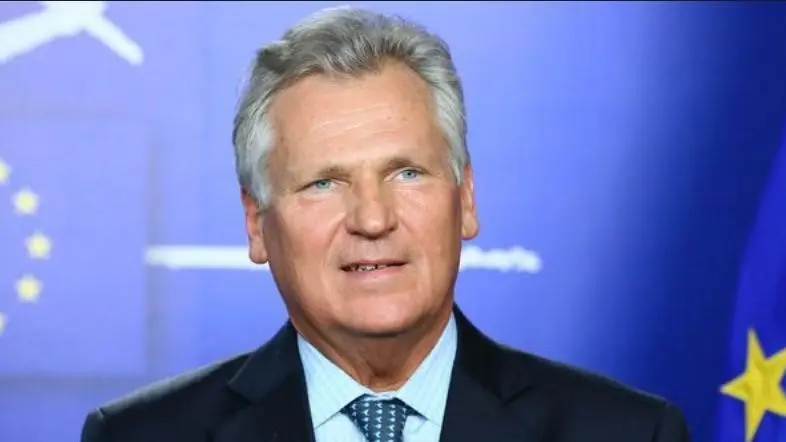
WARSAW, September 19. /Dunyo IA/. Founder and Chairman of the Board of the “Amicus Europae” Foundation, Former President of Poland Aleksander Kwaśniewski, answered questions from a Dunyo IA correspondent on the eve of the 10th anniversary of the start of large-scale reforms in Uzbekistan.
– This year marks 10 years since the launch of wide-ranging reforms in New Uzbekistan. How do you assess the changes that have taken place over this decade? Which reforms and transformations in the country's life do you consider the most significant?
– These changes are truly impressive. Reforms are being carried out on a very large scale. At the same time, they take place during a difficult period in the world, especially from the standpoint of the geopolitical situation.
Despite such a complex situation, the determination of the President and the leadership of Uzbekistan to consistently pursue reforms deserves high respect.
Adoption of the new Constitution by New Uzbekistan was a very important event. It has created a solid legal foundation for implementing numerous reforms and projects. In my view, the new Constitution helps increase social engagement by providing citizens with greater opportunities to influence their lives and the country's economic activity.
In such a challenging environment, Uzbekistan pursues a highly prudent and balanced foreign policy. In particular, good relations have been established with Russia and China, while ties with the Republic of Korea, European Union member states and Global South countries, including India and other nations, are being consistently developed.
Uzbekistan pursues an active policy in Central Asia and is one of the leading nations making a significant contribution to ensuring stability and security in the region.
I believe that currently, Uzbekistan is also paying serious attention to properly guiding and effectively utilizing one of its main potentials - capabilities of the younger generation.
Uzbek society is one of the youngest in the world. However, young people have their specific needs. These include issues of quality education, schools, jobs, housing, family, and children. Naturally, all of this encompasses a very wide range of tasks.
At the same time, I see that the policy of Uzbekistan's leadership in this direction is highly active. Today, the youth represent the greatest capital of your country.
– One of the key directions of the reforms has been the formation of a more open, investor-friendly economy that is deeply integrated into the global economy. To what extent do you believe the implemented transformations have contributed to increasing the confidence of the international community, investors and foreign partners in Uzbekistan?
– I have participated in several economic forums organized in Uzbekistan. The opinions expressed and the discussions held there are of great importance. This is because to build confidence in a country, one must first be sure that the state is effectively managed, secure, fulfills its obligations and that the legal system is not subject to constant changes. Only then can an entrepreneur or a foreign investor plan their activities for the long term.
Furthermore, Uzbekistan possesses vast potential in agriculture, tourism, and other economic sectors. Some of the fruits and vegetables grown in Uzbekistan are truly among the highest-quality and most remarkable products in the world.
Active engagement of your country in fields that define today's modern global economy is also highly crucial. In particular, focus must be placed on digital technologies, “green” economy and addressing environmental issues.
Another important direction that I have been observing for quite some time now is the smart development of tourism and tourism infrastructure.
The number of tourists is constantly growing, and direct flights are of great importance in this regard. I am glad that a direct flight exists from Warsaw to Tashkent. Such opportunities not only promote the development of tourism but also make a great contribution to helping people understand each other better.
In my view, the work that President Shavkat Mirziyoyev and his team have been carrying out in recent years represents very consistent steps in the right direction. They demonstrate Uzbekistan's firm commitment to the chosen path.
– Today, Uzbekistan is actively promoting initiatives in areas such as sustainable development, “green” economy, digital transformation, science, education and human capital development. What opportunities do you see for further expanding cooperation in these fields in the coming years?
– You have listed practically all the main areas. It is precisely in these sectors that active steps must be taken.
On one hand, this requires training people and providing them with a modern education. Today, having a high-quality and up-to-date education is essential to meet all the challenges associated with digital technologies, Artificial Intelligence (AI) and other modern fields.
It is very good that many young Uzbek people are receiving education both within the country and abroad. It is extremely important that they subsequently return to Uzbekistan. It is these young people who must form the core pillar capable of effectively managing and developing new industries.
Uzbekistan has the necessary conditions for this. Speaking of the “green” economy, I will say bluntly: a country with such a large number of sunny days a year possesses far more favourable opportunities compared to many other nations. Therefore, serious attention must be paid to solar energy, photovoltaic technologies and other areas of “green” energy.
On the other hand, there are serious challenges in Uzbekistan related to water resources. Here, too, it is necessary to find solutions that will allow for more efficient land irrigation and rational use of available water resources.
At the same time, it is necessary to reach agreements with neighbouring states on matters of accumulation, management, and distribution of water resources. Water should not be a source of conflict, but rather a shared resource that serves to improve people's lives.
In my view, another highly important direction for Uzbekistan is providing people with the opportunity to take initiative. There must be a serious reliance on small and medium-sized enterprises (SMEs), as well as family businesses.
Based on my personal trips to your country, I have a strong impression that the Uzbek people are highly enterprising. People are not afraid to take risks and strive to freely fulfill their potential in various fields, such as small business, minor manufacturing and trade. I would develop this direction very seriously. I can also speak on this based on Poland's experience, as small and medium-sized enterprises played a vital role in the development of the Polish economy.
– Uzbekistan is also asserting itself more and more actively on the international stage. In the course of the reforms over the past decade, our republic has put forward a number of initiatives of international and regional significance. Which of these initiatives, in your view, carry the greatest long-term significance not only for our country, but also for Central Asia and the international community?
– I consider these initiatives concerning Central Asia to be highly important. Today, the world is far more unstable than it was before. Under these conditions, it is extremely vital that, thanks to Uzbekistan’s positive role, its striving for cooperation and its ability to reach agreements on complex issues, Central Asia remains a stable region.
This is particularly important because we are talking about a large and complex region that directly borders Afghanistan. At the same time, I highly appreciate the work being done by Uzbekistan. Separately, I would like to note Uzbekistan’s good relations with Kazakhstan and other neighbouring states of Central Asia. We observe this with respect as a factor contributing to the stabilization of a rather volatile and tense international situation in the world, as I have repeatedly stated.
I also believe that Uzbekistan’s balanced and stable foreign policy is the right direction. You strive to maintain relations with all key global players, and this is a prudent policy.
Russia, China, and the United States of America are important partners for official Tashkent. The agreements signed with the European Union are also a very good signal. Therefore, speaking of a balanced, stable, and long-term foreign policy, I can note that Uzbekistan is making the right steps.
– What aspects of Uzbekistan's reform experience, in your view, could be of interest to other nations?
– This is a very broad question. First and foremost, the very decision to initiate reforms - meaning not to fear them - is crucial. In many cases, the primary issue stems from the apprehensions of politicians who wonder: “If we start reforms, what will the outcome be?”.
It is essential to correctly understand existing challenges. Uzbekistan understands these challenges correctly.
In a young society, it is necessary to create more jobs and provide high-quality education. It is imperative to move forward in this direction. The world and the global economy are changing. Therefore, developing modern industries is vital.
This means developing ecological and digital solutions, and transforming traditional agricultural products into more competitive products with high added value. As I have mentioned before, it is essential to effectively utilize human potential. That is, to develop small and medium-sized enterprises.
For this process to be effective, bureaucracy must be reduced. This is because I still get the impression that bureaucracy remains one of the main problems facing the country.
Furthermore, it is necessary to maintain good relations in the region and with neighbouring states. Many positive examples can be drawn from Uzbekistan's experience. Of course, one must understand that each country has its own specifics. In many cases, it is impossible to mechanically transfer the experience of one country to another.
However, no matter how you look at it, today's Uzbekistan is a unique laboratory. It is worth observing, learning from, visiting the country and utilizing the various positive experiences you are accumulating.
– We observe that the interest of Polish companies in Uzbekistan has grown significantly in recent years. This is particularly evident in sectors such as energy, industry, infrastructure and modern technologies. Which areas of economic cooperation between Uzbekistan and Poland, in your view, possess the greatest untapped potential?
– I believe that bilateral relations have been developing successfully in recent years, as interest in Uzbekistan continues to grow. However, I look with great optimism, for instance, at the prospects of cooperation in environmental solutions. Specifically, crucial areas include the restoration of ecologically damaged territories, such as the Aral Sea region, more efficient water resource management in agriculture and the development of irrigation and land reclamation systems.
Poland possesses extensive experience in infrastructure construction. In recent years, our country has actively built roads and highways. Therefore, in my view, Polish enterprises could also actively participate in various infrastructure projects being implemented in Uzbekistan.
Poland is also actively developing its pharmaceutical industry. This could become another important direction for bilateral cooperation. Given that Poland's population is nearly 40 million people, developing ties in the tourism sector also seems promising. At the same time, Uzbekistan is still not well-known enough to many Poles. Now that there is a direct flight from Warsaw to Uzbekistan, the travel time is short. A trip lasting a week or ten days, with visits to Tashkent, Samarkand, Bukhara and Khiva, leaves an immense impression on a person.
I know that every Pole who has visited Uzbekistan returns with very good impressions of the country and a desire to come back. I am optimistic about this direction.
Furthermore, I know that certain reforms and governance solutions implemented in Poland are also of interest to the Uzbek side. For instance, we have hosted delegations that showed great interest in the Polish experience of decentralizing state administration. We can share our experience in this area.
Both Poland and Uzbekistan have traveled the path of transition from a centralized communist economy to a market economy. Therefore, in my view, we still have a lot to offer each other in terms of ideas, projects and approaches.
In this regard, I strongly support the most active possible development of intergovernmental ties, as well as dialogue at the presidential level.
– In conclusion of our conversation, what wish or message would you like to address to the leadership and people of Uzbekistan on the occasion of the 10th anniversary of the launch of the New Uzbekistan reforms?
– Uzbekistan is on the right track. The last 10 years have been successful and have built a solid foundation for a bright future. Now it is necessary to continue on this path, show determination and maintain a broad perspective on everything happening in today’s complex international environment.
I would like to note that when we initiated large-scale reforms in Poland in the mid-1990s, the international environment was relatively stable and favorable. Today, the situation on the international stage is completely different.
Therefore, I wish Uzbekistan, President of Uzbekistan Shavkat Mirziyoyev and the Uzbek people patience, determination and a deep confidence that you are capable of handling these tasks and possess sufficient strength and potential to do so.
I am convinced that if Uzbekistan continues to follow this path, it will become not only one of the influential states in Central Asia, but also a very important, influential and respected country in the world.
Therefore, keep moving forward along this path!

Latest News
See all
Read also