Up to 300 Million People Could Be Displaced by Rising Sea Levels
September 22, 2026. 17:00 • 3 min
• 40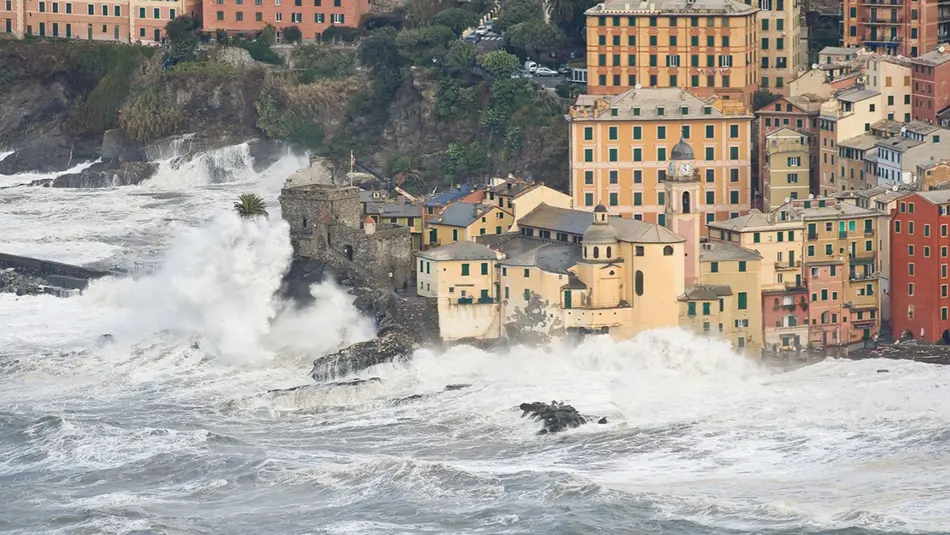
NEW YORK, September 22. /Dunyo IA/. Rising sea levels could force between 150 million and 300 million people to leave their homes by the end of the century, while another 500 million could lose access to freshwater and agricultural land, reports Dunyo IA correspondent.
Andrew Harper, Special Advisor on Climate Action to the United Nations High Commissioner for Refugees (UNHCR), said this in an interview with “UN News.”
According to him, sea levels are already rising, with some Pacific island states experiencing rates twice the global average despite their minimal contribution to global emissions.
In Bangladesh, for example, rising seas are causing the salinization of soil and freshwater sources, threatening agriculture and food security. The ability to adapt largely depends on available resources: some residents can reinforce land and raise houses on stilts, while others lack the means to do so and are forced to leave.
“People will try to adapt... But those who cannot afford to do so will be forced to leave,” the expert said.
Measures to protect vulnerable areas include restoring mangrove forests, strengthening coastlines, improving drainage systems, developing early-warning systems and preventing further settlement in areas at risk of flooding.
However, displacement cannot be completely avoided. Its scale is difficult to determine precisely because decisions to leave are influenced by a combination of flooding, saltwater intrusion, crop losses, as well as economic and social pressures.
Andrew Harper said most displaced people are likely to remain within their own countries, moving from coastal and rural areas to cities in search of housing, jobs and essential services. Such an influx could place additional pressure on infrastructure and resources in host communities.
That is why planned relocation needs to begin in advance, helping the most vulnerable people move to safer areas while maintaining their access to livelihoods.
Some mechanisms are already being developed. Under an agreement between Australia and Tuvalu, Australia provides up to 280 Tuvaluan citizens each year with an opportunity to obtain permanent visas and live, work and study in the country. In East Africa, a regional protocol provides for the admission and temporary stay of people crossing borders because of natural disasters and the effects of climate change.
“There is no special international convention on displacement in the context of climate change or sea-level rise. And there probably never will be, because the international community would have to reach a consensus on it,” Harper said.
At the same time, an emerging approach seeks to ensure that states whose territories could become uninhabitable retain their sovereignty, international legal status and rights to maritime zones. This would allow their citizens to maintain a legal connection with their countries.
For island communities, the issue also has a profound cultural dimension, as their homeland is closely tied to their history, traditions and ancestors. Decisions on relocation should therefore be made with the direct participation of the communities affected.
Photo from Euronews.com

Latest News



See all
Read also
The Head of the Presidential Administration of Uzbekistan Met With the UN Secretary-General in New York