Oncology services and palliative care system to be improved in Uzbekistan
June 11, 2026. 18:40 • 4 min
• 121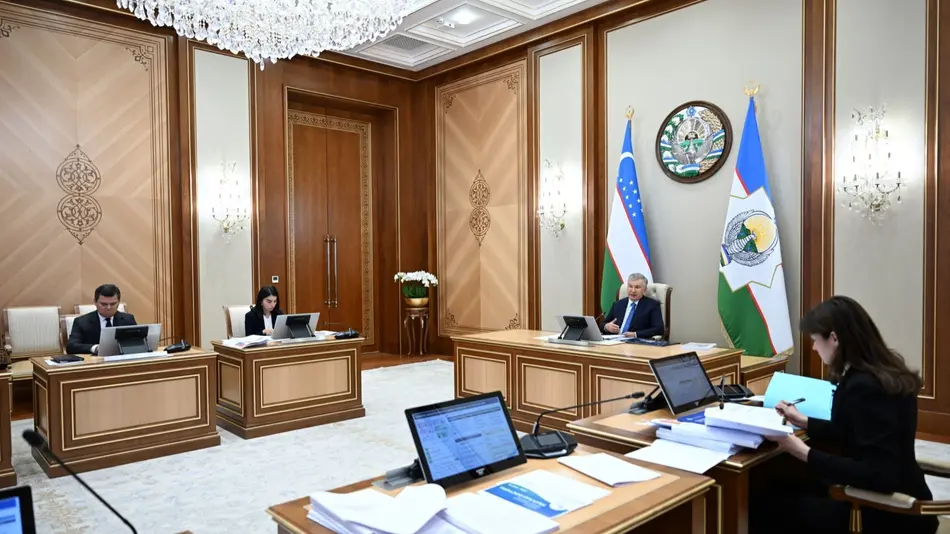
ТАSHKENT, June 11. /Dunyo IA/. Today, President Shavkat Mirziyoyev reviewed a presentation on proposals to enhance the oncological, hematological, and palliative care systems, as well as plans to provide financial support to public healthcare employees, reports Dunyo IA correspondent.
According to the press service of the Head of our State, Uzbekistan is actively working to safeguard public health by focusing on the early detection and treatment of serious illnesses. This includes delivering specialized medical care for patients with cancer, blood disorders, and related conditions, as well as expanding palliative and hospice services.
The presentation covered measures designed to enhance cancer prevention, early detection, and treatment aligned with international standards.
The objective, as noted, is to expand medical screening coverage for the most common cancers to 60 percent within the target population and to improve the five-year survival rate of cancer patients from 35 percent to at least 45 percent.
Starting in 2027, the National Cancer Control Programme, developed with input from the World Health Organization and international experts, will be gradually implemented across the regions.
This program aims to increase cancer awareness among primary healthcare workers. They will receive retraining to recognize early signs of cancer and to refer patients quickly to specialized facilities.
In addition, clinical guidelines based on international recommendations will be adopted. A multidisciplinary team approach will be introduced in oncology, with several specialists involved in determining the diagnosis and treatment strategy for each patient.
Programs for the early diagnosis of the most common types of cancer will be developed and gradually introduced into practice. Fast-track diagnostic pathways are planned to enable patients to undergo examinations and receive a diagnosis within a short period.
Special attention will be given to modernizing radiotherapy services, primarily by gradually replacing old cobalt machines with linear accelerators and expanding access to high-dose-rate brachytherapy.
The development of palliative and hospice care was addressed separately. By 2030, the goal is to expand coverage of these services to at least 80 percent of the population.
Starting September 1, 2026, the country will implement a unified system for palliative and hospice care that integrates medical and social services. This system will handle the identification, referral, registration, and care of individuals needing palliative support through an electronic information platform.
Mobile palliative care teams will be created to deliver medical and social services directly at patients’ homes. Inpatient palliative care will be offered through both public and private medical organizations, including hospices.
Hospice facilities will be gradually established across all regions based on population needs. The Tashkent Interregional Hospice will serve as the primary organization for coordinating palliative and hospice care approaches and assisting in organizing these services across various regions.
Initially, mobile palliative care teams will be established in Tashkent’s Mirzo Ulugbek district to provide palliative and hospice services for cancer patients. In Samarkand region, a hospice-based palliative care center will be created specifically for children with severe and incurable illnesses.
Patients registered in the electronic information system as needing palliative and hospice care will automatically receive disability status following a decision by the medical and social expert commission, without the need for further medical examinations or assessments. Those in need of home care will be supplied with adjustable beds and special mattresses via a voucher system.
Additionally, plans are in place to provide palliative care and home-based nursing and supervision services at the mahalla level. Moreover, a Family Support service will be introduced to assist patients’ family members.
The presentation also covered initiatives to enhance the healthcare system for patients with hematological and oncohematological conditions.
Between 2026 and 2030, the goal is to boost early detection of these diseases from the current 30-40 percent to 60 percent. Additionally, efforts will be made to reduce the time from diagnosis to transplantation from 6 months to 3 months.
The aim is to achieve full coverage of patients with hematological diseases through specialized medical care and to introduce hematopoietic stem cell transplantation in the regions.
The presentation also addressed ways to offer financial aid to medical and pharmaceutical workers in public healthcare. Specifically, it suggested that employees with at least 15 years of service receive reimbursement for a portion of their children’s annual university tuition fees, as well as a portion of the down payment on a mortgage for a home purchase.
The Head of our State approved the proposed measures and issued directives to guarantee their effective execution. These include enhancing access to cancer and blood disorder care across regions and adopting modern diagnostic and treatment technologies.

Latest News



See all
Read also
President of Uzbekistan reviews proposals to introduce a unified management system and support the development of the fishery industry
President of Uzbekistan reviews measures for the developing specialized districts in Samarkand region