President of Uzbekistan Sets Priorities to Turn Kashkadarya’s Potential into Higher Household Incomes and New Jobs
October 22, 2026. 15:15 • 6 min
• 159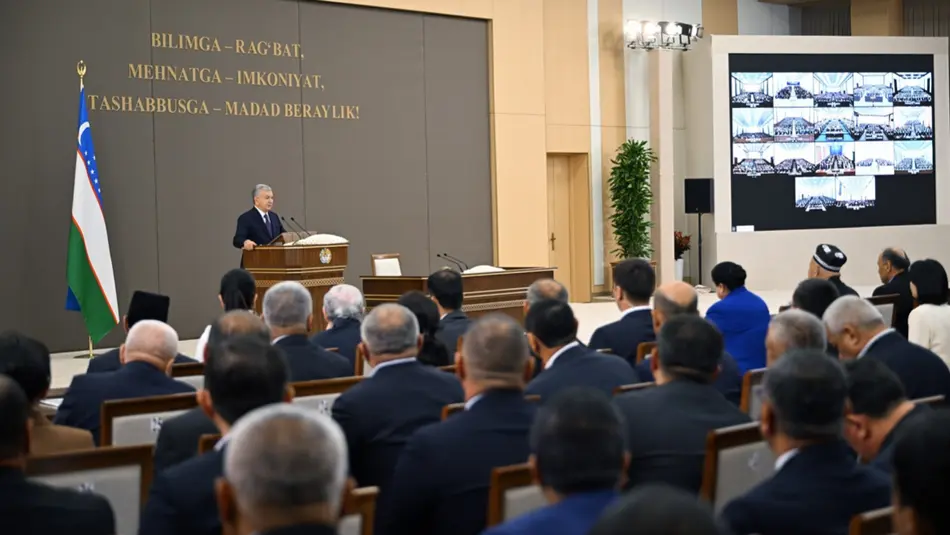
ТАSHKENT, October 22. /Dunyo IA/. Today, President Shavkat Mirziyoyev held a meeting on the socio-economic development of Kashkadarya region, reports Dunyo IA correspondent.
According to the press service of the Head of our State, Leader of Uzbekistan opened the meeting by congratulating participants on Uzbek Language Day. The President paid special tribute to Kashkadarya-born poet Abdulla Oripov, a Hero of Uzbekistan and author of the national anthem, highlighting his significant contribution to the development of the Uzbek language.
“Yesterday, seeing the changes taking place in the region’s cities, districts and mahallas, as well as the enthusiasm of entrepreneurs, investors and young people, gave me tremendous energy”, President said.
Goal is to eliminate poverty and unemployment in Kashkadarya by the end of the year, transforming a region that faced some of the country’s greatest challenges just a few years ago. Over the first nine months of this year, growth has been recorded in industry, the services sector and agriculture. However, it was emphasised that the region’s current economic performance has yet to fully reflect its abundant natural resources and human potential.
Increasing value added in industry is essential to driving Kashkadarya’s economic growth. It was emphasised that the region’s natural gas, electricity and mineral resources should be used to support the production of finished goods. In this context, discussions covered new projects at the gas-to-liquids (GTL) plant, the production of polymers and petrochemical products from naphtha, expansion of the Dehkanabad potash plant’s production capacity, and opportunities to develop small-scale chemical manufacturing. Officials were instructed to prepare a three-year programme covering $20 billion in projects and the creation of 50,000 jobs.
These projects should also foster closer cooperation between major enterprises and local manufacturers. To this end, six industrial clusters will be established across the region, along with new branches of the Kashkadarya Free Economic Zone. An initial 250 billion soums will be allocated to develop their infrastructure. Other priorities include increasing the local content of modern tractors and agricultural machinery, as well as launching the production of agricultural drones.
Industrial growth also depends on a reliable energy supply. Next year, a 300-megawatt solar power plant developed by Masdar, together with energy storage capacity, will become operational in the region. A waste-to-energy project in Karshi district is nearing completion. To deliver additional electricity to consumers, instructions were given to build major substations in Nishon and Kokdala and complete the 245-kilometre Tolimarjon–Sogdiyona transmission line.
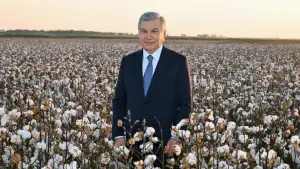
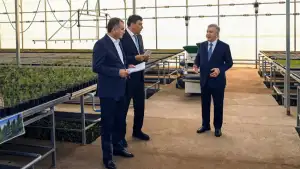
Agriculture was also considered a major source of higher household incomes. The sector alone has the potential to provide additional income opportunities for 200,000 people across the region. In cooperation with the World Bank and drawing on Egypt’s experience, drought-resistant fodder crops will be planted using drones across 100,000 hectares of pastureland in eight districts, alongside the establishment of livestock complexes. In Guzar, 10,000 hectares of land will be brought into productive use and allocated to farmers. Egyptian specialists will also be involved in developing another 30,000 hectares identified through satellite data.
Water infrastructure will be improved to ensure more efficient land use. Given the high cost of supplying irrigation water to agricultural land in Kashkadarya, 265 kilometres of canals will be lined with concrete and 20 pumps upgraded next year. Water-saving technologies will be introduced across 75,000 hectares in cooperation with farmers. The successful experience of constructing small water reservoirs this year will be extended to five additional districts.
Improving access to clean drinking water received particular attention. With the funds already allocated, construction of 747 kilometres of water supply and sewerage networks and 43 facilities will be completed, providing clean drinking water to 200,000 people. A new pipeline from the Hisorak Reservoir to Karshi city and surrounding districts will serve another 350,000 residents. Reconstruction of the Tolimarjon – Muborak water supply system is expected to improve access to water for 700,000 people across five districts.
Road infrastructure projects were also outlined to improve connectivity between communities. In cooperation with the Asian Development Bank, a 100-kilometre section of the A-380 highway passing through the region will be reconstructed. The Karshi ring road will be connected to this highway, while modern overpasses will be built at two railway crossings where passing trains currently cause traffic congestion.
Meeting emphasized that the benefits of major development projects must be felt in every mahalla. In Chim mahalla of Qamashi district, a school, kindergarten, outpatient clinic, youth centre, sports complex and public park have been built. Most importantly, no families remain in poverty, and unemployment has been eliminated in the community. Building on this experience, two modern mahalla centres will be established in each district by Independence Day next year. In Mirishkor, new projects in lemon cultivation, fish farming and horticulture will be launched, while the cultivation of high-value crops on leased land will be expanded.
It was highlighted that banks should not limit their role in implementing these initiatives to offering new lending products. Their performance will be assessed based on the number of businesses receiving financing and the growth of those businesses. Banks were instructed to consider cash flow and confirmed orders when making lending decisions and eliminate unnecessary documentation requirements for entrepreneurs.
Kashkadarya’s natural attractions also offer significant opportunities for job creation in tourism. Since the beginning of the year, the region has welcomed 2.5 million tourists, including 500,000 visitors to the village of Gelon alone. Plans include launching the first phase of a ski resort in Gelon, developing ethnographic tourism in other mountain villages, and expanding rafting and sports tourism in Shahrisabz district. Master plans will be prepared for six villages, paving the way for $50 million in new projects.
Preparing young people for emerging employment opportunities is equally important. At the Advanced Vocational Skills College in Karshi, 32 instructors who received professional training in Germany are now training instructors from 57 vocational colleges across the region. Students at the college can obtain vocational certificates alongside their secondary school qualifications, while German specialists provide language instruction and professional training. Officials were tasked with establishing a clear system of career guidance linking schools with vocational colleges.
Achievements of Kashkadarya’s schoolchildren were also recognised. The Presidential School in Karshi recorded the highest results nationwide in the Cambridge examinations, while the Abdulla Oripov Creative School won the Zakovat intellectual competition. Murodjon Khalimov from Koson achieved the maximum score of 1,600 on the SAT. Starting next year, one school in each district will teach mathematics and science subjects in a foreign language. Robotics clubs will also be established in every district, with an annual championship organised for schoolchildren.
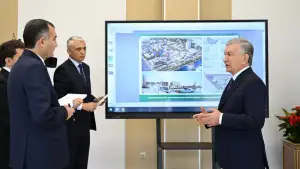
Region’s future growth will require careful long-term urban planning. A new city, Yangi Karshi, designed for 500,000 residents, will be developed at the intersection of Karshi city, Kokdala and Karshi district. The Kohna Nasaf eco-complex will also be established in Karshi district. A master plan will be prepared with the involvement of leading architectural firms, and the new developments will follow green and smart city principles.
In addition, a Kashkadarya model for tree planting and expanding green spaces in mahallas will be introduced. An annual competition for the Greenest Mahalla will be held ahead of the Navruz holiday.
At the conclusion of the meeting, reports from regional and district governors were heard, followed by a dialogue with community representatives.

Latest News


See all