Berlin hosts “roundtable” on Uzbekistan–Germany university cooperation in dual education
June 16, 2026. 11:30 • 4 min
• 114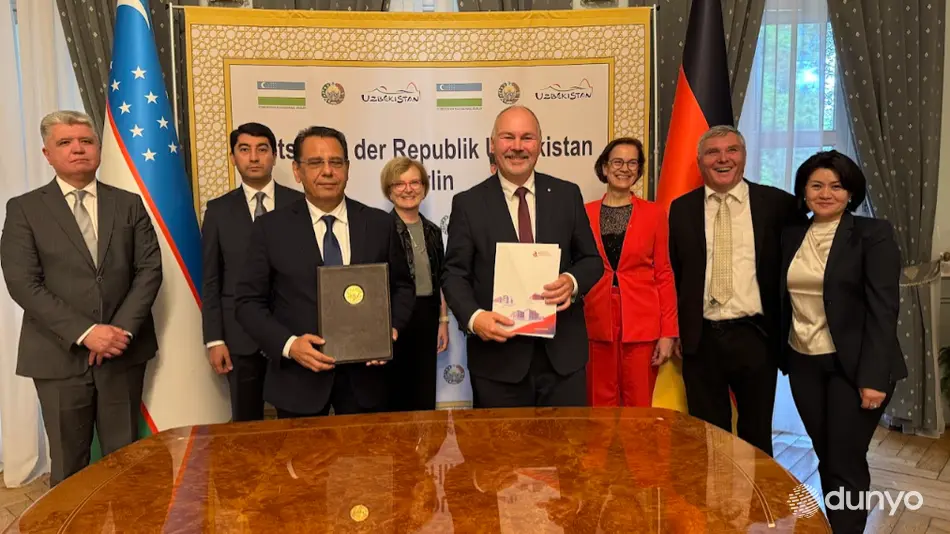
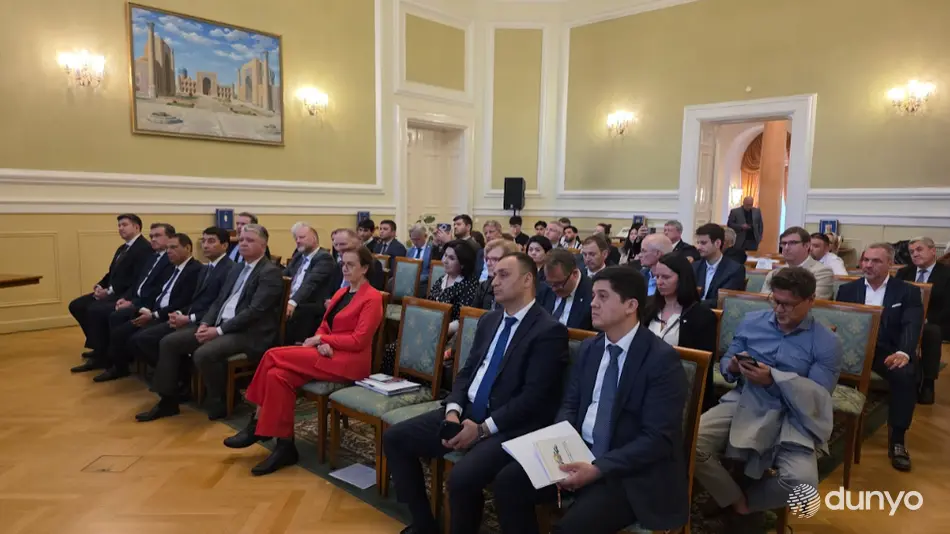
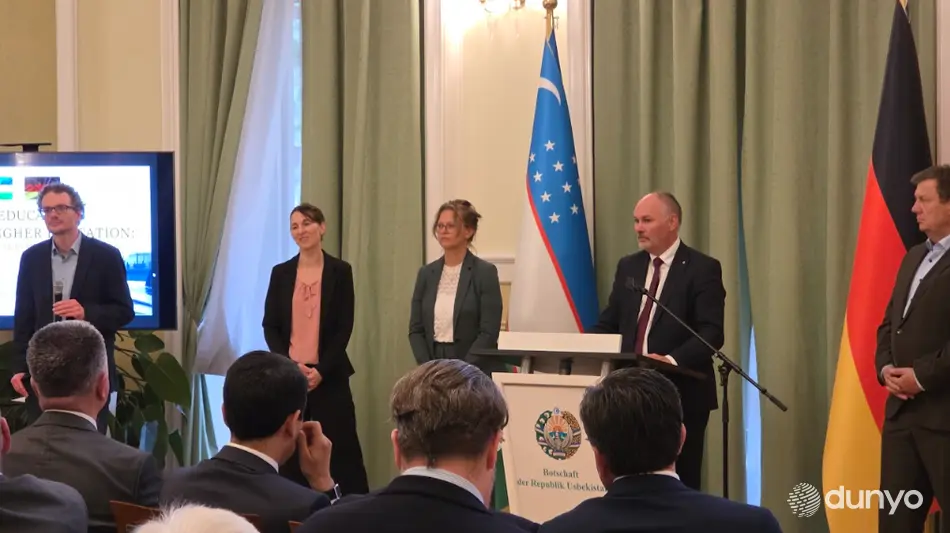
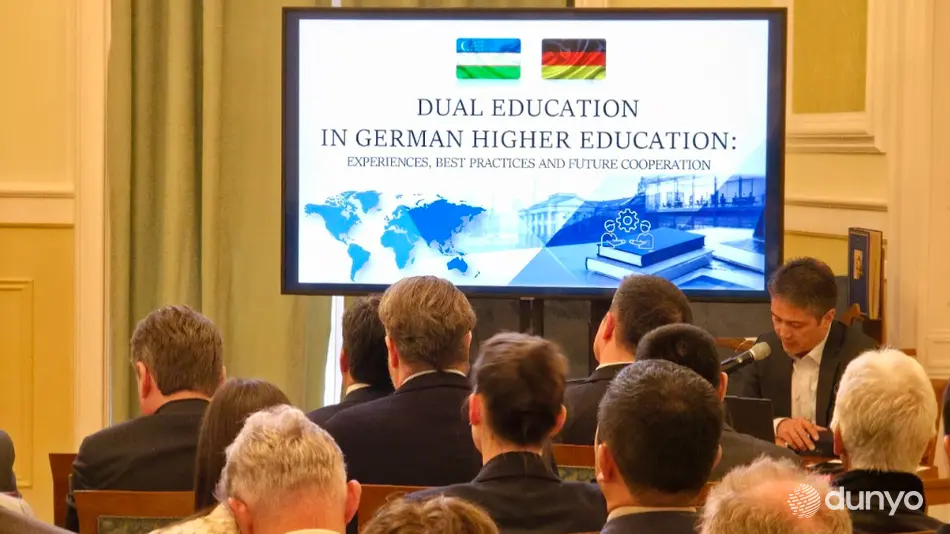
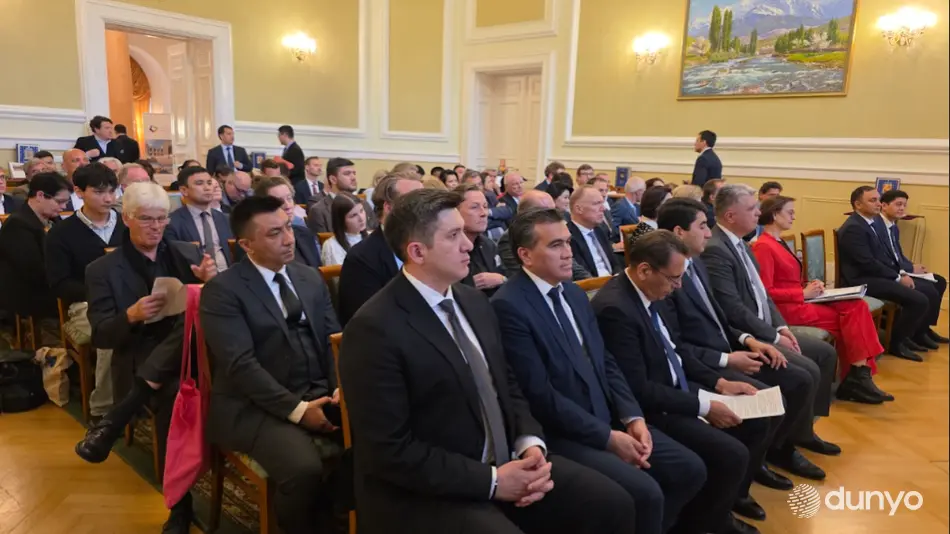
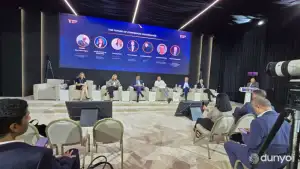
BERLIN, June 16. /Dunyo IA/. Embassy of Uzbekistan in Berlin hosted a “roundtable” entitled “Dual Education in the Higher Education System of Germany: Experience, Best Practices and Prospects for Further Cooperation”, reports Dunyo IA correspondence.
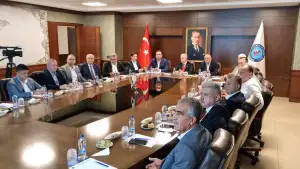
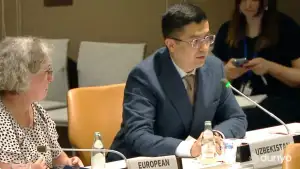
The event, organized upon the initiative of the diplomatic mission, brought together rectors of leading German universities and institutes, heads of research centers, executives of foundations providing higher education grants, and representatives of dual education agencies. The Uzbek side was represented by a high-level delegation led by the Deputy Head of the Administration of the President of Uzbekistan Ilkhom Siradjev and Minister of Higher Education, Science and Innovations Kongratbay Sharipov, which included rectors of domestic higher educational institutions.
“Roundtable”, organized with the assistance of the leadership of the Anhalt University of Applied Sciences, was opened by the Ambassador of Uzbekistan to the Germany Dilshod Akhatov. The speakers emphasized that the new-stage educational reforms implemented in the country, aimed at enhancing the quality of instruction and introducing joint educational programs based on German experience, unlock fresh opportunities for the youth.
In his speech, Minister of Higher Education, Science and Innovations Kongratbay Sharipov, announced that currently, approximately 50,000 young individuals are enrolled in dual education programs across Uzbekistan, with plans to increase this figure to 200,000 by 2030. According to the Minister, the presence of more than 200 German enterprises operating within the country establishes a solid foundation for the successful advancement of this system.
In the course of the round table, the leadership of the German Centre for Higher Education (CHE), the Saxony Cooperative State University of Applied Sciences, alongside representatives from the dual education agencies of the federal states of Berlin and Brandenburg, delivered comprehensive presentations on their institutional experiences and successful models of dual training organization.
Following the event, significant practical results were achieved. In particular, an agreement on the establishment of the German University of Applied Sciences in Uzbekistan was signed between Consortium of Universities of Applied Sciences of Germany and Ministry of Higher Education, Science and Innovations of Uzbekistan. Furthermore, the sides finalized a series of bilateral memorandums aimed at advancing dual education frameworks within the higher education sector.
Professor Markus Krabbes, Rector of the Duale Hochschule Sachsen - Saxony Cooperative State University, stated:
- Although our university was established relatively recently, it builds upon decades of historical experience. Within the framework of dual education, students spend half of their three-year academic term gaining practical training at enterprises, insurance organizations or banks, while the remaining half is conducted directly at the higher educational institution.
Now that the Saxony Cooperative State University is officially recognized as a higher educational institution, we have vast opportunities for developing international cooperation. And, without a doubt, first and foremost, I would like to establish such interaction precisely with Uzbekistan. There is a very high concentration of young people in your country who are deeply interested both in receiving a high-quality education at home and in studying in Germany.
The defining feature of the Saxon model of dual education lies in the fact that our university is not concentrated in a single location, but maintains branches across various regions, operating primarily where major university centers are absent. Such educational institutions help retain youth within their home regions, bridging the gap between young talent and local enterprises, and, in turn, connecting industry with science and education. Consequently, dual education centers forge sustainable regional linkages and drive territorial development.
This concept can operate with high efficiency not only in Germany but also in other nations worldwide. Today, a widespread trend of youth migration toward large metropolitan areas is observed globally. Thanks to the dual education system, we gain a viable mechanism to provide young individuals with both qualitative training and guaranteed employment directly within their home regions.
Franziska Kuhl, Director of the Brandenburg Dual Studies Agency (Agentur Duales Studium Land Brandenburg), Federal State of Brandenburg, stated:
- I was profoundly impressed by meeting the leadership of the higher education system of Uzbekistan and the university rectors who attended this event. It is particularly encouraging that interest in dual education and commitment to its advancement in Uzbekistan are continuously growing.
I am convinced that international cooperation and the exchange of experience between the parties are of paramount importance for the advancement of dual education. These very issues were at the core of our discussions today. For higher educational institutions, dual education serves as an effective mechanism for the early engagement of youth in practical activities. For employers, it offers a valuable opportunity to cultivate talent from the very beginning, seamlessly integrating students into the corporate environment and subsequently ensuring their permanent employment upon graduation.
I sincerely welcome the initiative to implement dual training frameworks within the higher education system of Uzbekistan, and we stand ready to actively participate in this process, contributing our expertise to its successful realization.

Latest News

See all