View from Bishkek: Initiatives of Uzbekistan aimed at shaping a new Central Asia
October 11, 2026. 12:30 • 3 min
• 87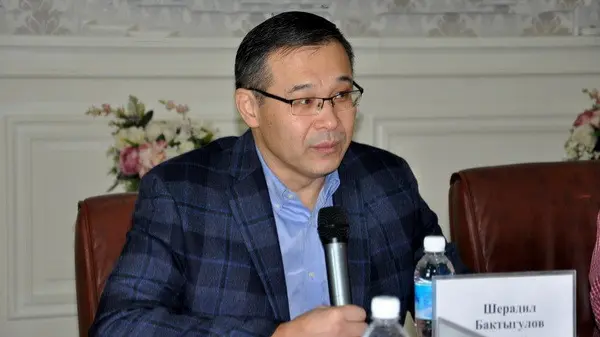
BISHKEK, October 11. /Dunyo IA/. Sheradil Baktygulov, Director of the Global Policy Institute of Kyrgyzstan, in an interview with Dunyo IA, commented on the outcomes of the working visit of the President of Uzbekistan to Turkmenistan on October 7–9th:
- Immediately upon taking office in 2016, President Shavkat Mirziyoyev declared Central Asia as the primary foreign policy priority of Uzbekistan. In 2017, he proposed convening regular Consultative Meetings of the Heads of State of the region, which became a platform for addressing common challenges. The Eighth meeting, held on October 8th, 2026, in Turkmenistan with the participation of Azerbaijan, marked the next stage in expanding regional cooperation.
Over the past decade, Central Asia has transitioned from mutual mistrust toward closer interaction. Territorial disputes have been settled, border checkpoints opened, transport links restored, and cooperation in the water and energy sectors strengthened. A significant step was the accession of Azerbaijan to the format in November 2025. President Shavkat Mirziyoyev described this as “building a solid bridge between Central Asia and the South Caucasus”.
Economic indicators reflect the results of this convergence. In January–August 2026, Uzbekistan's trade with Central Asian countries exceeded 6.1 billion US dollars, demonstrating an increase of 26.2%. In 2025, the mutual trade turnover among the states of the region reached 12.3 billion dollars, which is nearly double the figure from five years ago. Following the expansion of the format, a target has been set to bring the trade volume to 20 billion dollars.
The next stage entails transitioning from regular leaders' meetings to a sustainable institutional model of cooperation. President Shavkat Mirziyoyev proposed transforming the consultative mechanism into a “Central Asian Community” format, providing for the creation of a secretariat on a rotational basis and the development of procedural rules for meetings. At the same time, this does not imply a supranational body. In the economic sphere, the priorities will include a trade plan up to 2035, a joint investment zone, and the development of e-commerce.
Another strategic direction is turning Central Asia into a major transport hub of Eurasia. Among the key projects are the China–Kyrgyzstan–Uzbekistan railway, Trans-Afghan Corridor and Trans-Caspian Route. To accelerate freight transportation, Uzbekistan also proposed the creation of a “Digital Customs and Logistics Alliance”, which is designed to simplify cross-border procedures.
Regional agenda also encompasses security, water resources and cultural interaction. “Decade of Rational Water Use in Central Asia” initiative, proposed in 2025, is aimed at addressing the issue of water scarcity. Concurrently, Uzbekistan advocates for the coordination of efforts against transnational threats and the strengthening of a shared cultural space, including through the promotion of the heritage of Islamic civilization.
Uzbekistan is also expanding cooperation with external partners within the “Central Asia Plus” format. At the first summit with the Republic of Korea in September 2026, new areas of interaction were proposed, ranging from the establishment of industrial and technological parks to a regional investment alliance in the field of critical mineral resources. Despite the differences among the states, the current policy is aimed at shaping a New Central Asia – a community of nations capable of jointly addressing regional tasks and implementing large-scale projects.

Latest News



See all
Read also

View from Moscow: Uzbekistan Sees Prospects for Regional Cooperation in Logistics and Industry
Akramjon Nematov: Central Asia is increasingly emerging as an independent centre for shaping its own economic and technological agenda