Attitude from the USA: Washington views Uzbekistan as a country demonstrating practical results of reforms
May 09, 2026. 10:00 • 5 min
• 865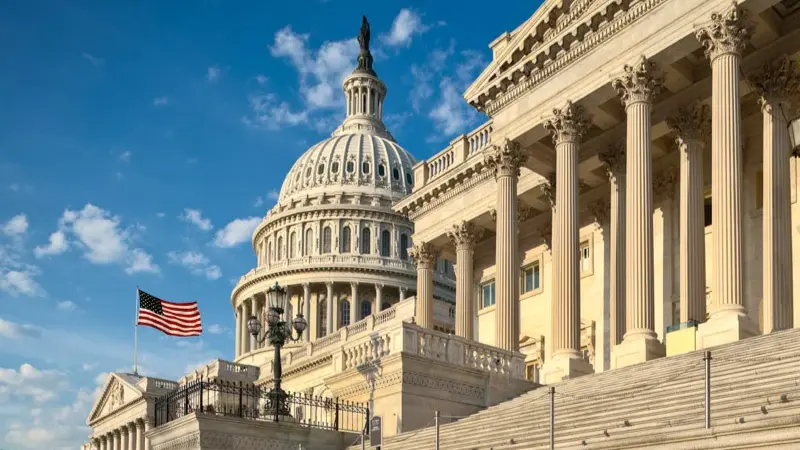
WASHINGTON, May 9. /Dunyo IA/. The prestigious international analytical platform “Diplomatic Watch” has published an article titled “New Uzbekistan: A decade of reforms under the leadership of Shavkat Mirziyoyev”, reports Dunyo IA correspondent.
The full text of the article is provided below.
In 2016, Uzbekistan entered a period of transformation under a new head of state who set out a clear proposition: government must serve its citizens. A decade later that idea has taken form in what is now known as the “New Uzbekistan” agenda, a reform program that has reshaped economic policy, social conditions, governance, and foreign relations with measurable outcomes.
The shift began with the economy. In 2017, the government unified the exchange rate and allowed the free flow of foreign currency, removing a long-standing barrier to trade and investment. That decision altered the country’s economic direction. Over the past ten years, the economy has more than doubled in size, with gross domestic product exceeding $145 billion and projected to reach $167 billion by 2026. Foreign investment has followed this opening, with inflows reaching $43.1 billion in recent years. In the first quarter of 2026 alone, investment rose by 45.7 percent to $8.84 billion. Credit agencies have responded with improved sovereign ratings, reflecting growing confidence in fiscal management and market stability.
Structural changes have accompanied this expansion. Privatization has reduced the dominance of state-owned enterprises and encouraged private sector participation. Exports have reached $33.4 billion, driven increasingly by higher-value production rather than raw commodities. These developments indicate a gradual shift from a controlled system to a more competitive and diversified economy.
Economic reform has been matched by social policy aimed at improving living standards. More than 8.5 million people have risen out of poverty through targeted interventions at the community level. The national poverty rate has declined to 5.0 percent by 2026. Education has expanded in parallel. The proportion of young people completing higher education has increased from 9 percent to 25 percent, while the number of kindergartens has tripled. These changes point to long-term investment in human capital.
One of the most consequential developments has been the elimination of forced labour in the cotton harvest. Within four years, the practice ended through systematic enforcement and monitoring, allowing Uzbekistan to re-enter global supply chains under improved labour conditions. Gender representation has also improved, with women now holding 38 percent of parliamentary seats. Health indicators have followed a similar trend, supported by expanded access to maternal and child care.
Institutional reform has focused on the structure and function of the state. The “Concept of Administrative Reform” introduced measures aimed at transparency, efficiency, and accountability within the civil service. Authority has gradually shifted toward Parliament and local governments, including the introduction of direct elections for regional governors. Judicial reforms have sought to strengthen independence and simplify legal procedures, making the system more accessible to citizens.
The next phase of development centers on modernization. Under the “Uzbekistan 2030” strategy, the government has set out plans to expand infrastructure, strengthen energy security, and support technological growth. A new railway program will add 500 kilometres of high-speed lines beginning in 2026, improving domestic connectivity and regional trade links. Electricity production has reached 85 billion kilowatt-hours, with increased investment in solar energy. Subsidies for household solar installations signal a shift toward decentralized and sustainable energy systems. At the same time, the government aims to position the country as a regional technology hub and enter the top 60 in global innovation rankings by 2030.
Foreign policy has undergone a parallel transformation. Uzbekistan has adopted a “Central Asia first” approach, emphasizing cooperation with neighbouring states after years of limited engagement. Border disputes have been resolved through negotiation, while new trade corridors have strengthened economic ties across the region. These efforts have repositioned Uzbekistan as a more active participant in regional affairs and a link between Central Asia and global markets.
In Washington, D.C., the reform agenda has also entered policy discussions. At a Capitol Hill presentation of *New Uzbekistan: The Path of Shavkat Mirziyoyev in September 2025, organized by the Embassy of Uzbekistan, senior Uzbek officials engaged with U.S. policymakers, analysts, and business leaders on the country’s evolving trajectory. The discussions examined reforms tied to economic opening, labour standards, infrastructure modernization, regional cooperation, and Uzbekistan’s efforts to position itself as a more competitive and internationally engaged state.
Drawing on field reporting and verified data, it was noted that the reform program had moved beyond stated ambition to measurable outcomes, particularly in economic liberalization, labour standards, and regional cooperation. The exchange reflected a broader reassessment in Washington, where Uzbekistan is increasingly viewed through the lens of practical reform.
The reform trajectory rests on a sequence of policy frameworks that provide continuity. The Strategy for Action (2017–2021) established initial priorities for modernization. The New Uzbekistan Strategy (2022–2026) deepened institutional and economic reforms. The Uzbekistan 2030 Strategy now sets long-term goals in sustainability, governance, and inclusive growth.
Ten years after the launch of the “New Uzbekistan” agenda, the country presents a case of sustained transition. Economic indicators point to expansion and diversification. Social data shows improvement in living standards. Institutional reforms have begun to reshape the relationship between the state and its citizens. The direction is clear. Uzbekistan has moved from a closed system toward an open, competitive, and regionally engaged state, guided by a reform program that links policy vision with measurable results.

Latest News


See all
Read also
“Russia News”: Uzbekistan presents itself to the world - confidently, with dignity and beautifully