Tasks for further development of ferrous metallurgy identified at the meeting chaired by President of Uzbekistan
July 13, 2026. 16:15 • 6 min
• 107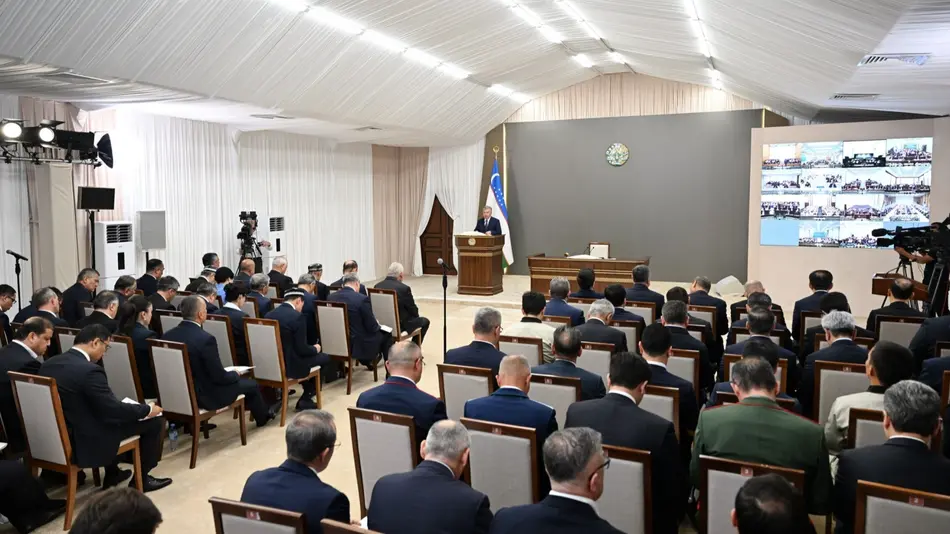
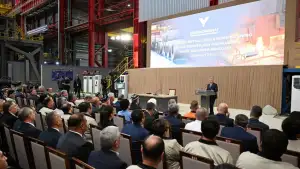
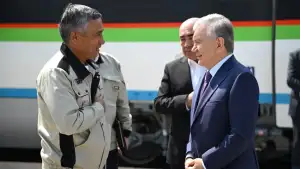
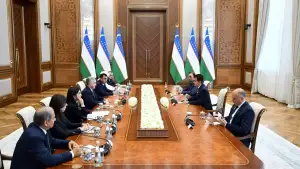
ТАSHKENT, July 13. /Dunyo IA/. Today, President Shavkat Mirziyoyev chaired a meeting at the Uzbek Metallurgical Plant devoted to priority tasks for bringing the ferrous metallurgy industry to a qualitatively new stage of development, reports Dunyo IA correspondent.
According to the press service of the Head of our State, Head of State emphasized that ferrous metallurgy is one of the main sources of raw materials for sectors of the economy with a combined value exceeding $50 billion, including construction, building materials, the automotive industry, mechanical engineering, energy and the electrical industry.
To transition the economy to a technology-driven, innovation-based development model and increase gross domestic product to $240 billion by 2030, annual economic growth of at least 8-9 percent must be achieved. In this process, the development of the metallurgical industry should be based on a sustainable raw material base, the production of competitive products and the introduction of modern technologies.
At the same time, attention was drawn to dependence on imports, high production costs and energy consumption, as well as the limited effectiveness of efforts to digitalize operations and introduce artificial intelligence technologies. It was noted that amid global instability and logistical disruptions along key international transport corridors, these issues are becoming particularly pressing.
Over the past ten years, the country’s demand for sheet metal, long steel products, pipes and metal structures has tripled, reaching 5.5 million tons. The nuclear power plant, the fourth copper concentrator and the new copper smelter currently under construction alone will require around 2.5 million tons of sheet metal and reinforcing steel.
Over the next five years, new production capacities totalling $180 billion will be commissioned, infrastructure projects totalling $27 billion will be implemented, and apartment buildings for 800,000 families will be constructed. As a result, annual demand for metal products will increase by 1.5 times and exceed 8 million tons by 2030.
Today, the Bekabad Metallurgical Plant produces 40 percent of its rolled metal products from secondary metal, while the remaining 60 percent is manufactured using imported raw materials. Although 700,000 tons of ferrous metal scrap are supplied to the plant annually from across the country, around 500,000 tons of scrap metal remain in the shadow economy.
In this regard, all processes related to the circulation of ferrous metals will be monitored in real time through an electronic platform. A dedicated project office will be established within the Government to ensure a healthy competitive environment and price stability in the industry and to introduce effective control mechanisms. Instructions were given to launch the E-Lom electronic platform on August 1 and establish oversight of the circulation of ferrous metals.
It was noted that the country has 1.5 billion tons of iron ore reserves. An agreement has been reached with Chinese partners to establish annual production of 650,000 tons of this raw material through the enrichment of ore from the Surun-ota deposit. In addition, the need was emphasized to create capacity for the annual production of up to 1 million tons of steel through the implementation of the Tebinbulak deposit development project, as well as to expedite the conclusion of an agreement on the annual supply of 700,000 tons of iron ore raw materials from a metallurgical plant in Tajikistan.
It was emphasized that major private enterprises are ready to establish a full technological cycle, from geological exploration and the extraction of raw materials at deposits to the production of finished goods, and that favourable conditions should be created for them.
Head of State noted that improving steel quality would also increase demand for such raw materials as manganese and ferrosilicon. Responsible officials were instructed to analyse promising sites using artificial intelligence technologies and to develop a geological program aimed at increasing iron ore reserves and the minerals required for its enrichment.
Around 150 medium-sized and small private enterprises operate in the metallurgical industry. To ensure their stable supply of raw materials, a separate company will be established to handle centralized imports. It will be allocated $200 million, and imported raw materials will be sold exclusively through the commodity exchange.
At the meeting, particular attention was paid to expanding the range of metal products and strengthening cooperation between major metallurgical plants and private enterprises.
The casting and rolling complex commissioned today creates opportunities to launch production of goods worth a total of $1.5 billion in the automotive industry, specialized machinery, technological equipment, household and agricultural appliances, and construction materials.
Responsible officials were instructed to prepare a package of projects for the production of seamless pipes and cold-rolled steel, as well as the introduction of 3D printing and high-precision metalworking technologies.
Uzbekistan Industrial Park of Environmental Technologies, equipped with ready-to-use infrastructure, will be established on a 90-hectare site at the Bekabad Metallurgical Plant. It will house a research and development center for ferrous metallurgy and a modern laboratory authorized to issue internationally recognized certificates.
In addition, instructions were given to develop a program of cooperation projects worth a total of $100 million around major metallurgical enterprises in Samarkand, Jizzakh, Namangan and Syrdarya. This will expand value chains in these regions and localize the production of new types of goods.
Digitalization of the metallurgical industry and the introduction of artificial intelligence technologies were also addressed at the meeting. It was noted that the Almalyk Mining and Metallurgical Complex has achieved results in reducing operating costs, production costs, and energy consumption, as well as increasing labour productivity through the use of artificial intelligence technologies.
A program will be developed to increase equipment utilization efficiency at metallurgical enterprises by 20 percent through the introduction of AI technologies and digitalization, reduce production costs by 10 percent and energy consumption by 15 percent, and cut maintenance costs and technological downtime by 20 percent.
Center for Economic Research and Reforms has been designated as the think tank of the metallurgical industry. In addition, the research centers of the Navoi and Almalyk Mining and Metallurgical Complexes, the Uzbek-Korean Scientific and Technological Center of the Technological Metals Complex, Tashkent State Technical University, Navoi State University of Mining and Technologies, the Almalyk branch of Tashkent State Technical University, and the Almalyk branch of the National University of Science and Technology MISiS will be assigned to support the industry.
These research institutions and higher education establishments will analyze demand for new types of materials, identify the projects required to meet this demand by region and the most suitable technological solutions, and determine areas for training specialists in demand. One-year, three-year and five-year programs will be developed for each region.
Starting from the new academic year, a Department of Ferrous Metallurgy will be established at the Bekabad Metallurgical Plant, and a dual education system will be introduced.
Center for Economic Research and Reforms was instructed to launch a digital platform to consolidate information on problems in the metallurgical industry. A venture fund will also be created to finance and facilitate the practical implementation of scientific developments.
Emphasizing the need to achieve a technological breakthrough in the industry, the Head of State identified expanding the raw material base of ferrous metallurgy, reducing dependence on imports, widely introducing digital technologies and artificial intelligence, launching production of new products, and strengthening cooperation with the private sector as priority tasks.
Reports from the heads of relevant agencies and regions were heard at the meeting.

Latest News

See all
Read also
President of Uzbekistan: All our efforts, whether constructing facilities or implementing projects, must primarily serve the people and improve their lives