Under the chairmanship of the President of Uzbekistan large-scale measures outlined for development of culture and the arts
June 01, 2026. 17:10 • 10 min
• 129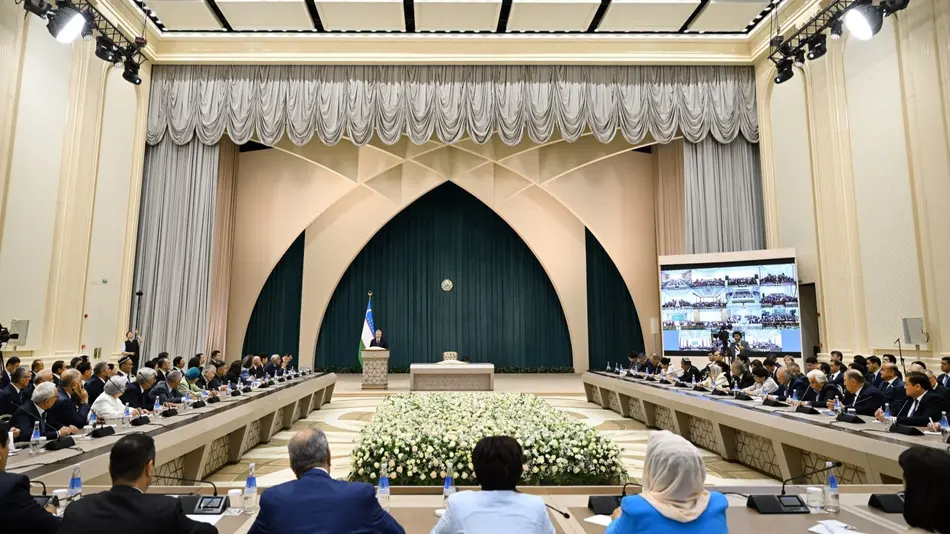
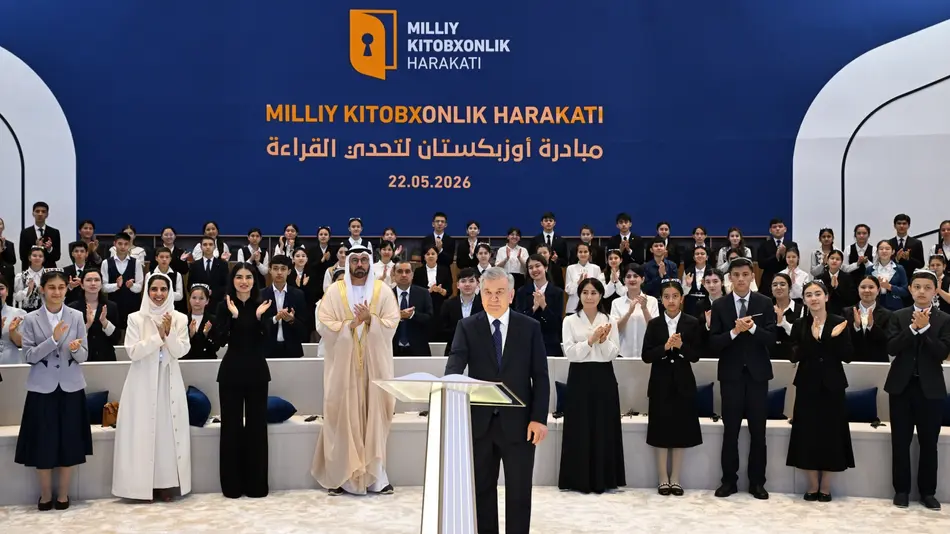
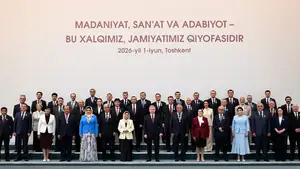
ТASHKENT, June 1. /Dunyo IA/. On June 1st, President Shavkat Mirziyoyev held a meeting with representatives of Uzbekistan's culture and arts sector, reports Dunyo IA correspondent.
According to the press service of the Head of our State, meeting was attended by leading figures from literature, culture, and the arts, including poets, writers, actors, playwrights, directors, singers, musicians, composers, painters, sculptors, artisans, and art scholars.
At the beginning of his speech, the President emphasized that culture and the arts play an invaluable role in shaping the spiritual values and mindset of the people and in educating the younger generation.
The Head of State noted that the global struggle for influence over hearts and minds is intensifying and that books, theater, cinema, music, and literature are becoming increasingly effective means of strengthening society's spiritual resilience.
In preparation for the meeting, officials held consultations with representatives of the artistic community and reviewed the condition of cultural institutions and facilities. The President noted that the dialogue seeks to address existing challenges in the sector and create a new environment for the development of literature, culture, the arts, and the creative economy.
First and foremost, the Head of State outlined plans to introduce a new system for encouraging creative professionals and supporting young talent. Creative associations will be established in 21 areas, including theater, cinema, choreography, opera, folklore, pop music, academic and traditional instrumental arts, as well as fine and applied arts. Distinguished artists, ministers, and executives of major companies will serve as co-chairs of these associations.
Working jointly with music schools and artistic groups in the regions, these associations will identify young talents, organize competitions at the mahalla, district, regional, and national levels, and support winners' participation in tours, festivals, and international competitions.
A National Creative Figures Kurultai will be held annually. As part of the kurultai, creative evenings will be organized for artists who have achieved outstanding results during the year, and they will receive special recognition.
In the field of music, incentive measures are envisaged for singers, musicians, and composers who create new works, win international competitions, and showcase their work on national and international stages. Similar support will be provided for poets, writers, and playwrights whose works gain broad recognition, are published in large print runs, and are adapted for theater and cinema.
Such creative professionals will receive a monthly stipend of 5 million soums for one year. They will be able to use air, rail, and public transport free of charge when traveling within Uzbekistan. The cost of treatment at specialized medical institutions will be covered from the state budget, and their master schools and creative houses will also be established.
Important measures have also been envisaged to support young talents and their mentors. Beginning September 1, winners of national competitions will receive awards of 100 million soums, while laureates of prestigious international competitions will receive up to 300 million soums. Their participation expenses will be fully covered, and teachers and mentors will receive salary supplements of up to 100 percent.
Each year, 100 young men and women will study at foreign cultural and arts institutions at the state's expense. To identify young talents and support producer initiatives, the Investments in Creativity Fund will be established with annual funding of 200 billion soums.
President emphasized the importance of protecting artists' copyrights. He noted that every work created in literature, culture, and the arts constitutes the intellectual property of its author and that every artistic work, musical composition, and song should generate income for its creator. Responsible officials have been instructed to develop a system that ensures guaranteed protection of copyright.
New opportunities will also be created for writers and poets. Each year, poets and writers will receive creative commissions for at least 50 outstanding literary works. The ten best works of Uzbek literature will be translated into foreign languages annually and presented abroad with the participation of their authors. The state will also cover the cost of paper for publishing books recommended by the Writers' Union.
President Shavkat Mirziyoyev also outlined a number of social support measures for artists. Each year, the state will cover 50 percent of the down payment on mortgage loans for housing purchases by 1,000 poets and writers, cultural and arts professionals, museum employees, and artists.
Representatives of the sector from other regions will receive compensation for housing rental expenses of up to 2.5 million soums per month in Tashkent and up to 1.6 million soums in the regions.
Annually, 1,000 sector employees who have achieved outstanding results in their work will receive free treatment through the State Medical Insurance Fund, while another 2,000 artists will receive state-funded medical insurance packages. Employees with at least 10 years of work experience will be provided with free vouchers to sanatoriums.
To support song and dance ensembles, the salaries of all employees will be doubled from September 1. For dance masters, the required length of service for retirement will be reduced from 20 to 15 years. A proposal was also put forward to build a modern Dance Palace in New Tashkent next to the Maqom Center currently under construction.
The system of financing and material incentives for composers and authors of musical works will also be revised. Each year, they will receive state commissions to create at least 20 new works in contemporary and classical genres, including opera and symphonic music.
President also emphasized the importance of strengthening national identity in society. He noted that the country today needs literature that inspires people, cinema that instills a sense of pride and dignity in young people, music that reaches the depths of the soul, and theater that encourages self-discovery.
The Head of State noted that, as the Internet and social media occupy an increasingly important place in our lives, the voice of the creative intelligentsia must sound even louder in the digital space.
To increase demand for cultural events, new mechanisms will be introduced. Each year, 500,000 teachers, healthcare workers, civil servants, active schoolchildren and students, as well as 100,000 low-income families and children with disabilities, will receive free vouchers to attend theaters, cinemas, and concert events.
Beginning July 1, up to 20 percent of the costs of organizing concert and entertainment events in each district and mahalla will be reimbursed from the state budget. Concert and entertainment organizations, private theaters, cinematography, children's content production, and private educational institutions in the culture and arts sector will be exempt from a number of taxes. Charitable funds directed toward the development of literature, culture, and the arts will also be exempt from taxation.
Separate directorates will be established under regional khokimiyats to ensure the effective use of concert and theater halls, palaces of culture, and the daily organization of cultural events.
Broad opportunities will also be created for the theater sector. The President noted that granting the Alisher Navoi Theater the authority to independently address financial, creative, and organizational matters had yielded positive results. Within a year, the number of performances increased by 1.5 times, and the number of spectators doubled. This experience will now be introduced at the Mukimi and Berdakh theaters, as well as the National Puppet Theater.
To support private theaters and theater studios, beginning September 1, the state will annually compensate the cost of producing 50 stage productions. They will be granted free use of state cultural facilities, while rental expenses of up to 20 million soums per month for private premises will be covered from the state budget. A system of additional budget-funded payments for each ticket sold for theatrical performances will also be introduced.
Important measures have also been outlined for the development of the film industry. “Uzbekfilm” will be granted national status and transformed into a central film concern serving both domestic and international film industries. To promote national films in international markets, cooperation with global film platforms will be strengthened.
For films produced under state commission, up to 30 percent of the production budget will be allocated for promotion and advertising. In addition, 50 percent of box-office revenues from state-commissioned films will be directed as additional incentives to producers and creative teams. To enhance the prestige of the Oltin Humo National Film Award, 5 billion soums will be allocated annually.
The development of the creative economy has also been identified as a priority area. In the coming years, the volume of the creative economy is expected to reach 145 trillion soums through increased value creation in the culture and arts sector. To support this goal, a legal framework has been established for the industry, and a separate tax regime has been introduced for residents of the Creative Industries Park. Construction of major creative parks has begun in Tashkent's Shaykhantakhur District and in the city of Nukus.
Projects will also be implemented to increase the value of handicraft products five- to tenfold through the introduction of modern design. Cooperation with international designers will expand, and the number of exhibitions in Europe, the United States, South and East Asia, and the Middle East will increase. A program for organizing mega-events throughout the year in every region will also be developed.
The meeting also discussed in detail measures to improve the culture and arts education system. The teaching of music, fine arts, and technology in general education schools will be updated on the basis of the Art curriculum. Beginning with the new academic year, the Art subject will be introduced on a pilot basis in 10 general education schools in each region.
In elementary grades, children's interest in creativity will be developed through drawing, music, and game-based learning, while in upper grades students will develop skills in design, graphics, artificial intelligence, and creative projects.
President noted that 95,000 children are studying at 326 music and art schools and 29 specialized schools across the country. Specific performance indicators will be developed for these institutions. Graduates of music schools will be required to master at least one other national musical instrument in addition to their main specialty.
Beginning with the new academic year, the salaries of teachers at 326 music and art schools will be brought in line with those of teachers in general education schools. Teachers at general education and music schools will receive salary supplements of up to 20 percent, depending on their students' level of proficiency in playing musical instruments. A target has been set to involve at least 1.5 million students in music and art classes.
At least four music and art clubs will be organized in every general education school. When purchasing national musical instruments, 30 percent of the cost will be compensated by the state. Inclusive creative workshops for young men and women with disabilities will be established in the regions, with 30 billion soums allocated annually for this purpose.
The personnel training system will also be revised. Beginning with the new academic year, students will be admitted to specialized schools from the fifth grade for music and from the ninth grade for dance, theater, and art. Music and art colleges, as well as pop and circus technical schools, will be transferred to the Ministry of Culture system and granted the status of higher schools. Education at these institutions will be organized under three-year programs.
A dual education system will be introduced in higher educational institutions in the culture and arts sector. Each student will be assigned a renowned art figure who will prepare young specialists for the professional stage through participation in concerts, theatrical productions, and other performances. The curriculum will include such modern disciplines as arts management, creative industries, and project commercialization. A total of 50 billion soums will be allocated to 10 universities for student startup projects.
A unified system for the advanced training and retraining of sector employees will be established through the creation of an Institute for Advanced Training and Retraining within the Ministry of Culture system, which will also be responsible for the professional development of music teachers in general education schools.
“Today, we are witnessing a difficult situation, contradictions, and conflicts around the world. At such a time, national unity and cohesion are more important to us than ever. I am confident that by taking a leading role in this effort, you will set an example for our youth and for the entire nation through your genuine patriotism, devotion to the Motherland, and selflessness,” President Shavkat Mirziyoyev said.
The Head of State also held a sincere dialogue with representatives of the sector and heard their views, proposals, and initiatives.

Latest News
See all
Read also