President of Uzbekistan: We need high-quality roads that will last for many years
November 27, 2026. 15:36 • 5 min
• 199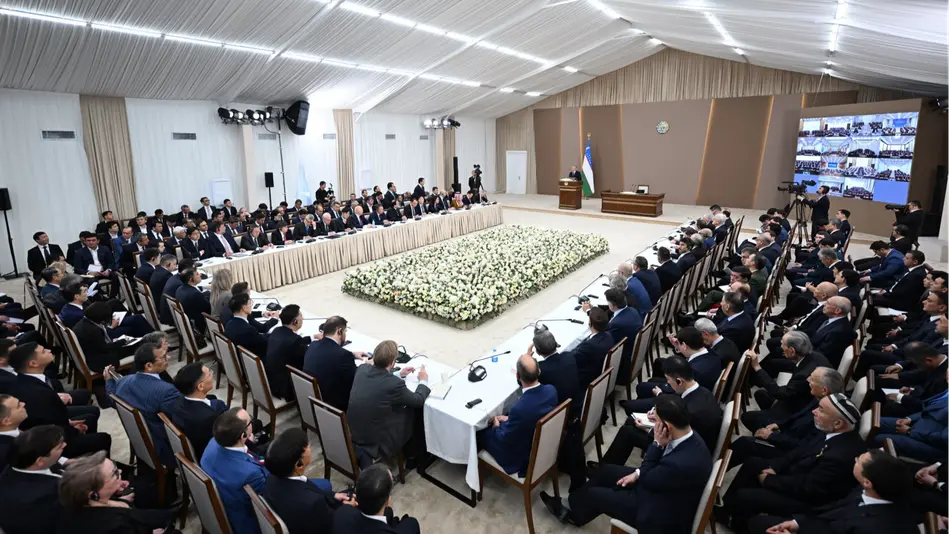
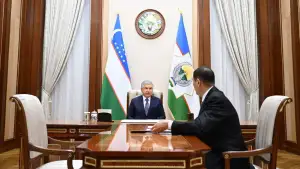
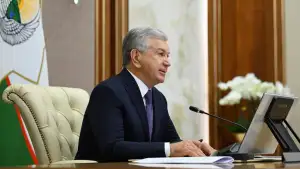
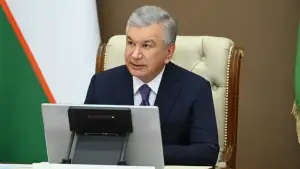
ТАSHKENT, November 27. /Dunyo IA/. Today, President Shavkat Mirziyoyev held a meeting with investors and entrepreneurs in the transport and logistics sector, reports Dunyo IA correspondent.
According to the press service of the Head of our State, Leader of Uzbekistan emphasized the need to develop the transport system in line with the rapid growth of the national economy, attract more investment and modern technologies to the sector and further expand private sector participation in this process.
Meeting outlined priority tasks for modernizing transport infrastructure, creating favourable conditions for businesses in the sector and deepening Uzbekistan’s integration into international transport corridors.
Over the past ten years, 80 trillion soums have been allocated to the development of the road sector, with 7,000 kilometers of roads reconstructed and 125,000 kilometers repaired. The sector now has the potential to attract $20 billion in investment.
In particular, five major toll road construction projects covering a total of 593 kilometers and worth a combined $5.6 billion are underway.
New opportunities will also be created to involve domestic entrepreneurs more broadly in the construction of highways and bridges. To date, 131 projects worth $4 billion have been developed across the regions. These projects will be offered to investors, granting them the right to construct, maintain, and operate highways, as well as establish commercial and service facilities along them.
Projects totalling $6.5 billion are being implemented in cooperation with international financial institutions. The President proposed that foreign partners develop a joint program to involve Uzbek specialists in major international infrastructure projects and prepare domestic companies to participate in tenders abroad.
Importance of ensuring quality and cost-effectiveness in highway construction was also emphasized.
“We do not need roads that are cheap to build, only to require additional budget funding tomorrow. We need high-quality roads that will last for many years”, Head of State noted.
To this end, officials were tasked with incorporating the use of polymer-bitumen materials and geotextile technologies into road construction standards and making their use mandatory in the construction and reconstruction of international highways starting next year.
The meeting also addressed the need to increase the capacity of the railway network and adapt infrastructure to projected freight volumes.
With the commissioning of the China-Kyrgyzstan-Uzbekistan railway, freight traffic is expected to increase tenfold, reaching 15-16 million tons annually. By 2030, Uzbekistan plans to build 545 kilometers of new railway lines and increase the share of electrified railway lines to 65 percent.
Plans include modernizing the Angren-Pap railway line and other key routes, as well as building a dedicated high-speed railway line between Tashkent and Samarkand. The Head of State called on international financial institutions and investors to cooperate in implementing these projects, worth a total of $8 billion.
To expand the freight railcar fleet by 5,000-6,000 units annually, entrepreneurs will receive tax incentives and discounts on the use of railway infrastructure. Starting next year, a new tariff policy will be gradually introduced in the sector to establish a transparent pricing system for transportation services.
President noted that Uzbekistan has all the necessary capabilities to become a major dry port connecting East and West, North and South.
Responsible officials were instructed to make effective use of the opportunities offered by the Middle Corridor, finalize agreements with foreign partners on the mutual recognition of electronic cargo documents, and launch block train services connecting Uzbekistan with major seaports around the world.
A target has been set to increase the country’s logistics capacity to 80 million tons over the next ten years. To achieve this, nine major logistics centers worth a combined $1.6 billion are planned to be built jointly with investors.
New initiatives were also proposed in the aviation sector to attract private investment and create favourable economic conditions for market participants.
In recent years, the number of airports in Uzbekistan has reached 18. Air passenger traffic is expected to reach 17 million this year, with a target of increasing this figure to 25 million in the coming years.
A multifunctional complex called Aerocity will be established adjacent to the new international airport currently under construction with the participation of foreign partners. The project, estimated at $5 billion, will bring together logistics and e-commerce centers, shopping complexes, hotels, and residential infrastructure within a single ecosystem.
To enhance the competitiveness of domestic airlines, plans include linking aviation fuel prices to global average prices and introducing additional tax and customs incentives for fuel and spare parts imports, as well as aircraft leasing. Special incentives will be offered to airlines that commit to training and employing local pilots.
Given these favorable conditions, a target has been set to expand the aircraft fleet to at least 250 by 2030. To encourage the development of international airport infrastructure, international airports will be exempt from property and land taxes until 2030.
President proposed establishing the International University of Civil Aviation of Uzbekistan in New Tashkent, featuring a modern campus, a training and simulation center, and research facilities.
The meeting also addressed the provision of convenient, high-quality public transportation services.
Over the past three years, entrepreneurs have imported more than 3,500 modern buses, and 330 routes have transitioned to a new operating system. As a result, daily passenger traffic has doubled in the capital and increased 2.5-fold in the regions.
It is now planned to fully transition bus routes up to 20 kilometers in length that connect the capital with its urban agglomeration to a gross-cost contracting system. Tax incentives will be introduced for entrepreneurs building bus depots, and a new financing mechanism will be developed to support the provision of transportation services in remote areas.
Given the growing passenger traffic on the Tashkent Metro, officials were tasked with purchasing 28 five-car trains over the next two years and expanding 40 existing four-car trains to five cars each.
Head of State also held an open dialogue with investors and entrepreneurs and heard their views and proposals on further developing the sector, addressing existing challenges, and implementing promising projects.

Latest News
See all
Read also
President of Uzbekistan Visits New Scientific and Practical Center in the Road Sector