President of Uzbekistan: Drawing strength from our identity and reflecting deeply on life today, together we can open a new chapter in the history of our national cinema
October 26, 2026. 20:20 • 7 min
• 256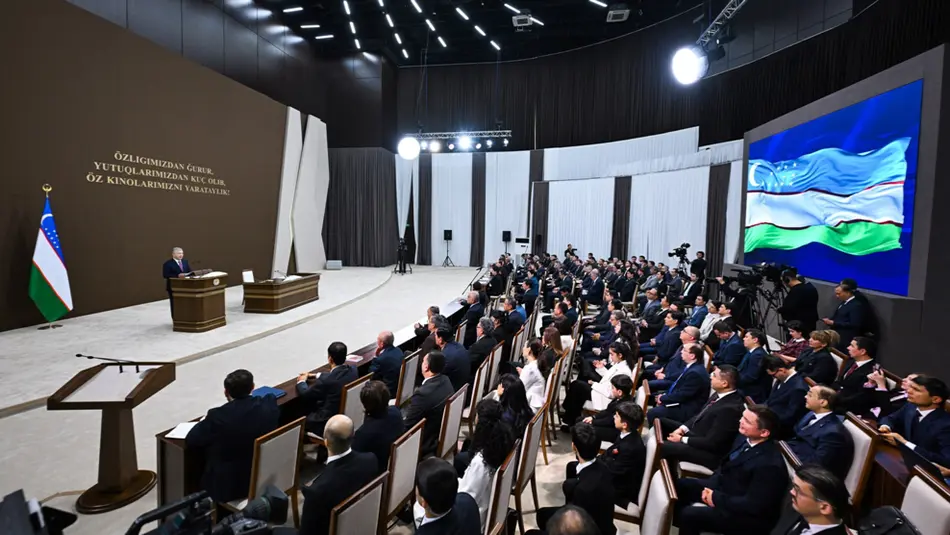
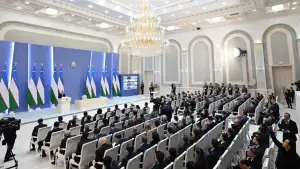
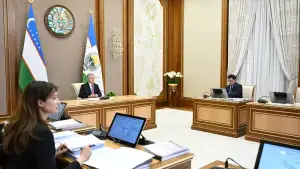
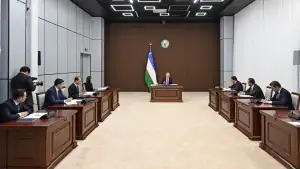
ТАSHKENT, October 26. /Dunyo IA/. President Shavkat Mirziyoyev met with filmmakers at the “Uzbekfilm” film studio, reports Dunyo IA correspondent.
According to the press service of the Head of our State, meeting focused on the achievements of national cinema, current priorities and plans for its further development.
Head of State noted that “Uzbekfilm” is an iconic place where generations of filmmakers have created works beloved by audiences. Films such as “The Whole Mahalla Is Talking About It”, “Bygone Days”, “The Mischievous Boy”, “The Duel Under the Plane Tree and Suyunchi”, along with their memorable characters, remain fondly remembered by generations of viewers. During the years of independence, these traditions were continued through such films as “Abdullajon”, “The Fields Left by My Father”, “Dilkhiroj”, “Homeland” and “The Yurt”.
“Within the walls of this film studio lies the history of our national cinema, the work of several generations of filmmakers, and the dreams, aspirations and hopes of our people brought to life on screen”, Head of State noted.
In recent years, the film studio has undergone a complete reconstruction. Two decrees and eight resolutions aimed at supporting the industry have been adopted. While 10 billion soums was allocated from the state budget for film production in 2016, this year the figure has reached 218 billion soums. Over the past decade, a total of 1.2 trillion soums has been allocated to the industry.
Dozens of private film studios have entered the industry, and a new generation of local professionals has emerged. Historical films such as “Islamkhodja”, “Ibrat”, “Avloniy”, “Abdulla Kadiri”, “The Wind of Kokand”, “Mukimi”, “Ilkhak”, “Uzbek Girl” and “Bahadir Yalangtush” have been produced.
Recently, Tashkent hosted an awards ceremony for filmmakers from Central Asia and the Caucasus for the first time as part of the Golden Globe international film awards. Actress Gulchekhra Jamilova received the Meridian Award at the event.
Alongside these achievements, the President also drew attention to problems facing the industry. Despite the widespread view that the rise of social media has led people to visit cinemas less frequently, cinema halls continue to fill up for screenings of foreign films.
“This means that audiences have not turned away from cinema or stopped going to cinemas – only their tastes and expectations have changed”, Head of State noted.
One of the factors preventing national films from meeting these expectations is the lack of an integrated distribution system covering the entire process from film production to theatrical release. Insufficient attention is also paid to the views of professional film critics. President emphasized that objective analysis would help filmmakers identify shortcomings in their work and continue to improve.
Current system of state commissioning and procurement also falls short of the requirements of the modern film industry. As many as six projects are assigned simultaneously to a single director and up to seven to a single screenwriter. Nearly half of all commissions are allocated to state-owned film studios, limiting opportunities for private filmmakers to compete on equal terms.
It was noted that procuring a film based on technical specifications, as though it were an ordinary product or construction project, is inappropriate, since the script may be revised and creative decisions reconsidered during production.
“In reality, a filmmaker’s work should be judged by the film they create – one that makes audiences think deeply and leaves a lasting impression on them”, President emphasized.
Head of State noted that cinema helps nations understand one another better and that a country capable of presenting its history, culture and national heroes compellingly on the world stage gains greater international recognition. Today, cinema has become an important instrument of “soft power” that contributes to the country’s international standing. It also plays an important role in shaping the outlook and worldview of the younger generation.
President summed up the essence of the “O‘z” (“Own”) concept in cinema as follows: “To understand our identity and tell the world our story in our own voice”.
He also noted that, alongside the country’s great ancestors, the lives and stories of people living among us today should be authentically portrayed on screen. It was emphasized that the lives of teachers, doctors, athletes, defenders of the Motherland, entrepreneurs, builders and young people offer rich material for creativity and the creation of vivid, emotionally powerful films.
“Let our children see themselves in these heroes, believe in their own abilities and feel that they have a part to play in the future of their country!”, Head of State emphasized.
As part of the reforms to develop national cinema, the functions of industry governance, financing and film production will be clearly separated. The Cinematography Agency will be abolished, and responsibility for implementing state policy in the sector will be transferred to the Ministry of Culture. A Department of Cinema Art will be established within the ministry, and its head will have a status equivalent to that of a deputy minister. Responsible officials were instructed to organize the work of the new department and complete the process of abolishing the agency and its subordinate structures within one month.
National Film Company “Uzbekfilm” will be established on the basis of the state-owned Uzbekfilm film studio and will operate under a modern business model. The company itself will no longer produce films, with production to be fully transferred to the private sector. The National Film Company will select and finance projects, promote and distribute films, and facilitate their entry into international markets and film festivals. Instructions were given to launch the company’s operations within one week.
A subsidy-based support mechanism will replace the state commissioning system for film financing.
“From now on, the state will act not as a customer commissioning films, but as a reliable partner of filmmakers and the private sector”, President emphasized.
Under the new system, priority will be given not to technical specifications but to the creative process and its requirements. Instructions were given to introduce the new financing mechanism within one month and, beginning next year, to allocate the necessary funding annually from the state budget based on proposals from the National Film Company.
A single industry cluster – “Uzbekfilm” Cinema City – will be established on Uzbekfilm’s 10-hectare site, bringing together film production services. A total of 400 billion soums will be allocated for this purpose.
A modern Dubbing and Voice Recording Center will be built within Cinema City, with 80 billion soums allocated for the project. Instructions were given to develop the master plan and design-and-cost documentation for Cinema City within two months and begin construction in March next year.
Another initiative aimed at supporting filmmakers was also announced. The Kohinur sanatorium in Kuyichirchik district, renovated to modern standards, will be placed at their disposal. In addition, at least 300 industry professionals will receive free vouchers each year for recreation and medical treatment at sanatoriums across the country.
A Club of Film Critics will be established to promote research, analysis and professional film criticism. The National Film Company will support its activities and facilitate its membership in the International Federation of Film Critics (FIPRESCI).
Chamber of Cinema Figures of Uzbekistan will be established through the merger of the Creative Union of Cinema Figures of Uzbekistan and the Association of Representatives of the Film Industry of Uzbekistan. The Chamber will protect the copyright and professional interests of filmmakers and support the professional development of young talent. Opportunities will also be created for young filmmakers to undergo advanced training abroad.
President proposed strengthening Uzbekfilm as the unified brand of national cinema. An initiative was also put forward to name a section of Chilanzar Street after Uzbekfilm and bring the Museum of Cinema Art, the Palace of Cinema Art and the National Film Fund under the “Uzbekfilm” name.
Head of State then heard the views of experienced filmmakers and young professionals. Emphasizing that all necessary conditions would be created for filmmakers and that their initiatives would receive support, the President noted that creating quality cinema requires dedicated work, patriotism and creativity rooted in love for one’s people.
“I believe in you. Drawing strength from our identity and reflecting deeply on life today, together we can open a new chapter in the history of our national cinema”, said President of Uzbekistan.

Latest News
See all
Read also