President of Uzbekistan chaired a meeting on the Socio-Economic Development of the Bukhara Region
November 04, 2026. 14:10 • 7 min
• 126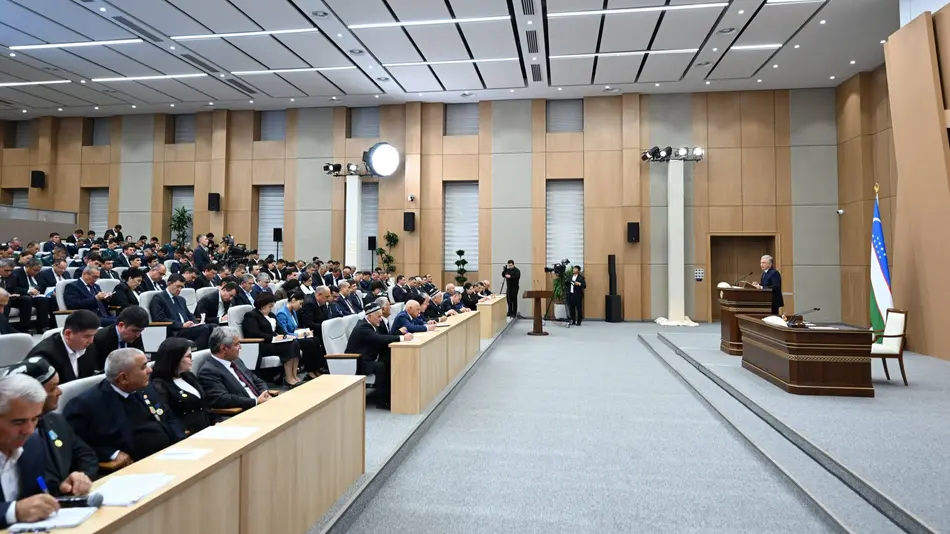
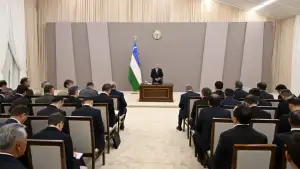
ТАSHKENT, November 4. /Dunyo IA/. Today, during his visit to Bukhara region, President Shavkat Mirziyoyev chaired a meeting on the region’s socio-economic development, reports Dunyo IA correspondent.
“We have come with new initiatives worth $30 billion that will bring positive changes to Bukhara’s economy and people’s daily lives”, Head of State said.
According to the press service of the Head of our State, it was emphasized that the results of these initiatives should primarily be reflected in improvements to essential infrastructure and the creation of new sources of income for the population. With this in mind, plans were reviewed to expand drinking water supply and sewerage networks, upgrade roads and implement new projects in industry and services.
A $385 million project to improve water supply and sewerage systems is being implemented with the participation of the Asian Infrastructure Investment Bank. An additional $248 million will be secured for the project’s second phase. As a result, water supply services will improve for 1.7 million residents, while 775,000 people will gain access to a centralized sewerage network. Coverage of the population with centralized water supply will increase from the current 80 percent to 95 percent. The President instructed officials to set specific deadlines and accelerate work in the 55 mahallas still awaiting connection to water supply networks as a priority.
Projects aimed at improving transport connectivity in the region were also discussed. Reconstruction of the A-380 highway passing through Bukhara region is scheduled for completion this year. Next year, work will begin to upgrade a 69-kilometer section of the M-37 highway within the region. The project also includes building a 4.5-kilometer bypass around the regional capital.
Plans are underway to build a toll highway with a cement-concrete surface and a new high-speed railway line between Samarkand and Bukhara. The new highway is expected to reduce travel time from the current five hours to just one and a half hours. Responsible officials were instructed to finalize the master plans for both projects and begin negotiations with potential partners.
A new international airport worth $300 million is under construction in Bukhara. It will be designed to accommodate 20 aircraft and 1,200 passengers simultaneously.
A 24-kilometer road will connect the airport to the city center. A 5.5-kilometer dedicated bus rapid transit (BRT) lane will also be built. Turkish airline Pegasus is launching direct flights to Bukhara. Plans are also underway to establish air connections with Malaysia, Indonesia, Kuwait, Egypt and Bahrain next year.
Alongside the construction of new roads and the airport, the meeting also emphasized the need to improve transport accessibility within the region. Although 900 billion UZS have been allocated for road improvements this year, 2,000 kilometers of local roads and 266 bridges still require repairs. Officials were instructed to explore opportunities to attract private investment for upgrading and maintaining these roads, as well as to construct alternative toll roads connecting major tourist routes.
Due to the underdevelopment of public transport, 80 percent of residents rely on private cars for their daily journeys. In response, the delivery of 120 buses to the region will be accelerated. Priorities also include improving service quality at the airport and railway stations, as well as adopting a unified approach to landscaping that reflects Bukhara’s climate and historic character.
Tourism is a key driver of the regional economy. Bukhara is expected to welcome 3.5 million international tourists this year. The need to double this figure, encourage visitors to stay longer in the region and extend the tourist season to other months of the year was emphasized.
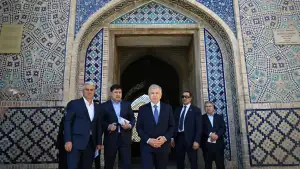
To achieve these goals, historical sites and complexes such as the Old City, Yetti Pir, Chor-Bakr, Paykent, Varakhsha and Vardonze will be brought together under a unified tourism concept. A tourism center is being developed on a 50-hectare site in the Gulchorbog mahalla, while a congress hall for international events and Hilton and Holiday Inn hotels are under construction in the Jalol Ikromi mahalla. Eight central streets in the city will be renovated, and six public squares will be created. A $500 million tourism cluster covering 1,000 hectares is also planned for Bukhara district.
President emphasized that, alongside developing new facilities, it is essential to expand the range of tourism services and improve their quality. Bukhara’s tourist season has already been extended from four to six months, and around 30 international events are planned for next year. However, the region has no five-star hotels, lacks sufficient large shopping and entertainment centers, and most existing facilities and services are concentrated in the city of Bukhara.
Responsible officials were instructed to develop a month-by-month plan to increase international tourists to 7 million. The plan must clearly identify new tourism packages, events, facilities to be opened in the region’s districts, and target markets for attracting visitors.
It was noted that the region’s economy is expected to exceed 100 trillion UZS for the first time this year, with growth reaching 10.1 percent. According to a survey, 98 percent of Bukhara residents reported an improvement in their quality of life, while 83 percent of entrepreneurs expressed optimism about prospects for the next three years. At the same time, the region’s economic growth remains dependent on natural resource-based industries and agriculture, which together account for 43 percent of the economy. Meanwhile, the share of services has increased only from 33 to 36 percent over the past decade.
President called for diversifying the economy, promoting deeper processing of raw materials and identifying growth drivers in each district. Specific plans will be developed to raise performance indicators in industry, services and agriculture to 1.5 times their current levels.
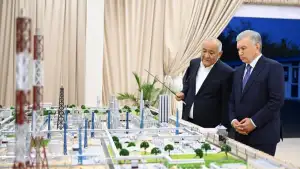
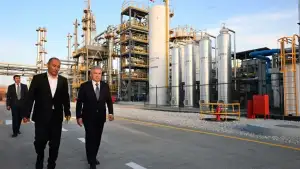
As noted at the meeting, combining Bukhara region’s raw material and energy resources with its entrepreneurial potential could enable the implementation of industrial projects worth a total of $28 billion over the next three years. Of this amount, $17 billion would be allocated to projects in the oil and gas and chemical industries. Officials were tasked with attracting leading technology companies to expand the capacity of the Bukhara Oil Refinery and establishing a petrochemical research and industrial cluster in Kagan district.
In the energy sector, power plants with a combined capacity of around 2,000 megawatts have been commissioned within a short period. Over the next three years, plans call for constructing wind farms with a combined capacity of 3,100 megawatts and energy storage systems with a capacity of 1,000 megawatts. Alongside the commissioning of new power generation facilities, the region’s electricity transmission and distribution infrastructure will be developed, including the construction of 745 kilometers of power lines.
Development of light industry was also discussed. Officials were tasked with expanding Bukhara’s textile products in foreign markets by drawing on experience gained through cooperation with international brands. Next year, plans call for implementing projects worth at least $1 billion in the sector and doubling exports.
During the review of ongoing efforts in the social sector, discussions focused on increasing the number of private preschools and general education schools, enrolling 50 percent of school graduates in technical colleges, and establishing cooperation between technical colleges and major entrepreneurs and investors. The target also included doubling the coverage of dual education programs across the region’s ten public and private higher education institutions.
This year, work has been carried out to modernize 29 hospitals and outpatient clinics. The President emphasized the need to improve the quality of healthcare services, particularly at the primary care level, attract investment to the sector and make greater use of the expertise of compatriots who have gained professional experience abroad.
During the meeting, sectoral and regional leaders presented reports and plans for the coming year.
President praised Nargiza Nematova, Hokim of Alat district, for her exceptional dedication to the district’s comprehensive development and announced a decision to award her the Order “Fidokorona Khizmatlari Uchun” (For Selfless Service) in recognition of her many years of productive service in government and public administration, as well as her contribution to improving people’s well-being through job creation.
Thereupon, President concluded his visit to Bukhara region and returned to Tashkent.

Latest News
See all
Read also
President of Uzbekistan inspects Restoration Work at Kosh-Madrasah Ensemble in Bukhara