Akramjon Nematov: Uzbekistan consistently supports preserving the SCO's open and non-aligned character while strengthening the principles of good-neighbourliness
July 06, 2026. 19:00 • 7 min
• 671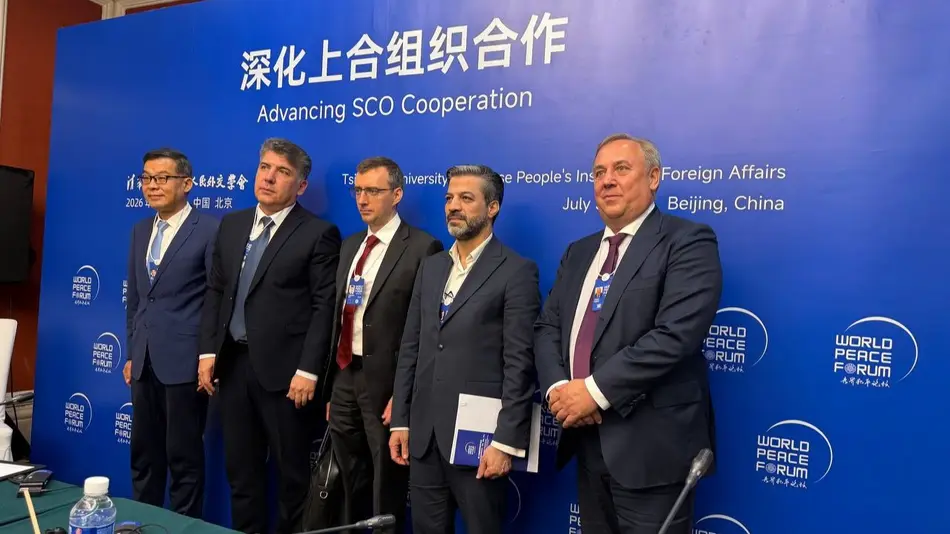
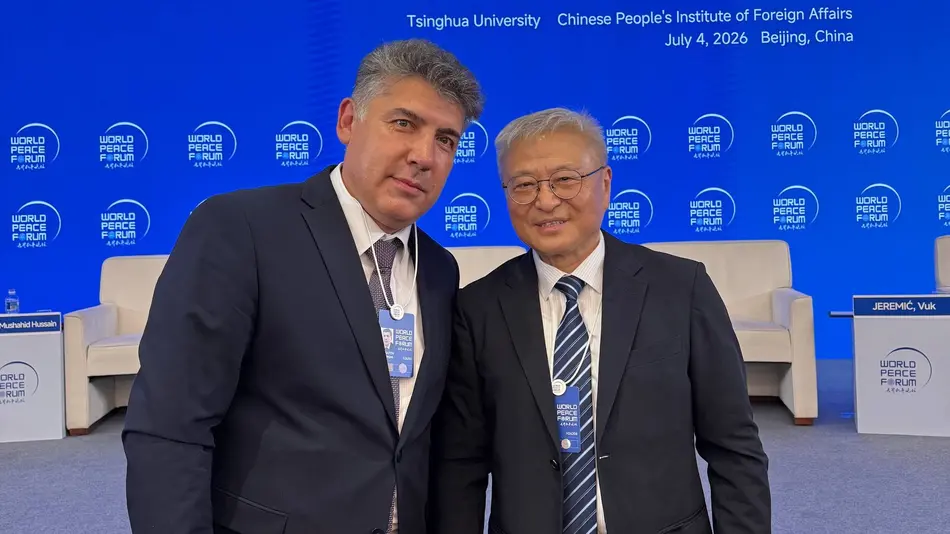
BEIJING, July 6. /Dunyo IA/. A delegation of the Institute for Strategic and Regional Studies under the President of Uzbekistan (ISRS), led by First Deputy Director Akramjon Nematov, participated in the 14th World Peace Forum, held in Beijing from 2nd to 4th July, reports Dunyo IA correspondent.
Organized by Tsinghua University with the support of the Ministry of Foreign Affairs of the People's Republic of China, the Forum brought together more than 400 delegates from 60 countries, including representatives of political, diplomatic and academic circles from the United States, Russia, Europe, Asia, Latin America, Africa and the Middle East.
Speaking at the opening ceremony, Vice President of the People's Republic of China Han Zheng outlined Beijing's key approaches to shaping a new international security architecture and underscored the importance of multilateral cooperation amid growing geopolitical turbulence.
During a session devoted to the prospects for cooperation within the Shanghai Cooperation Organisation (SCO), Akramjon Nematov presented Uzbekistan's vision for the Organisation's future development. Quoting President Shavkat Mirziyoyev, he noted that, for Uzbekistan, the SCO is not merely a foreign policy platform, but an effective instrument for ensuring security, sustainable development and mutually beneficial cooperation.
According to Akramjon Nematov, importance of regional cooperation mechanisms is growing amid profound transformations of the international system. “At a time when global governance institutions are facing mounting challenges and are not always able to respond swiftly to emerging threats, regional formats are assuming greater significance. It is precisely for this reason that the role of the SCO is objectively increasing today”, - he noted.
At the same time, the expert stressed that the Organisation has preserved its unique nature. “Shanghai Cooperation Organisation is not a military alliance and was never conceived as an alternative to the existing international institutions. Its uniqueness lies elsewhere. It brings together countries with different political systems and interests, while retaining the ability to develop common approaches. In an increasingly fragmented world, the ability to sustain dialogue has become a strategic resource in its own right”, - he stated.
Considerable attention was also devoted to the transformation of contemporary challenges. In Akramjon Nematov’s assessment, security and development can no longer be viewed separately. “It is impossible to ensure security without a resilient economy, and sustainable development cannot be achieved without security”, - he said.
Against this backdrop, he noted that President Shavkat Mirziyoyev has consistently advocated the establishment within the SCO of a new model of economic partnership based on connectivity and resilience. This is not about closing off the region, but about strengthening its collective capacity to withstand external economic shocks through enhanced industrial cooperation, greater transport and digital connectivity, expanded trade and the development of resilient production and supply chains. As the ISRS representative emphasized, “Economic interdependence is not only a source of growth but also an essential element of collective security”.
Accordingly, the expert noted that the SCO's further evolution should be guided by a new agenda in which security, economic integration, transport connectivity and technological development are viewed as mutually reinforcing components of a comprehensive strategy aimed at strengthening resilience and stability throughout the Organisation's area.
Particular emphasis was also placed on the need to preserve an atmosphere of trust within the Organisation. According to Akramjon Nematov, “Against the backdrop of growing international tensions, it is essential to prevent external contradictions from spilling over into the Organisation itself. Therefore, a culture of dialogue is not merely a value, but a prerequisite for the SCO's continued development”. At the same time, he acknowledged that “differences among member states are inevitable. This is precisely why dialogue, consultations and confidence-building mechanisms are essential to ensure that such differences do not undermine the common agenda”.
Outlining Uzbekistan's vision for the Organisation's future development, the ISRS representative emphasized that the Republic “consistently supports preserving the SCO's open and non-aligned character while strengthening the principles of good-neighbourliness”.
The central message of his remarks was that Central Asia must remain the strategic core of the SCO. As Akramjon Nematov stressed, “This is reflected in the Tianjin Declaration adopted at the 2025 Summit in Beijing. More importantly, however, it reflects the objective structural reality of Eurasian cooperation”.
According to him, it is Central Asia that provides the Organisation's internal cohesion. “A look at geography, economics and security makes it evident that Central Asia serves as the internal connective core of the SCO”. In this context, the expert explained that the region constitutes Eurasia's principal transit hub, through which routes linking East and South Asia with Russia and the Middle East pass. Moreover, “it is here that the principles of the Shanghai Spirit are being implemented most consistently”, while the countries of the region are moving from confidence-building towards the implementation of large-scale infrastructure projects.
As an example, the ISRS representative referred to the China–Kyrgyzstan–Uzbekistan railway, noting that “this is not merely a transport route. It is a strategic corridor capable of reshaping the architecture of regional connectivity”.
He also recalled that the 2022 SCO Samarkand Summit became “a genuine turning point”, laying “the strategic and conceptual foundations of the SCO's new economic architecture”. Furthermore, it is in Central Asia that the Organisation's key security institutions are located, including the Regional Anti-Terrorist Structure (RATS) in Tashkent, as well as the newly established centres in Dushanbe and Bishkek. “In essence, Central Asia today serves as the systemic stabiliser of the entire Organisation”, Akramjon Nematov concluded.
A significant part of his address was devoted to Afghanistan. According to the ISRS expert, “SCO's ability to act as a responsible stakeholder in global governance depends directly on how effectively it ensures stability within its own region”. He emphasized that “Afghanistan is a key element of regional security. Instability in the country affects the entire wider Eurasian region - from terrorism and drug trafficking to transport connectivity and economic integration”.
In this regard, First Deputy Director of the ISRS stressed the need to move from discussions to practical action. “It is important not only to maintain attention to the Afghan issue, but also to move towards practical mechanisms of engagement. Resuming the work of the SCO - Afghanistan Contact Group remains highly relevant. Equally important is to develop dialogue with the Afghan authorities and support efforts aimed at reviving the country's economy. Without Afghanistan's economic recovery, it is impossible to speak of long-term regional stability”, - Akramjon Nematov emphasized.
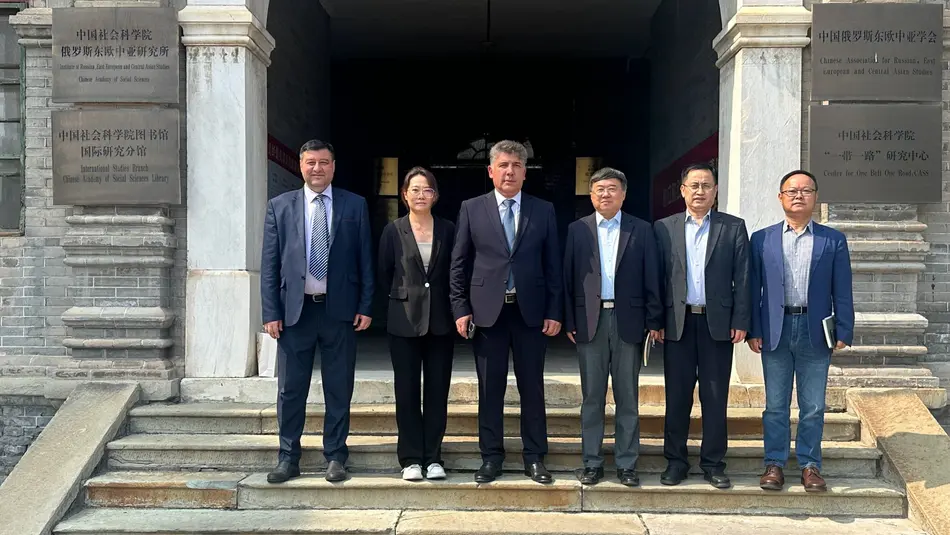
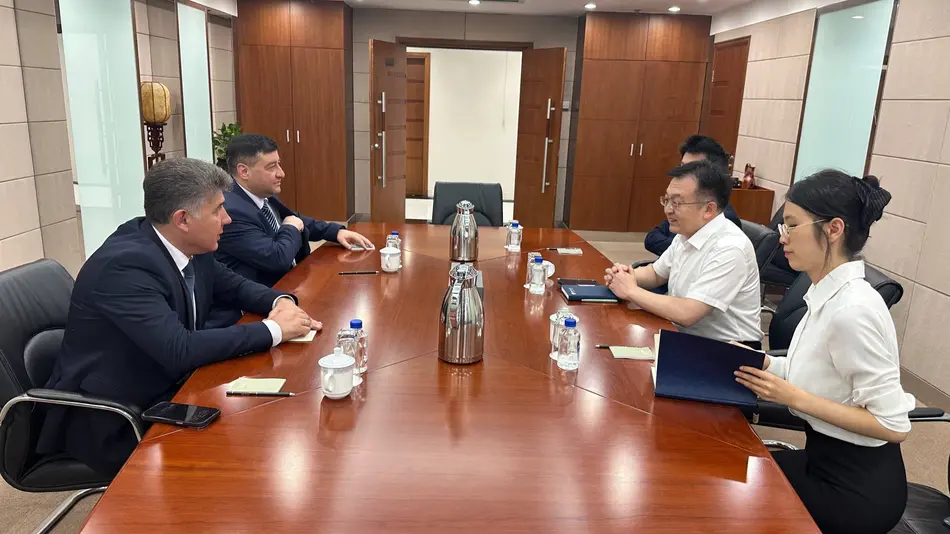
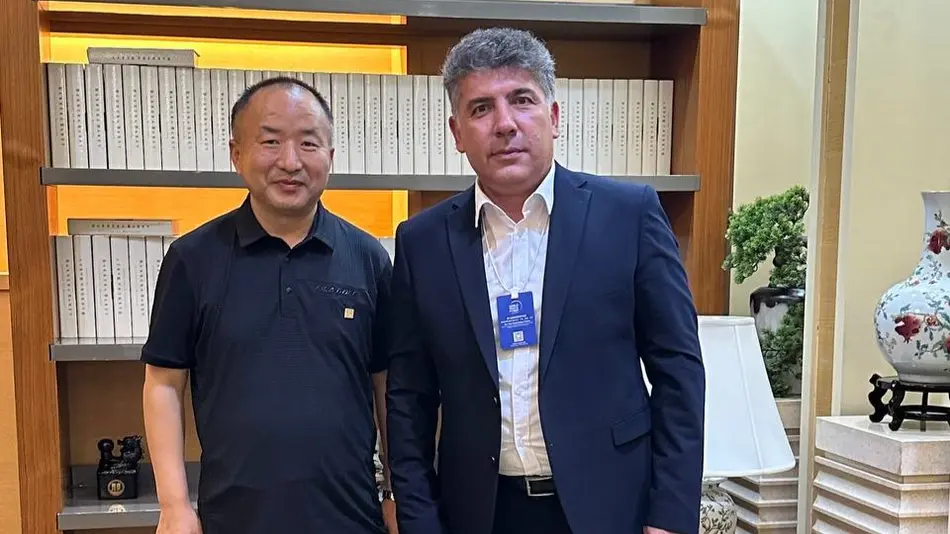
On the sidelines of the Forum, ISRS delegation held meetings with the heads of China's leading think tanks and universities, including Sun Zhuangzhi, Director of the Institute of Russian, East European and Central Asian Studies of the Chinese Academy of Social Sciences (CASS); Ding Xiaoxing, Director of the Institute of Eurasian Studies of the China Institutes of Contemporary International Relations (CICIR); Xu Baofeng, President of President of the World Sinology Center; and Professor Yan Xuetong, Director of the Institute of International Relations at Tsinghua University.
During the meetings, the Chinese experts unanimously noted that, thanks to the policies pursued by President Shavkat Mirziyoyev, Uzbekistan–China relations have reached the level of an all-weather comprehensive strategic partnership.
They also highlighted the President of Uzbekistan's role in strengthening good-neighbourly relations in Central Asia, advancing regional integration and promoting the concept of a “New Central Asia”. As a result, the region is increasingly viewed in China as a land of new opportunities and one of the key centres of Eurasian cooperation.
Particular attention is expected to be devoted to the high-tech dimension of bilateral cooperation. In this regard, the Chinese side expressed its readiness to further expand cooperation with Uzbekistan in the fields of the digital economy, artificial intelligence, innovation and expert dialogue.

Latest News
See all
Read also
Samarkand hosted an international scientific and practical conference on “Brother Cities: A New Model for Sustainable Development and Public Diplomacy”