New mechanisms for deepening Uzbek-German strategic partnership discussed in Berlin
March 10, 2026. 14:41 • 6 min
• 160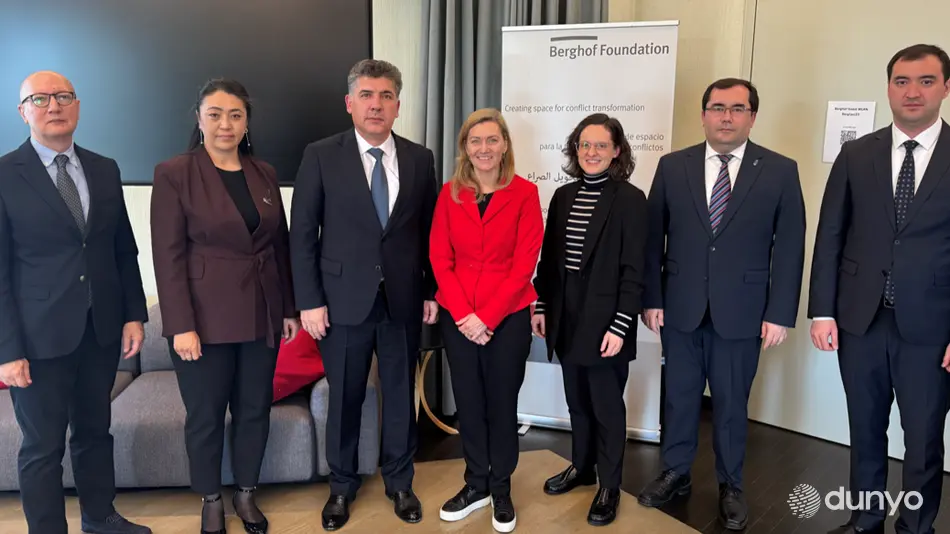
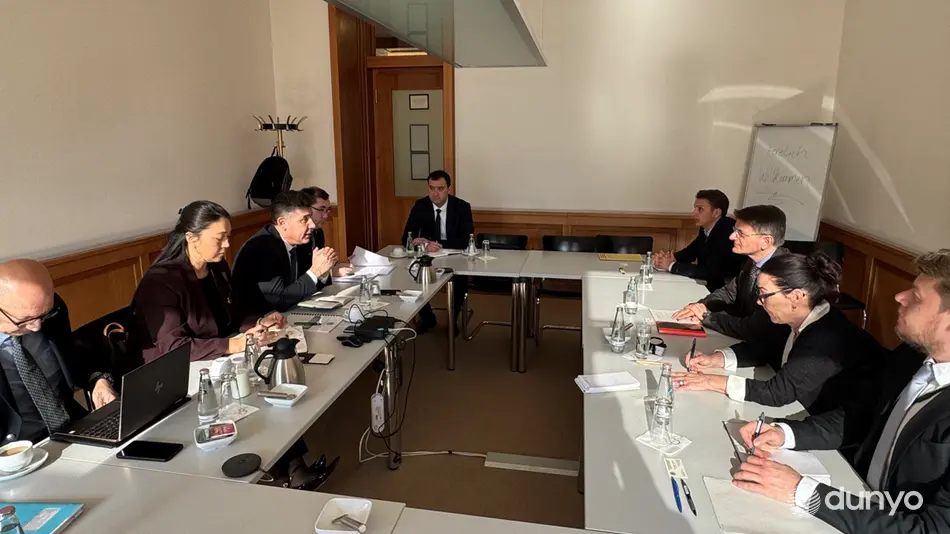
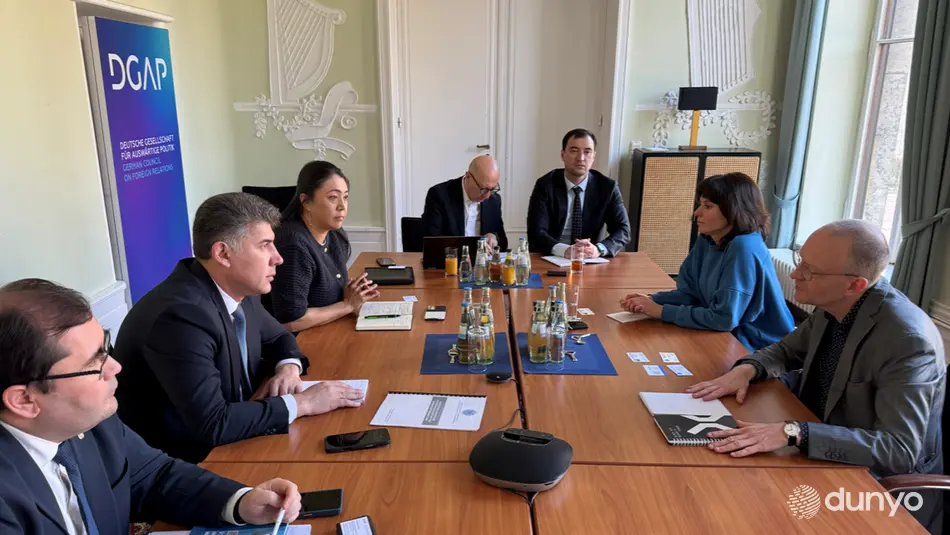
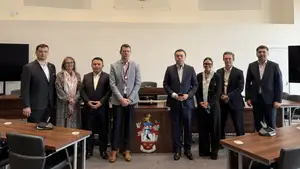
BERLIN, March 10. /Dunyo IA/. A working visit of a delegation of experts from Uzbekistan to Germany took place on March 4–7, organized jointly with the diplomatic mission of our country in Berlin, reports Dunyo IA correspondent.
The delegation included executives and experts from the Institute for Strategic and Regional Studies under the President of Uzbekistan (ISRS), the International Institute for Central Asia (IICA), and the Development Strategy Center.
During their stay in Berlin, negotiations were held with representatives of a number of German state institutions, including the Bundestag, the Federal Chancellery, the Federal Foreign Office, the Federal Ministry for Economic Affairs and Energy, as well as the Eastern Committee of the German Economy.
In addition, expert meetings and roundtables were held with leading German think tanks, including the Global Public Policy Institute (GPPi), the Centre for East European and International Studies (ZOiS), the German Council on Foreign Relations (DGAP), as well as major foundations – the German Institute for International and Security Affairs (SWP), the Carnegie Endowment for International Peace, the Berghof Foundation, the Konrad Adenauer Foundation, and the German Marshall Fund.
The purpose of the visit was to conduct a substantive exchange of views on pressing issues of the global and regional agenda, analyse the dynamics of relations between Germany and the Central Asian region as a whole, and identify concrete steps to deepen bilateral Uzbek–German cooperation.
The parties emphasized that at the present stage the political dialogue between Uzbekistan and Germany demonstrates a high level of activity, based on the principles of trust and mutual consideration of interests. The intensity of contacts is confirmed by the regular nature of visits at the highest and high levels.
In this context, special attention was paid at the Bundestag to deepening interparliamentary cooperation as a key instrument for advancing the bilateral and regional agenda. Participants of the meeting confirmed that the intensification of direct contacts between legislators will ensure effective follow-up to previously adopted decisions and will serve as a platform for the exchange of experience in the fields of lawmaking and public administration.
The issue of elevating bilateral economic partnership to a qualitatively new level was at the center of the discussions. The German side highly appreciated Uzbekistan’s consistent course toward industrial modernization as well as digital and green transformation.
In particular, representatives of the Federal Ministry for Economic Affairs and Energy emphasized that the chosen development strategy enjoys full support within German business circles. It was noted that the creation of transparent and predictable conditions facilitates a large-scale inflow of German investment into the republic’s economy.
A clear confirmation of this is the steady positive dynamics of trade and economic cooperation. It was noted that over the past ten years the volume of bilateral trade has almost tripled, reaching a record level of $1.42 billion by the end of 2025.
At the same time, it is noteworthy that the structure of German exports has a pronounced investment character, with more than 55% of supplies consisting of high-tech equipment and vehicles.
As stated by Michael Harms, Executive Director of the Eastern Committee of the German Economy, in the eyes of German business Uzbekistan is transforming into a regional industrial locomotive that provides a reliable platform for the implementation of joint investment projects. In this context, the parties emphasized the unconditional priority of transitioning from “classical trade exchange” to deep industrial cooperation.
Particular attention was paid to the importance of transferring advanced German technologies and introducing European standards into the Uzbek economy. It was noted that such cooperation is strategically beneficial for both sides in terms of diversifying foreign economic partners and strengthening supply chain resilience.
Among the priority areas of cooperation identified were the attraction of high technologies and know-how from Germany, joint development of renewable energy generation, as well as the establishment of reliable and secure logistics routes, primarily through the consistent strengthening of the transport and transit potential of the Middle Corridor.
The parties also substantively reviewed the mechanisms for implementing the Migration Partnership Agreement. It was noted that cooperation is based on the principle of mutual benefit.
Uzbekistan’s skilled labour resources represent a key factor in meeting Germany’s workforce demand, which exceeds 1.7 million jobs. Thanks to the active Uzbek–German partnership in the field of migration, citizens of Uzbekistan receive safe and legal access to the German labour market, where their rights are reliably protected.
During the meetings it was noted that by working in Germany, Uzbek specialists acquire unique competencies that in the long term are regarded as a strategic investment in human capital for the country’s domestic technological breakthrough and industrial development.
Touching upon Tashkent’s regional policy, the German side emphasized that the proactive cooperation of Central Asian states is a “forward-looking decision” amid growing uncertainty in the world. According to Berlin, this contributes both to the internal stability of each state and to strengthening the region’s agency and influence in the international arena.
High appreciation was expressed for the outcomes of Uzbekistan’s chairmanship within the framework of the Consultative Meetings of the Heads of State. According to the German side, thanks to Tashkent’s leadership this format has gained sustainable momentum, becoming the foundation for the formation of a new architecture of regional cooperation, an unprecedented expansion of multifaceted interaction, and the strengthening of stability and sustainable development in Central Asia.
Analysts from the German Council on Foreign Relations noted that the commitment of Central Asian states to a democratic path of development, the principles of multilateralism, and the norms of international law creates favorable conditions for deepening relations between the European Union and the countries of Central Asia.
In this context, the growing strategic relevance of developing the “Central Asia + Germany” format was highlighted, enabling Berlin to build a systemic dialogue with a unified and predictable region that represents a rapidly growing market with a population of more than 80 million people and a combined GDP exceeding $560 billion.
In this regard, at the Federal Chancellery special attention was paid to deepening interaction with the Central Asian states and ensuring the long-term sustainability of this format. It was noted that Berlin aims to move from periodic high-level contacts to systemic partnership. In this connection, the need to establish permanent mechanisms ensuring continuous political, economic and expert dialogue was emphasized.
Overall, the results of the visit demonstrated that the Republic of Uzbekistan has a reliable strategic partner in Germany. It is evident that both sides have clear benchmarks and priorities for cooperation, as well as an understanding of their mutual relevance.
The parties agreed that a significant reserve for the growth of bilateral relations lies in the sphere of technology transfer and the optimization of logistics routes. Synergy in these sectors is critically important for forming a new architecture of cooperation capable of ensuring the technological resilience and competitiveness of Uzbekistan and Germany in conditions of global turbulence.
In a broader context, the partnership between Tashkent and Berlin is viewed as an important factor for sustainable development and the strengthening of interregional ties between Central Asia and the European Union.
In order to ensure substantive expert and analytical support, an agreement was reached to continue regular dialogue between the leading think tanks of the two countries and to launch joint applied research on topical issues of the bilateral agenda.

See all