View from Budapest: Uzbekistan strengthens independent role of Central Asia in Eurasia
October 31, 2026. 09:00 • 4 min
• 314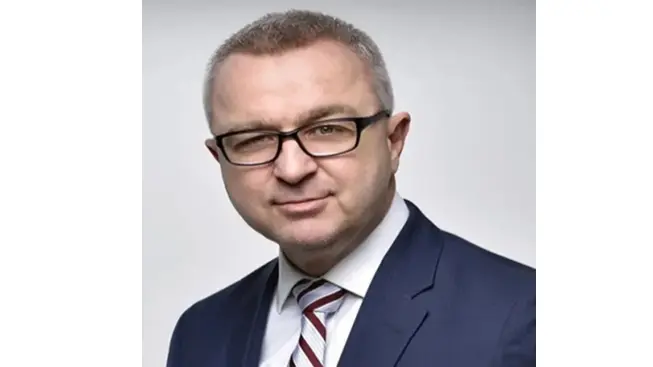
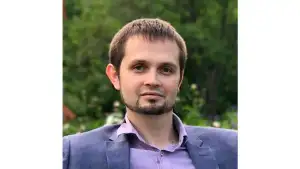
BUDAPEST, October 31. /Dunyo IA/. Director of the Doctoral School of Regional Studies and Business Administration at István Széchenyi University, Professor László Vasa, commented for Dunyo IA on the participation of the President of Uzbekistan in the 13th Summit of the Organization of Turkic States (OTS) in Ankara:
- In my view, the main objective of the working visit of President Shavkat Mirziyoyev to Türkiye is to transform the already established political relations and shared cultural identity into concrete economic, infrastructural, and investment outcomes. This will strengthen Uzbekistan's positioning within the Organization of Turkic States (OTS) and contribute to transforming the Turkic world into a more interconnected economic and political space.
Significance of Uzbekistan’s initiatives extends beyond the borders of the country itself. They contribute to the gradual transformation of the OTS from a platform predominantly focused on political and cultural cooperation into a more functional regional organization.
I believe that the real opportunities for economic partnership lie not merely in increasing trade volumes, but in establishing joint manufacturing capacities and value-added chains. Türkiye’s industrial expertise, technological capabilities and connections to international markets can complement Uzbekistan's developing manufacturing sectors. This opens up prospects for joint projects involving companies from Azerbaijan, Kazakhstan, and other Turkic states, aimed at manufacturing high-value-added products for both regional and European markets.
Development of transport connectivity represents another strategic priority. For Uzbekistan, the diversification of international routes is not merely a commercial task, but a matter of long-term economic sovereignty. The Middle Corridor, which connects Central Asia with Azerbaijan, Georgia, Türkiye and Europe, is becoming an increasingly vital route for international freight transportation.
At the same time, infrastructure alone is insufficient. The harmonization of customs procedures, digitalization of documentation, predictability of transit tariffs and efficient organization of border control are required. Cooperation within the framework of the "E-Permit" system already demonstrates the capacity of the OTS to provide practical solutions in this field.
I also see significant prospects in energy cooperation. Uzbekistan's plans to develop renewable energy, alongside initiatives for the transmission of green electricity involving Kazakhstan and Azerbaijan, open up opportunities to connect Central Asia's energy resources with Europe. Türkiye can play an important geographical and infrastructural role in the implementation of these projects.
From a European, and particularly a Hungarian perspective, the OTS should not be viewed as an alternative or a competitor to European cooperation. On the contrary, it is a complementary regional mechanism capable of enhancing transport connectivity, diversifying supply chains, and creating economic opportunities between Europe and Central Asia.
It is also important to emphasize that expanding Uzbekistan’s participation in the OTS does not contradict its multi-vector foreign policy.
Furthermore, I believe that cultural diplomacy, educational exchanges, scientific cooperation and academic mobility can serve as a solid foundation for long-term regional integration. These areas present additional opportunities for European universities and research institutions as well.
Regarding the outcomes of the visit, I believe they serve to strengthen the strategic partnership between Uzbekistan and Türkiye, giving a new impetus to cooperation in the fields of transport, energy and investment. At the multilateral level, the practical application of existing agreements and instruments, including the Turkic Investment Fund and digital trade mechanisms, will be of particular importance.
In a broader geopolitical context, Uzbekistan’s active participation in the activities of the organization contributes to strengthening the independent role of Central Asia in shaping the regional agenda. Tashkent can become an important link between the interests of Central Asian nations, the Trans-Caspian route, and European economic opportunities.
Thus, strategic significance of the meeting in Ankara lies in the opportunity to transition from political solidarity to deeper practical integration. For Uzbekistan, this means diversifying economic ties, improving transport connectivity, and strengthening its position in the region, while for the OTS, it represents an opportunity to transform significant economic and geographical potential into tangible benefits for all member states.

Latest News

See all
Read also

View from Paris: Uzbekistan strives to transform OTS into an effective mechanism for international cooperation
View from Moscow: Multi-Vector Policy of Uzbekistan and the OTS Strategy complement each other well