A view from Sweden: Uzbekistan is playing a leading role in advancing voluntary cooperation across Central Asia
August 01, 2026. 13:30 • 4 min
• 1140
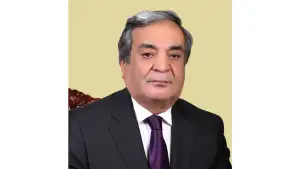
STOCKHOLM, August 1. /Dunyo IA/. Johan Engvall, Senior Expert at the Institute for Security and Development Policy (ISDP) in Sweden, shared his assessment with Dunyo IA of the outcomes of the Uzbekistan-Kyrgyzstan summit, held in Cholpon-Ata on July 30:
- During the state visit of President Shavkat Mirziyoyev to Kyrgyzstan, the Presidents of Uzbekistan and Kyrgyzstan, Sadyr Japarov, signed more than ten agreements covering cross-border cooperation, water resource management, infrastructure, tourism, education, and other areas.
The most significant outcome was the signing of the Treaty on Allied Relations, which elevated Uzbekistan–Kyrgyzstan ties to the level of an alliance, placing them alongside Uzbekistan's allied partnerships with Kazakhstan and Azerbaijan.
The treaty legally formalizes the transformation that began with the Declaration on Strategic Partnership, Strengthening Friendship, Good-Neighbourliness and Trust between Uzbekistan and Kyrgyzstan, signed on October 5, 2017. That declaration was one of the earliest indications that President Shavkat Mirziyoyev had made reconciliation and the development of constructive relations with neighbouring countries a top foreign policy priority.
The new agreement marks a historic milestone in the profound transformation of bilateral relations that had long been regarded as among the most challenging in Central Asia.
In 2016, President Shavkat Mirziyoyev set out to change this reality by making Central Asia the principal focus of Uzbekistan's foreign policy, guided by the principle of 'zero problems with neighbours.'
Since then, Uzbekistan has worked to eliminate long-standing sources of regional tension, including territorial disputes and disagreements over water resources. At the same time, it has consistently strengthened bilateral relations with all neighbouring countries under the banner of promoting peace, stability, and security in 'our common home – Central Asia.'
Within the framework of the emerging New Central Asia, Uzbekistan and Kyrgyzstan have, in less than a decade, developed one of the closest strategic partnerships in the region.
This rapprochement offers clear benefits to both sides. For Kyrgyzstan, stronger relations with Uzbekistan create broader economic opportunities through access to the Uzbek market of nearly 40 million consumers. It also enhances transport connectivity and expands cooperation in the energy sector.
For Uzbekistan, the benefits include secure access to transport routes through Kyrgyzstan toward China—one of the country's key economic partners—as well as joint management of vital water resources.
For both countries, further expansion and diversification of bilateral trade are essential to ensuring stability and prosperity, particularly in the densely populated Fergana Valley.
However, the significance of the treaty extends far beyond bilateral relations. Cooperation based on trust, rather than rivalry fuelled by mutual suspicion, is gradually becoming the defining principle of regional politics in Central Asia.
From this perspective, the treaty confirms the emergence of a New Central Asia, in which the five countries of the region increasingly engage directly with one another rather than relying primarily on external partners.
Uzbekistan plays a leading role in promoting voluntary regional cooperation among Central Asian states. This is of fundamental importance. A more integrated region is better positioned to engage with external powers from a position of unity rather than fragmentation. In turn, this reduces the risk of outside actors exploiting differences among Central Asian countries, as has often occurred in the past.
In other words, the continued strengthening of regional unity—of which the Uzbekistan–Kyrgyzstan treaty is another important milestone—provides all Central Asian governments with greater opportunities to pursue balanced and multi-vector foreign policies.
The developments unfolding in Central Asia also offer valuable lessons for other regions of the world. The alliance treaty between Uzbekistan and Kyrgyzstan demonstrates that long-standing disputes can be resolved peacefully through sustained political commitment. Gradual confidence-building measures, combined with the necessary political will, make compromise possible.
The experience of Uzbekistan and Kyrgyzstan shows that confidence-building can overcome decades of mutual mistrust.
The new agreement has the potential to fundamentally transform relations between the two countries. To fully realize the benefits of this new framework of cooperation, however, sustained political attention and tangible results that improve the lives of people in both countries will be essential.

Latest News





See all
Read also

View from Austria: Uzbekistan revives its role as a crossroads of civilizations through a new format of cooperation with South Korea

View from Moscow: Visit of the President of Uzbekistan to Seoul confirms Tashkent's course toward expanding the circle of technological and investment partners