Attitude from Türkiye: Uzbekistan consistently expands the Horizon of its foreign policy
July 11, 2026. 10:00 • 3 min
• 314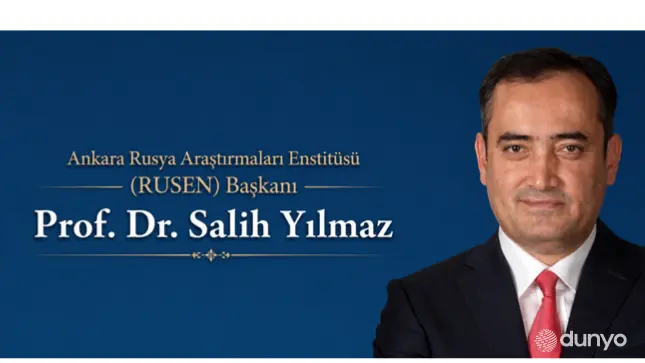
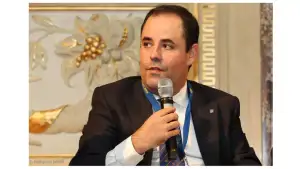
ANKARA, July 11. /Dunyo IA/. Director of the Institute for Russian and CIS Studies (RUSEN), Professor Dr. Salih Yılmaz, commented for Dunyo IA on the outcomes of the official visit of the President of Uzbekistan Shavkat Mirziyoyev, to Belarus on July 8–9:
- In international politics, by no means every state visit becomes a major event. Most of them follow a long-familiar scenario: solemn ceremonies, a joint photo, and a few agreements that are soon forgotten. However, the visit of the President of Uzbekistan Shavkat Mirziyoyev, to Belarus belongs to a fundamentally different category.
- Behind the external diplomatic attributes, a more significant trend is visible - Uzbekistan is consistently expanding the horizon of its foreign policy. Today, Tashkent no longer operates under the logic of a geopolitical choice between East and West or North and South. It acts differently: wherever there is mutual interest, cooperation emerges.
Signing of the Declaration on Strategic Partnership is, undoubtedly, the main political outcome of the visit. However, the declaration itself is merely the tip of the iceberg. What is much more interesting is what lies beneath it. We are talking about dozens of directions where the parties have decided to work together: from industrial cooperation and agriculture to education, science, digital technologies, and social policy. In other words, the relations are beginning to acquire a systematic character.
This is precisely where the new philosophy of Uzbek diplomacy manifests itself. Just a few years ago, such visits were often perceived as a demonstration of political support. Today, they are becoming an instrument of economic development. Every trip must yield a concrete result - new investments, new markets, new jobs and new opportunities for business.
Agreement on the organized employment of citizens of Uzbekistan in Belarus is also telling. Today, many countries compete not only for capital but also for human resources. Belarus experiences a shortage of workforce, while Uzbekistan possesses a young and qualified labor potential. If this mechanism functions effectively, both sides will benefit.
Establishment of the Uzbek-Belarusian Expert Council looks no less symbolic. Political leaders define the direction, but it is precisely the expert community that fills it with substance. In the modern world, sustainable relations are built not only by presidents and ministers - they are maintained daily by analysts, universities, research centers and business circles.
In Türkiye, there is close observation of how Uzbekistan's foreign policy is changing. It is becoming increasingly evident that Tashkent does not merely seek to expand the number of its international contacts. It is building a network of strategic partnerships where every new agreement becomes part of a larger architecture of cooperation.
This is precisely why the Minsk visit should be viewed not as an isolated diplomatic event, but as another step in Uzbekistan's long-term strategy. Today, republic is confidently transforming from a participant in regional processes into one of their architects. And this, perhaps, is the main outcome of the visit to Belarus.

Latest News

See all
Read also

View from Russia: Uzbekistan is actively shaping its own economic agenda across the post-soviet space
View from Madrid: Agreements Reached in Minsk Are of Historic Significance and Open a New Chapter in Uzbekistan-Belarus Relations