“Orta Lectura”: Council of Elders serves as a mechanism for preserving Central Asian Identity
January 06, 2026. 12:44 • 3 min
• 195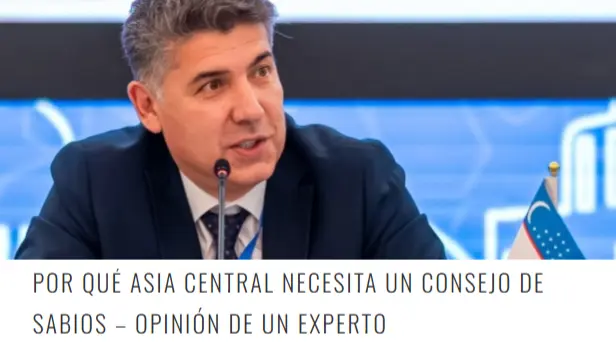
MADRID, January 6. /Dunyo IA/. The Spanish analytical news portal “Otra Lectura” has published an article entitled “Why Central Asia Needs a Council of Elders – An Expert's Opinion”, reports Dunyo IA correspondent.
The article features comments from Akramjon Ne’matov, First Deputy Director of the Strategic and Interregional Studies Institute under the President of Uzbekistan, who shared his insights with Dunyo Information Agency.
According to Ne’matov, The proposal put forward by the President of Uzbekistan to create a Council of Elders of Central Asia warrants particular attention, as it transcends standard institutional approaches and draws on the region’s profound social and cultural foundations. It is not intended as a formalized body or an additional political layer, but as a return to time-tested mechanisms of social consensus that have historically underpinned stability and internal cohesion in Central Asian societies.
Historically, the institution of elders has played a central role in Central Asia as a means of preserving social harmony, mediating conflicts, and reaching broadly accepted decisions. Unlike formal legal frameworks, elders enjoyed legitimacy grounded in trust, wisdom, familiarity with local traditions, and broad societal recognition. This form of community-based arbitration proved instrumental in safeguarding societal stability during periods of political change, external pressures, and internal tensions.
Ne’matov emphasizes that elevating this logic to a regional level allows for the creation of a unique informal channel for inter-state dialogue, free from political pressures, ideological differences, and external influences. The Council of Elders does not replace formal institutions or compete with state authorities; instead, it complements them, providing a trusted space for discussing sensitive issues that may not yet be ready for formal deliberation.
From the perspective of regional security, the Council is capable of preventive diplomacy. Its members, endowed with moral authority and deep knowledge of regional dynamics, can identify potential tensions early, mitigate conflicts, mediate during crises, and propose consensual solutions before issues escalate. This approach aligns with best international practices in conflict prevention while respecting Central Asia’s own traditions.
The Council serves as a “social adhesive”, strengthening regional cohesion. While formal integration mechanisms often face challenges related to sovereignty, mistrust, and divergent national interests, informal institutions maintain a sense of shared responsibility, solidarity, and community. The Council of Elders could become a promoter and embodiment of regional values, including good neighbourliness, mutual respect, tolerance, compromise, and peaceful coexistence.
Moreover, the Council’s advisory role supports long-term, rational decision-making. Elders draw not on momentary political calculations but on historical experience, cultural memory, and public sentiment, providing guidance aimed at the sustainable development of the region. This is especially relevant in areas such as water and energy resources, ecological threats, migration, transport interconnectivity, and humanitarian cooperation.
The initiative also strengthens the perceived legitimacy of regional cooperation among Central Asian societies, engaging not only political elites but also citizens in decision-making processes. It builds bridges between states and societies, generations, and between historical experience and future development strategies.
Ne’matov concludes that regional stability is shaped not only through treaties and institutions, but also through norms, values, traditions, and shared identities. In this context, the Council of Elders serves as a tool for reinforcing Central Asian identity, emphasizing the region’s shared history, common challenges, and collective destiny.
In sum, the Council of Elders can be seen as a mechanism for strengthening the stability and cohesiveness of Central Asia, united by a shared historical path, collective challenges, and responsibility for the future and this, Ne’matov notes, is precisely where its strategic value lies.

See all