“Gesamtmasche”: Textile Industry of Uzbekistran expands production of higher value-added products
October 29, 2026. 11:30 • 2 min
• 76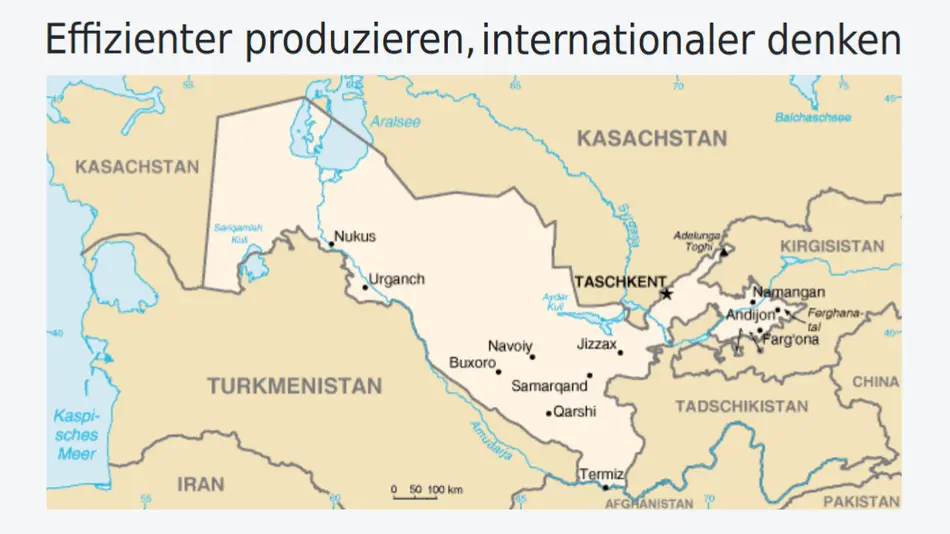
BERLIN, October 29. /Dunyo IA/. Specialised magazine “Gesamtmasche”, published by the German Confederation of the Knitting Industry, has published an article entitled “Produce More Efficiently, Think More Internationally” on structural changes in Uzbekistan’s textile industry and prospects for cooperation with German companies, reports Dunyo IA correspondent.
According to the author, Uzbekistan is making significant progress in its transition from a cotton-growing country to a supplier of finished textile products. In 2020, cotton yarn exports, valued at $941 million, significantly exceeded exports of finished products, but by 2023 the figures had almost converged. Article highlights the goal of tripling finished textile production to $20 billion by 2030.
According to the National Statistics Committee, textile exports increased by 24.1 percent in the first half of 2026, reaching $1.6 billion. Finished textile products accounted for 53 percent of exports, while yarn made up 31 percent.
Particular attention is given in the article to the “GUZ Partners” project, which supports the development of links between textile and apparel companies in Uzbekistan and Germany. In September, more than eight women entrepreneurs from various regions of Uzbekistan took part in “Lean Management” training at Albstadt-Sigmaringen University in Germany. They included representatives of Kashkadarya Region, designated as the project’s second pilot region in its new phase. According to Kamola Nabieva, a long-term expert with the project, the programme is geared towards the practical needs of businesses, while meetings with representatives of the German textile industry are intended to lay the foundations for cooperation that will continue beyond the project’s completion.
Magazine highlights Uzbekistan’s growing economic and transport and logistics significance for German companies. Development of the Trans-Caspian Transport Corridor is creating additional opportunities for trade, while the European Union aims to reduce freight transit times between Europe and Asia to no more than 15 days. The article also refers to the provisional application, since March 2026, of the Enhanced Partnership and Cooperation Agreement with the EU, as well as Uzbekistan’s efforts to accede to the World Trade Organization.
In conclusion, “Gesamtmasche” notes that Uzbekistan’s growing domestic market and new opportunities across the value chain are opening up promising avenues for cooperation with international partners.

Latest News


See all
Read also
Egyptian Media: International University of Turkic States creates a Unified Academic Space

“London Post”: Samarkand Summit secures Global Commitment to Children’s Wellbeing
Uzbekistan plans to begin Construction of Two Large Nuclear Power Units in 2027