ISRS Expert: Uzbekistan and Türkiye have successfully established the institutional architecture for a comprehensive strategic partnership
January 29, 2026. 17:12 • 6 min
• 49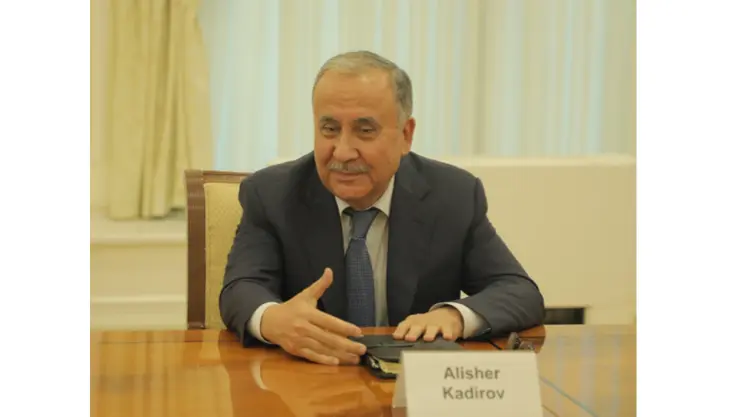
ТASHKENT, January 29. /Dunyo IA/. On the eve of the official visit of Uzbekistan’s President of Uzbekistan, Shavkat Mirziyoyev to Türkiye, Alisher Kadirov, Head of Department of the Institute of Strategic and Regional Studies under the President of Uzbekistan (ISRS), commented to Dunyo Information Agency on the current state of Uzbek-Turkish relations and their prospects for further development:
- The formula of “comprehensive strategic partnership” in relations between Uzbekistan and Türkiye has in recent years ceased to be merely a diplomatic definition and increasingly reflects the actual substance of bilateral cooperation. Political dialogue, economic collaboration, humanitarian contacts and transport connectivity form the stable pillars of systemic Uzbek-Turkish relations.
Analysis of the current state of partnership between the two countries confirms that Tashkent and Ankara have successfully established an institutional architecture for comprehensive strategic partnership. The key mechanism of bilateral interaction is the High-Level Strategic Cooperation Council co-chaired by the presidents of both states, with its fourth meeting scheduled for 2026. This format ensures systematic political dialogue and coordination of joint efforts across a broad spectrum of areas.
An important factor in the effective functioning of this institutional system is the active and trusting dialogue between Presidents Shavkat Mirziyoyev and Recep Tayyip Erdoğan, maintained through regular telephone conversations and meetings on the sidelines of international events. Such dynamics impart a personal dimension to strategic interaction and create a favorable environment for deepening practical cooperation at the levels of governments, businesses, and expert communities of both countries.
Uzbek-Turkish relations gain an additional dimension through cooperation within the Organization of Turkic States (OTS). The participation of Tashkent and Ankara in this organization's activities allows bilateral initiatives to be elevated to a broader regional level and to find synergy with other countries of the Turkic world. OTS summits, including those held in 2025, have demonstrated participants' commitment to giving practical substance to cooperation from economy and transport to culture and digital development.
For Uzbekistan and Türkiye, this creates opportunities for advancing joint projects, harmonizing approaches to the regional agenda, and strengthening their positions in a broader geopolitical space.
Uzbek-Turkish cooperation carries significant regional and international dimensions. During a meeting in the "4+4" format in January 2026, the parties discussed regional and international issues, including the situations in Afghanistan, Gaza, Ukraine, and Syria. This demonstrates the two states' intention to coordinate their positions on key items of the international agenda.
Against the backdrop of strengthening political understanding and institutional consolidation of Uzbek-Turkish partnership, the economic component of bilateral relations acquires particular importance, becoming a key driver for their further development.
Trade and economic cooperation between Uzbekistan and Türkiye has demonstrated consistent progress in recent years. The target of raising bilateral trade turnover to USD 5 billion in the medium term and to USD 10 billion in the longer term remains relevant and reflects the potential of bilateral ties. Trade volume in 2025 exceeded USD 3 billion, indicating significant progress compared to figures from eight years prior.
Particularly noteworthy is the structure of economic interaction. The relationship involves not only trade but also the formation of a stable investment presence. By the end of 2025, more than 2,100 enterprises with Turkish capital participation were operating in the country a testament to the establishment of a sustainable Turkish business ecosystem in Uzbekistan and one of the highest figures among Uzbekistan's foreign partners. The dynamics of direct investment from Türkiye clearly confirm the progressive strengthening of this area of cooperation: USD 2.2 billion was invested in Uzbekistan in 2024, and USD 2.9 billion during January–October 2025.
The parties are conducting systematic work to expand economic cooperation. In particular, during the 4th meeting of the Joint Strategic Planning Group held on January 21, 2026, progress was noted in implementing the Action Plan of the 8th meeting of the Joint Economic Commission (JEC). The key role of the JEC as an effective mechanism for developing practical trade and economic cooperation between Uzbekistan and Türkiye was emphasized.
For Uzbekistan, cooperation with Türkiye is valuable in that Turkish businesses bring not only capital but also managerial expertise, technologies, and production culture. For Türkiye, the Uzbek market is attractive as a dynamically developing economy with a population exceeding 38 million and growing domestic demand. In this sense, interaction increasingly takes on the character of mutual complementarity.
One of the notable trends of 2025 was the development of transport connectivity between the two countries, primarily in the aviation sector. The number of weekly flights reached 97, with routes expanding to 8 destinations. The broadening of geography and frequency of direct flights between Tashkent, Samarkand, Namangan, Andijan, Ankara, Istanbul, and Izmir promotes growth in business mobility, tourist flows, and humanitarian contacts. The launch of new routes by both national and private carriers became an important practical step toward further rapprochement.
The increase in flight numbers offers not only passenger convenience but also broader economic effects. It facilitates contacts between entrepreneurs, simplifies participation in exhibitions and negotiations, and makes accompanying joint projects more accessible. Prospectively, this also creates prerequisites for developing air cargo transportation, which could further strengthen trade and economic ties.
Energy cooperation also demonstrates positive dynamics. Turkish companies are actively participating in modernizing Uzbekistan's energy infrastructure, including projects for developing renewable energy sources.
Particular emphasis must be placed on the special role of cultural and humanitarian interaction in developing bilateral relations. Common historical, cultural, and linguistic roots create a favorable foundation for expanding cooperation in education, science, culture, and tourism. Branches of leading Turkish universities operate in Uzbekistan, joint educational programs are implemented, and student and faculty exchanges take place.
Tourist exchange between the two countries shows sustained growth. By the end of 2025, Türkiye entered the top five countries by number of tourists visiting Uzbekistan. In turn, Türkiye remains one of the most popular tourist destinations for Uzbek citizens. Development of tourism ties contributes to strengthening intercultural dialogue and people-to-people diplomacy.
These figures reflect not only the attractiveness of the Turkish tourism market but also the general expansion of population mobility. In the long term, it is precisely cultural and humanitarian ties that form the solid social foundation of bilateral partnership.
Analysis of 2025 dynamics allows identification of several directions that could become key to further deepening Uzbek-Turkish partnership:
First, development of industrial cooperation. The existing network of joint enterprises could become the basis for more complex projects oriented not only toward the domestic market but also toward exports to third countries. Such an approach corresponds to the strategic objectives of both economies.
Second, transport, logistics, and infrastructure. Expansion of air connectivity is an important step, but the potential for cooperation in this sphere is significantly broader and includes development of multimodal transportation, warehousing infrastructure, and digital trade solutions.
Third, services and human capital. Türkiye possesses considerable expertise in tourism, medicine, construction, and education. For Uzbekistan, interaction in these areas opens opportunities not only for adopting experience but also for jointly entering regional markets.
Uzbek-Turkish relations are developing on a positive and constructive basis, confirming the maturity and stability of bilateral interaction. The parties demonstrate readiness for dialogue, pragmatism, and a commitment to considering mutual interests. The growing number of joint enterprises, expanding transport links, increasing tourist flows, and stable political dialogue form a solid foundation for further development of cooperation.

See all