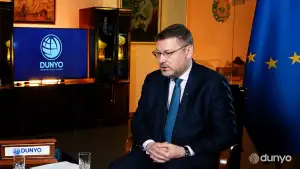
Kaha Imnadze: Commitment of Uzbekistan to peace, good-neighborliness and regional stability has fostered a new culture of dialogue and cooperation in Central Asia and beyond
August 07, 2026. 08:10 • 13 min
• 135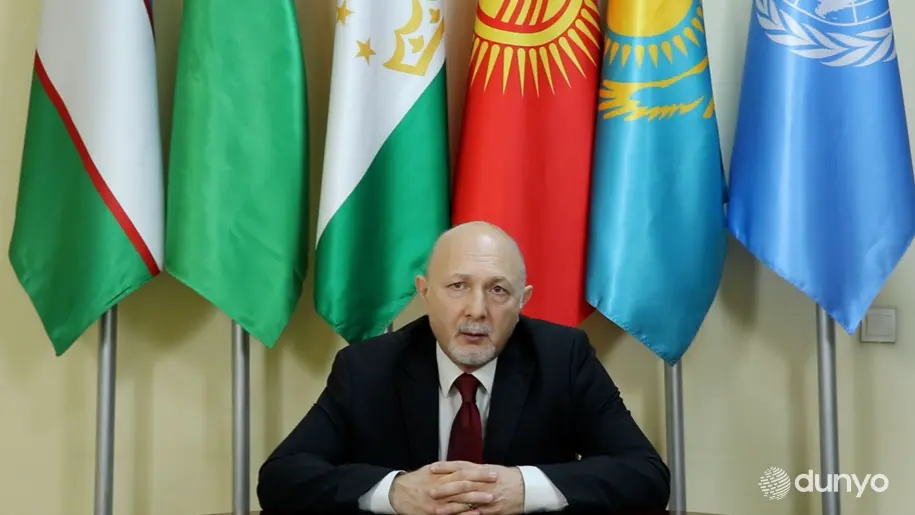
ASHGABAT, August 7. /Dunyo IA/. Kaha Imnadze, Special Representative of the UN Secretary-General and Head of the UN Regional Centre for Preventive Diplomacy for Central Asia, in an exclusive interview with Dunyo IA correspondent, spoke about the role of Uzbekistan in strengthening cooperation within the UN framework, large-scale reforms implemented in the country, regional integration, and prospects for further development of cooperation in the context of the “Uzbekistan – 2030” Strategy:
- This year marks the 10th anniversary of the launch of the large-scale reforms of New Uzbekistan. How do you assess the outcomes of this ten-year journey and which changes that occurred in the country do you consider the most significant?
- Reforms of the past decade are rightly referred to as the period of “New Uzbekistan”, as we have indeed witnessed the country's revival due to systemic legislative and institutional transformations, the strengthening of effective public administration, and large-scale modernization. We see a state that has successfully transitioned to regional convergence, integration and proactive international engagement.
Economy of Uzbekistan has become more open and market-oriented. Currency liberalization, the removal of restrictions on capital movements and foreign trade, as well as the privatization of state assets, have contributed to the steady growth of foreign direct investment. These are not cosmetic changes, but deep structural reforms that have altered the functioning principles of the Uzbek economy and the perception of the country by international partners.
Abolition of the exit visa system, the simplification of the visa regime as a whole, as well as the creation of a more open information environment, including expanded access for international mass media, have become real steps towards increasing transparency and public accountability. All of these are significant achievements; however, for me, perhaps the most important transformation has been the new foreign policy course.
Priority given to Central Asian diplomacy has facilitated the restoration of mutual trust between neighbouring states, the settlement of long-standing border and water issues, as well as the strengthening of Tashkent's role as a genuine center of regional dialogue. This reorientation has also helped transform the geopolitical situation in Central Asian, turning it from a space of protracted contradictions into a more cooperative regional system that is better prepared to collectively respond to common challenges in the field of peace, security, and sustainable development.
- During the past ten years, cooperation between Uzbekistan and the UN has intensified significantly. Which results of this interaction do you consider the most successful and what joint projects could become priorities in the future?
- UN Regional Centre for Preventive Diplomacy for Central Asia was established at the request of the states of the region themselves to provide them with a neutral and impartial platform for collectively addressing common security challenges. From the very beginning, Uzbekistan has been one of our most active partners in these efforts, consistently prioritizing dialogue over confrontation and supporting our mandate at the UN General Assembly year after year.
Several of the most significant results can be highlighted. In matters of delimitation and demarcation of state borders, Uzbekistan played a constructive role in resolving one of the long-standing sources of tension in the region. The trilateral summit of the leaders of Uzbekistan, Kyrgyzstan, and Tajikistan in Khujand, as well as the documents adopted following its outcomes, demonstrated how good-neighbouring states can successfully resolve multi-year border issues.
Today, we are building on this success through the peace process in the Fergana Valley, including the new initiative “Cross-Border Young Peacebuilders Initiative”, which directly engages the youth of all three countries in strengthening peace and trust.
In the area of countering terrorism and within the framework of the Joint Plan of Action agreed upon in Tashkent in 2022, we conduct training events across the region and organize expert exchanges on the early warning of violent extremism, countering terrorism, as well as the rehabilitation and reintegration of returnees from conflict zones.
As for water resources, energy, and climate change - historically one of the most sensitive issues in relations between upstream and downstream countries - we have managed to keep this topic within the channel of cooperation rather than confrontation. We work closely with Uzbekistan and the International Fund for Saving the Aral Sea in addressing the problems associated with the Aral Sea crisis. In general, we view water resource issues through the prism of peace and security, rather than exclusively as an environmental problem.
Particular attention is paid to the issues of inclusivity. Platforms such as the Central Asia Expert Forum, Women Leaders” Caucus and our Preventive Diplomacy Academy for Youth have significantly expanded the circle of participants in the regional dialogue. Today, it involves not only government representatives but also researchers, women leaders, and youth. Uzbekistan consistently supports this broader and more inclusive approach”.
- One of the key areas of the reforms has been the creation of a more open, investment-attractive, and internationally oriented economy. In your assessment, to what extent have these transformations contributed to strengthening trust on the part of the international community, investors, and partners?
- Matters of economic development, finance and investment fall outside the scope of my immediate mandate as the Special Representative of the UN Secretary-General and Head of the UN Regional Centre for Preventive Diplomacy for Central Asia. Nevertheless, as an observer of the ongoing processes, I see that Uzbekistan is consistently bringing its legislation and regulatory framework into compliance with international standards.
Having benefited from the free trade regime within the CIS framework, the country has also acquired the European Union's GSP+ preferential trade status, resumed its process of accession to the World Trade Organization, and expanded trade and investment cooperation with key partners both within the region and beyond. Foreign Investors Council was established at the initiative of the President of Uzbekistan.
Over recent years, Uzbekistan has transitioned from an economy perceived as high-risk to a state with competitive monetary and fiscal policies, as well as a predictable business environment. All of this is the result of the ongoing reforms and a clear testament to the growing trust on the part of the international community, investors and partners.
The major international rating agencies have upgraded Uzbekistan’s sovereign credit rating, and the volume of foreign direct investment has significantly increased. International financial institutions are substantially expanding their investment portfolios in the country, financing projects in industry, transport, logistics, energy, water management, agriculture, civil infrastructure development and other sectors, while increasingly shifting toward long-term structural financing.
Furthermore, we have witnessed successful placements of state and corporate bonds, as well as the execution of initial public offerings (IPOs). This demonstrates that international capital markets now perceive Uzbekistan as a country with a stable financial system and a favourable investment climate. All of this is a direct result of the ongoing reforms.
- Over the ten years of reforms, Uzbekistan has initiated a variety of international and regional projects. Which of the implemented initiatives, in your opinion, have the most long-term significance not only for the country but also for Central Asia and the international community as a whole?
- I must note that today Central Asia is significantly more integrated, cohesive, and united than it was just a few years ago. It is sufficient to recall the Consultative Meetings of the Heads of State of Central Asia, which have become a key regional mechanism for expanding cooperation based on common interests and developing joint responses to regional challenges.
Samarkand Solidarity Initiative for Common Security and Prosperity, put forward by President Shavkat Mirziyoyev, reflects the strategic vision of Uzbekistan as a state advocating for the formation of a more interconnected and resilient region. In the same vein, the UN Regional Centre for Preventive Diplomacy for Central Asia has been supporting the “Termez Dialogue” process since its launch in 2025. This platform is focused on strengthening connectivity between Central and South Asia, including finding ways for the constructive engagement of Afghanistan in regional cooperation.
This work is a logical continuation of Uzbekistan’s multi-year efforts to promote connectivity, which were initiated, in particular, at the International Conference ‘Central and South Asia: Regional Connectivity. Challenges and Opportunities’ held in Tashkent in July 2021. The unanimous adoption of the resolution initiated by Uzbekistan by the UN General Assembly in 2022 also marked an important milestone.
For us, the UN Regional Centre for Preventive Diplomacy for Central Asia, “Termez Dialogue” represents a long-term commitment to forming a shared space of peace, friendship, and prosperity for the two regions.
Of course, Uzbekistan has put forward a number of significant initiatives and draft resolutions at the UN. However, I would like to specifically highlight the initiative to strengthen regional cooperation and economic integration in the interests of sustainable development in Central Asia, which President Shavkat Mirziyoyev presented during the high-level general debate of the 80th session of the UN General Assembly in September 2025.
Adoption of this resolution served as evidence of the international community's recognition that a region, which until recently was associated with complex contradictions and deeply rooted mutual distrust, is today confidently transforming into a space of dialogue, good-neighbourliness, and joint development.
Moreover, the document underscored the particular significance of preventive diplomacy and noted the key role of the UN Regional Centre for Preventive Diplomacy for Central Asia as a crucial mechanism for conflict prevention, confidence-building and ensuring long-term regional stability.
- Many international experts refer to the reform experience of New Uzbekistan as one of the most notable examples of large-scale transformation in the region. Which elements of this experience, in your opinion, are of particular interest to other states?
- One of the most significant changes, which is also of interest to other states, has been the reorientation of Uzbekistan's foreign policy that began in 2016. The course towards peace, good-neighbourliness, and regional stability replaced a multi-year period of mutual distrust, forming a new culture of dialogue and cooperation both within Central Asia and beyond.
Chief lesson for countries facing historically established tensions or protracted disputes is that domestic reforms alone are often insufficient. Changes in foreign policy are equally important, and in many cases, it is precisely these changes that create the necessary conditions for successful transformations. Trust between neighbouring states does not emerge automatically as a result of economic or institutional reforms - on the contrary, it frequently becomes their necessary prerequisite. The experience of Uzbekistan convincingly demonstrates that the settlement of border issues, the opening of trade corridors, and the implementation of joint infrastructure projects became possible due to a conscious choice in favour of dialogue, mutual trust and constructive cooperation.
For any country striving for large-scale transformations, this means that restoring trust at the regional level should be considered an independent strategic reform, rather than a secondary direction or a side effect of economic and institutional changes.
No less indicative is Uzbekistan's experience in conducting economic transformations. Within a relatively short period, the country was able to implement the liberalization of the foreign exchange market, abolish the exit visa system, significantly simplify trade and investment procedures, execute the privatization of state assets, and open previously closed sectors to foreign investors. These measures ensured a substantial growth in foreign direct investment and foreign trade, as well as significantly enhanced the degree of integration of the national economy into regional and global markets. Today, the economy of Uzbekistan is considerably more competitive, open and dynamic than it was ten years ago.
For states considering the possibility of conducting similar reforms, the experience of Uzbekistan confirms that the sequence of transformations is of decisive importance. Liberalization of currency and trade regimes, supported by institutional reforms and effective mechanisms for protecting investments, allows maintaining a stable reform dynamic, strengthening the trust of businesses and investors, as well as reducing the risks of socio-economic instability.
- Speaking of the next decade, which areas of reform, in your opinion, will be of decisive importance for the further sustainable development of Uzbekistan and the strengthening of its position in the global economy and international politics?
- Uzbekistan has evolved into an influential regional middle power, playing an increasingly prominent and constructive role on both the regional and international stages. In today's fragmented world, it is difficult to overstate the country's commitment to acting as a unifying force and building bridges between states. It is precisely this approach that has earned Uzbekistan and its leadership well-deserved international recognition and respect.
Sustainable development of the country and the strengthening of its international positions in the coming decade will largely depend on preserving the achieved results and consistently implementing the priorities defined in the “Uzbekistan – 2030” Development Strategy. Among the key tasks are the further reduction of poverty, strengthening the independence of the judiciary, eradicating corruption, empowering civil society, youth, and women, as well as effectively responding to climate and water challenges, ensuring food and energy security, and further integrating the country into global production and logistics chains.
In this context, the International Forum on Poverty Reduction, initiated by Uzbekistan, is of particular importance, having become an authoritative platform for discussing topical issues and exchanging advanced international experience. Representing the UN Secretary-General António Guterres, I personally participated in the third forum held in Namangan under the motto “From Poverty to Prosperity”. The high-level forum was opened by President Shavkat Mirziyoyev and brought together representatives of governments, international organizations, development partners, the expert community, and civil society from Central Asian countries and other regions of the world to discuss comprehensive approaches to poverty reduction.
Work of the forum once again confirmed the close interconnection between poverty and instability, as well as the fact that a firm and sustainable peace is a necessary condition for long-term development and prosperity.
- On the occasion of the 35th anniversary of independence and the 10th anniversary of the reforms of New Uzbekistan, what would you like to wish the leadership and people of our country? What expectations do you associate with the further development of Uzbekistan in the coming years?
- I sincerely congratulate the leadership and people of Uzbekistan on these anniversaries. These are truly landmark dates and a well-deserved occasion to celebrate ten years of consistent and hard work that has laid a solid foundation for the irreversible modernization of the country. This important stage is the result of an effective partnership between a visionary leadership and the hardworking, dynamic people of Uzbekistan.
I am convinced that the achieved dynamic of reforms, based on an unwavering commitment to the principles of transparency, inclusivity, and the rule of law, as well as the course towards deepening regional cooperation and integration for the sake of lasting peace, security and stability in Central Asia and beyond, will be consistently maintained and developed in the coming years.
Link between peace, security, and sustainable development has always occupied a central place in the policy of President Shavkat Mirziyoyev and lies at the core of his vision for a shared, peaceful and prosperous future for Central Asia, based on the rich historical heritage, common values, and civilizational unity of the peoples of the region.
For us at the UN Regional Centre for Preventive Diplomacy for Central Asia, it is a great honour to be a reliable partner to Uzbekistan and all states of the region in achieving these noble goals. Taking this opportunity, I would like to express my sincere gratitude to Uzbekistan for its unwavering support for the activities of our Centre, as well as for the active participation of the country's representatives in the implementation of our initiatives.
I am confident that our constructive partnership and joint work will continue to contribute to finding long-term and sustainable solutions to common regional challenges, strengthening peace, security, and cooperation in Central Asia, as well as creating more favourable prospects for future generations.

Latest News

See all
Read also
Xu Tao: Today, Uzbekistan is a rapidly developing country playing an important role in the entire Central Asian region