
Egyptian Media: Artificial Intelligence should not become a tool to replace humans or control their fate
January 26, 2026. 12:29 • 3 min
• 1253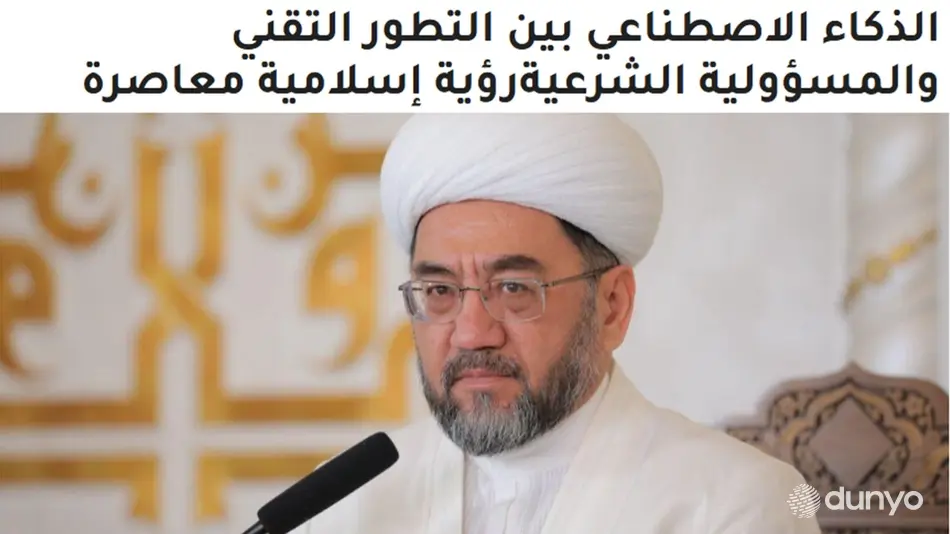
CAIRO, January 26. /Dunyo IA/. An article by the Chairman of the Muslim Board of Uzbekistan, Mufti Sheikh Nuriddin Khaliknazarov, titled “Artificial Intelligence between technical development and Shari'a Liability Contemporary Islamic Vision”, has received widespread coverage in Egyptian media, reports Dunyo IA correspondent.
In particular, the article was published in Arabic by prominent Egyptian news agencies, including “Al-Diplomasi” and “Al-Khabar al-Yaum”.
The publication notes that the world is currently witnessing a rapid development of artificial intelligence (AI) and digital technologies, which are being widely applied in economics, education, culture, media and public services. Amid such sweeping transformations, the need to examine AI from moral and religious perspectives is growing.
In this context, scholars emphasize that artificial intelligence is a product of human intellect and creativity. Today, innovative systems such as e-government platforms, smart cities, autonomous vehicles and unmanned aerial drones operate based on AI technologies.
However, despite its significant benefits, this progress is not without challenges and potential risks. Accordingly, there is a growing need to regulate the use of artificial intelligence, establish oversight mechanisms and implement measures to minimize possible negative consequences. Special attention is required when applying these technologies in sensitive areas related to religion and the issuance of fatwas.
According to scholars and researchers who participated in scientific conferences, artificial intelligence can serve as a supportive tool for collecting, analyzing, classifying, and facilitating access to Sharia knowledge. At the same time, it is unacceptable to rely solely on AI for independently issuing Sharia rulings or fatwas.
“To issue a fatwa, the direct involvement of a qualified faqih is essential, as legal rulings depend on a person’s specific circumstances, time, place, customs as well as social and economic conditions. Such subtle human factors cannot be fully comprehended by artificial intelligence independently. According to Islamic principles, the individual issuing a fatwa must be responsible and possess religious-legal authority, something a technical system cannot have”, - source writes.
In conclusion, the article notes that with careful and well-regulated use, artificial intelligence can bring substantial benefits to society across various spheres of life. Religious and academic institutions in the Islamic world, including the Muslim Board of Uzbekistan, remain committed to promoting Islamic education, strengthening dialogue between religion and science and seeking solutions to contemporary global challenges, while effectively harnessing the potential of modern technologies.

Latest News




See all
Read also
"RBC": Uzbekistan seeks to strengthen International Relations and Develop Economic Diplomacy

“Kommersant Weekend”: Contemporary Art Center of Tashkent opens in historic 1912 building


