Avaza Summits - a new step toward sustainable development and regional integration
October 08, 2026. 08:10 • 6 min
• 332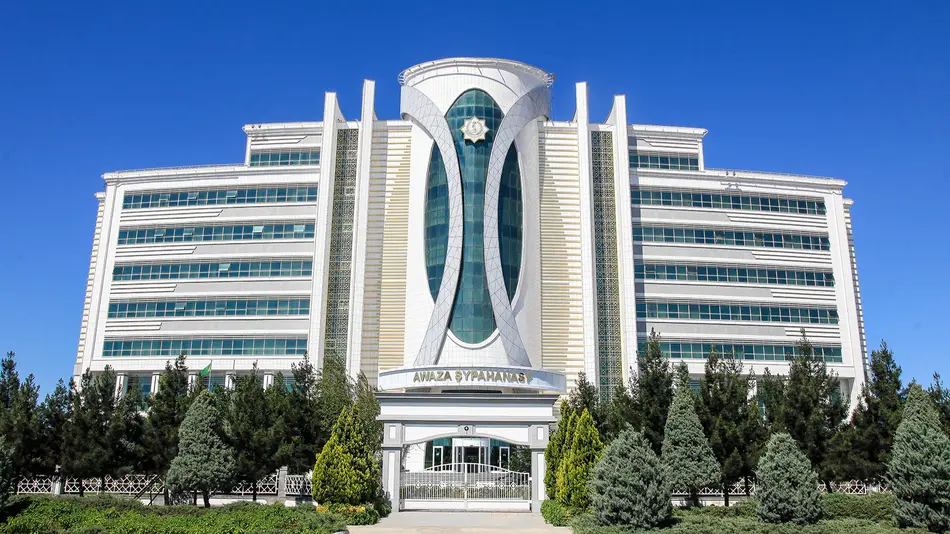
TASHKENT, October 8. /Dunyo IA/. On October 7th, President of Uzbekistan Shavkat Mirziyoyev arrived in Turkmenistan on a three-day working visit to participate in the Consultative Meeting of the Heads of State of Central Asia and Azerbaijan, as well as the regular meeting of the Council of Heads of State of the Commonwealth of Independent States (CIS), reports Dunyo IA correspondent.
“Avaza” National Tourist Zone in Turkmenistan has previously served as a venue for hosting meetings of the Heads of State of Central Asia and advancing regional dialogue. Notably, the Third Consultative Meeting of the Heads of State of Central Asia took place here on August 6th, 2021.
Since then, the format of regional cooperation has expanded substantially and is currently entering a new stage. A significant milestone in this process was the Seventh Consultative Meeting of the Heads of State of Central Asia, held on November 16th, 2025, in Tashkent, which resulted in the Republic of Azerbaijan joining the format as a full participant.
Continuation of this process was the Informal Consultative Meeting of the Heads of State of Central Asia and Azerbaijan, held on July 31st, 2026, in Cholpon-Ata. Following the meeting, the Cholpon-Ata Declaration was adopted.
Upcoming meeting in Avaza will mark the next stage in the development of this dialogue and practical cooperation across the areas established during previous summits.
Over the past years, format of the Consultative Meetings has evolved into an enduring platform for regular political dialogue and practical interaction among the states of the region. Foundation for further cooperation is formed by issues of trade and investment, transport and energy, industrial cooperation, security, ecology, and humanitarian ties, which have been consistently placed on the agendas of previous meetings.
Uzbekistan consistently acts as one of the active participants in developing regional interaction in Central Asia. It was precisely at the initiative of the President of Uzbekistan Shavkat Mirziyoyev in 2017 that the format of regular Consultative Meetings of the Heads of State of Central Asia was proposed. The first such meeting took place on March 15th, 2018, in Astana.
In the subsequent years, Uzbekistan actively promoted regional interaction, including hosting high-level summits. Specifically, the Second Consultative Meeting took place in Tashkent on November 29th, 2019 and the Seventh on November 16th, 2025.
Documents adopted at the conclusion of the Sixth Consultative Meeting hold particular significance. Among them, the initiatives spearheaded by Uzbekistan include the “Central Asia – 2040” Regional Cooperation Development Concept, “Roadmap” for the Development of Regional Cooperation for 2025–2027 and the Action Plan for the Development of Industrial Cooperation of Central Asian States for 2025–2027.
Furthermore, the Memorandum of Understanding on the Development of Transport and Logistics Centers in the Central Asian States, the Communique on the Results of the First Meeting of Energy Ministers of Central Asia, and the Astana Communique of the Second Meeting of Transport Ministers of the Central Asian States were signed.
Alongside the regional agenda, cooperation within the framework of the Commonwealth of Independent States (CIS) will occupy an important place in the upcoming events in Avaza.
Regular meeting of the Council of Heads of State of the Commonwealth of Independent States (CIS) will take place on October 9th, 2026, in the “Avaza” National Tourist Zone in Turkmenistan. The upcoming summit will be held against the background of the active development of cooperation among the Commonwealth states across a wide range of areas, including trade and economic ties, transport, security, scientific, technical and innovative cooperation, the digital sphere, humanitarian relations and cultural exchange.
Since 2017, participation of Uzbekistan in the activities of the CIS has acquired a more systematic and practical nature. To date, Republic participates in all statutory bodies of the Commonwealth: the Council of Heads of State, Council of Heads of Government, Council of Ministers of Foreign Affairs, Council of Ministers of Defence, Council of Commanders of Border Troops, Interparliamentary Assembly and Economic Council.
In 2017–2022, following the participation of the President of Uzbekistan in the meetings of the Council of Heads of State of the CIS, “Roadmaps” were adopted, aimed at the timely and full-scale implementation of the signed documents and the initiatives put forward by Uzbekistan.
As part of the implementation of these “Roadmaps”, Uzbekistan joined 24 sectoral cooperation bodies. As a result, out of 86 CIS bodies, Republic participates in the activities of 66 structures, whose tasks meet national interests and represent practical interest for the Uzbek side.
Uzbekistan also consistently puts forward initiatives aimed at strengthening practical interaction within the framework of the Commonwealth. In 2020, despite the difficult situation associated with the coronavirus pandemic, more than 50 events were held under the chairmanship of Uzbekistan in the CIS. During the same period, the UN General Assembly resolution “Cooperation between the United Nations and the Commonwealth of Independent States”, adopted on November 23rd, 2020, was initiated and granted unanimous support.
Turkmenistan holds the chairmanship of the CIS in 2026 and Uzbekistan, as the upcoming chair, is actively participating in the preparations for subsequent events of the Commonwealth.
Nation's participation in both formats reflects its consistent approach to developing regional and multilateral cooperation. On one hand, Uzbekistan contributes to developing interaction mechanisms among the Central Asian states and expanding ties with the Republic of Azerbaijan. On the other, it systematically advances its involvement in the activities of the CIS and its sectoral structures.
In this context, meeting in Avaza serves as an essential platform for continuing dialogue simultaneously on two levels - regional and multilateral. It enables the alignment and advancement of cooperation tracks that hold strategic significance for both Central Asia and the Republic of Azerbaijan, as well as the broader space of the Commonwealth of Independent States (CIS).
Significance of the upcoming events in Avaza extends beyond the calendar sequence of summits. They reflect a deeper paradigm shift—the transition of regional states from fragmented bilateral contacts toward a multi-tiered system of interaction, wherein the Central Asian regional format and multilateral cooperation within the framework of the CIS do not compete, but rather complement each other. It is within this precise context that Avaza emerges not merely as a venue for regular meetings, but as a pivotal arena shaping a new configuration of regional cooperation.

Latest News

See all
Read also

“Rzeczpospolita” Newspaper: Tashkent to become a major technology and financial hub in Central Asia
View from Baku: Uzbekistan strives for an Increasingly Active Participation in shaping the global agenda

View from Austria: Uzbekistan revives its role as a crossroads of civilizations through a new format of cooperation with South Korea

View from Moscow: Visit of the President of Uzbekistan to Seoul confirms Tashkent's course toward expanding the circle of technological and investment partners