Serge Rumin: Central Asia demonstrates the power of dialogue and confidence to the world
June 25, 2026. 19:30 • 6 min
• 80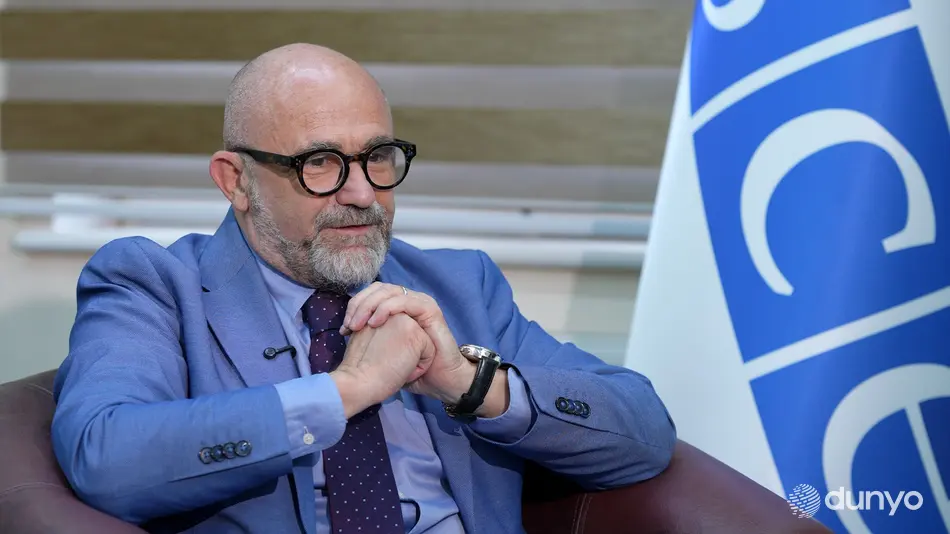
TASHKENT, June 25. /Dunyo IA/. Serge Rumin, Special Representative of the Swiss OSCE Chairmanship-in-Office for the Promotion of Dialogue and Confidence-Building, granted an exclusive interview to a Dunyo IA correspondent.
– Mr. Serge Rumin, what results of your visit to Uzbekistan do you consider the most significant? You also took part in the launch of the ‘Cross-Border Young Peacebuilders Initiative’ in Fergana. What importance does the OSCE attach to the personal participation of its representatives in such events in Uzbekistan?
– Currently, I am visiting Central Asia. I have visited Tajikistan, I am now in Uzbekistan, and tomorrow I will travel to Kyrgyzstan.
As part of my mandate as the Special Representative of the Chair-in-Office for Dialogue and Confidence-Building, I was appointed by the Swiss Chairmanship. For Switzerland, the key priorities of this Chairmanship are security, confidence, and dialogue. My mandate focuses specifically on confidence-building and dialogue.
One aspect of my role is to promote the work of the OSCE in the field of dialogue and confidence-building, as well as to highlight positive developments across the OSCE participating States. In particular, we are witnessing very unique initiatives in the Fergana Valley. The signing of the Khujand Declaration is a significant achievement. At a time when many parts of the world are facing conflict and tension, it is important to draw attention to what is happening in Central Asia, especially among these three countries, which have chosen to address their challenges through dialogue. This demonstrates the vital role that dialogue plays in building confidence.
What is also particularly encouraging is that these initiatives are not limited to governments alone. During my visit to the Young Peacebuilders Forum, I saw how important it is for different segments of society to be involved. Governors, academics, and young people are all participating and discussing these initiatives together.
Many layers of society are coming together, and through this engagement young people are building connections for the future. They are exchanging ideas, exploring new approaches, and listening to one another’s perspectives. It is important that they develop their own understanding of these issues, as they will be the leaders and decision-makers of tomorrow.
Confidence-building is a long-term process; it cannot be achieved in a single day. That is why it is both important and wise to invest in young people and ensure that they have a meaningful place in these discussions. This is particularly relevant for these three countries. I am deeply impressed by the commitment and efforts of young people to understand these issues and to engage constructively with them.
– How do you assess the outcomes of the 2025 Fergana Peace Forum? What steps could help transform such initiatives into a sustainable and continuously operating mechanism for dialogue and cooperation within the OSCE area?
– Yes, one important aspect, as I mentioned earlier, is the multi-layered and multi-stakeholder nature of participation, involving both government and society. I had the opportunity to meet with governors, who are also directly connected with their communities. In addition, young people, women, including cross-border women, and other actors engaged in similar initiatives are all part of this process.
For me, the ability of young people to communicate and interact across different levels is key to sustainability. It is not possible to achieve sustainable outcomes at a high level, solely through government engagement, if the broader population - particularly those who represent the future of the country is not included.
I understand that the second edition is now being prepared in Khujand, which reflects continuity and the government’s commitment to sustaining this process. One of the challenges of this forum, in my view, is to better connect the various platforms youth forums, women’s forums, and the broader Fergana Valley forum, which is now taking place for the second time in Khujand.
Strengthening these linkages would allow us to move gradually from isolated interactions toward more structured processes. This will be key to ensuring the long-term sustainability of our engagement around the Khujand Declaration.
– Concluding your visit, what would you identify as the most important achievement of Central Asia over the past year in the field of regional cooperation, and what, in your view, remains the main challenge?
– What is particularly remarkable is the sustained commitment of the government, which is clearly reflected in the various discussions and meetings taking place across different levels and sectors. At this stage, it is indeed difficult to imagine any reversal of this trajectory; rather, there is a sense of continued progress and consolidation.
There is a shared understanding that the appropriate way to address these issues is through bringing together diverse stakeholders and engaging in dialogue. Dialogue, by its nature, is not easy—it is often complex and demanding. In fact, when a dialogue is difficult, it is usually an indication that it is addressing real and substantive issues. If dialogue is too easy, it may suggest that the most challenging questions are being avoided.
In my view, one of the key strengths of the current process is the genuine commitment demonstrated at the highest political level, as well as the active engagement and participation across multiple layers of society. As I have already noted, there are also important bottom-up initiatives emerging from civil society, including women’s platforms such as cross-border women’s networks, which contribute to a highly dynamic environment.
This achievement, which has culminated in the Fergana Declaration, has created significant momentum and a shared understanding among all stakeholders that the time is now ripe for deeper engagement. There is a sense of openness and readiness to participate, and a collective belief that progress is possible if this opportunity is seized.
At the same time, this remains a long-term process, and there is no indication that this trajectory should not continue. Everything I have heard and observed reinforces this direction rather than calling it into question.
Confidence-building is, by definition, a long-term endeavour. Geography cannot be changed, and neighbours remain neighbours. This reality requires sustained engagement and the development of long-term, trust-based relations with all surrounding actors.
When trust is established, it becomes the foundation for broader progress—strengthening security through exchange and enabling economic development. In this sense, what is emerging in Central Asia is a very promising process, one that deserves to be highlighted and shared not only among participating States, but also beyond the region.
– In conclusion of our conversation, I would like to ask you to address the audience of the Dunyo Information Agency. What message would you like to convey to the young people who are reading or watching this interview?
– I would say that there should be no hesitation in participating. Dialogue is not always easy. From my long experience in dialogue and mediation, I can say that there are many ups and downs, but this is part of the process, and we should not be discouraged by it.
We should also not be afraid of complexity, because complexity is inherent to such processes. Likewise, uncertainty should not be a cause for concern; it is also part of the reality we are dealing with.
This is a long journey, but it is one that offers real opportunities today. By investing in it and having the courage to engage, stakeholders are effectively investing in their own future, as well as in the future of the next generation.
In this sense, there is a genuine opportunity for these three countries, and beyond them, including Kazakhstan and Turkmenistan, to contribute to the creation of a safe, stable, and dynamic economic space in the region.

Latest News



See all
Read also
Peace begins with dialogue: Unique school of practical peacebuilding launches in Fergana