Sultan Raev: Experience of New Uzbekistan is valuable for its systemic nature, balance and high adaptability
August 12, 2026. 08:10 • 10 min
• 177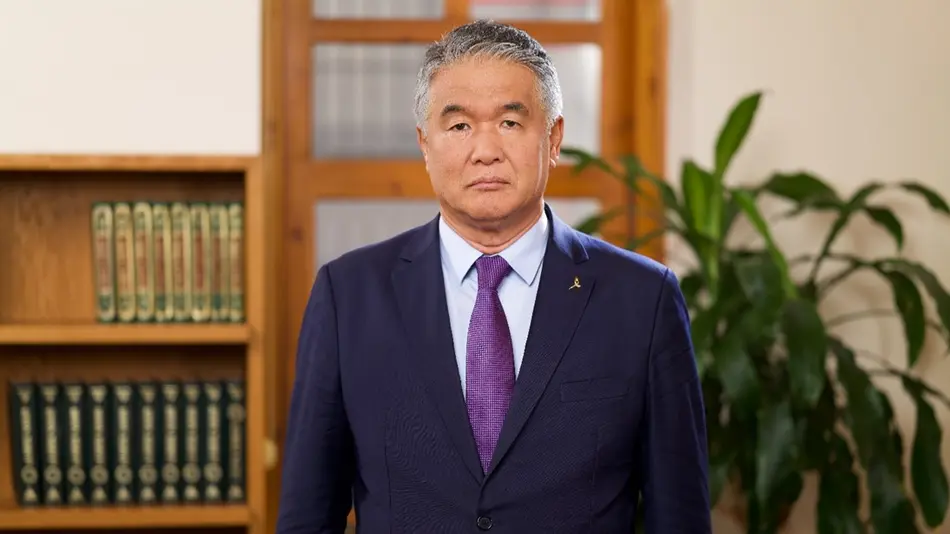
ISTANBUL, August 12. /Dunyo IA/. On the eve of the 35th Anniversary of the State Independence of Uzbekistan, Secretary General of the International Organization of Turkic Culture (TURKSOY), Sultan Raev, granted an exclusive interview to a Dunyo IA correspondent:
- Mr. Secretary-General, this year marks 10 years since the launch of the large-scale reforms of New Uzbekistan. How do you assess the results of this ten-year journey and which changes that have occurred in the country do you consider the most significant?
- Decade of reforms in New Uzbekistan under the leadership of President Shavkat Mirziyoyev is not merely a period of progressive socio-economic development, but a true historical renaissance - the Third Renaissance - encompassing absolutely all spheres of state and public life. As a man of culture, a writer and a diplomat who has observed the processes in our region for many years, I can confidently say that drawing upon the glorious historical and cultural heritage created by wise ancestors during two great epochs of rebirth - the First Enlightenment Renaissance of the 9th-12th centuries and the Second Timurid Renaissance of the 14th-15th centuries - Uzbekistan has made a colossal qualitative leap from isolation to dynamic openness, modernization, and leadership. Thanks to this, we are currently witnessing another important process of revival taking place in this brotherly country and society, where the terms “New Uzbekistan” and “Third Renaissance” fully reflect ongoing realities and serve as a source of inspiration for more ambitious goals.
I consider the most significant changes to be:
- First, institutional renewal and respect for the individual: the proclamation of the fundamental principle “For the dignity of man” by the country’s leader has transformed the philosophy of public administration. The liberalization of the economy, large-scale judicial reform, protection of property rights and support for entrepreneurship have shaped an entirely different environment of trust within the country.
- Second, spiritual and cultural uplift: Uzbekistan has deeply realized its historical mission as the heart of the Great Silk Road and a civilizational crossroads. The revival of national heritage, support for literature and art, and the restoration of unique monuments in Samarkand, Bukhara, Khiva and Kokand have become clear examples of how traditions nurture modernity.
- Third, the activation of human capital: large-scale investments in education - from preschool to university levels, the establishment of Presidential schools and support for youth initiatives - provide the country with a solid foundation for decades to come.
- Fourth, Uzbekistan has demonstrated to the entire world that profound and large-scale transformations are possible within a short historical timeframe if they are based on a clear strategy, political will and the support of the people.
- What results of interaction between Uzbekistan and TURKSOY do you consider the most successful and what joint projects could become priorities in the future?
- The full-fledged integration, full membership, and systemic activity of Uzbekistan within the International Organization of Turkic Culture (TURKSOY) have provided a powerful impetus for our organization, which was established by the Turkic states in 1993 as the first modern international organization for inter-Turkic humanitarian and cultural cooperation. Uzbekistan has brought a special cultural depth, rich traditions and the highest level of academic and creative thought to the activities of TURKSOY.
Among the most successful results of our interaction in recent years, I would note:
Institute of Cultural Capitals of the Turkic World: the declaration of Khiva as the Cultural Capital of the Turkic World in 2020–2021 and Kokand as the Tourism Capital became brilliant events of an international scale. This made it possible to draw the attention of the global community to the unique architecture and folk crafts of Uzbekistan. Furthermore, in June this year, as you know, the grand opening of the Year of “Andijan - Cultural Capital of the Turkic World 2026” took place.
- Second, the preservation and popularization of classical heritage: within the framework of TURKSOY's activities, as well as through the active participation of our organization in events hosted by our partners, we have implemented significant initiatives, international conferences and publishing projects dedicated to the great sons of the ancient Uzbek land - Alisher Navoiy, Zahiriddin Muhammad Babur, Abu Rayhan Beruni, as well as the 20th-century literary classics - Abdulla Qodiriy, Abdulhamid Choʻlpon and Mahmudkhuja Behbudi.
- Third, International Festivals: Uzbekistan has become a center of attraction for cultural dialogue thanks to the regular holding of the “Sharq Taronalari” International Music Festival in Samarkand, International Art of Bakhshi Festival in Termez and Nukus and International Festival of Folk Arts and Crafts in Kokand.
Speaking of priorities for the future, the following can be noted:
- First, digitalization of the Turkic cultural heritage: the creation of a Unified Digital Library and an electronic archive of manuscripts and folklore of the Turkic peoples.
- Second, youth creative residences and academic exchanges: the launch of joint programs for young writers, artists, filmmakers, restorers, archaeologists and specialists in the preservation and study of cultural heritage.
- Third, joint film production and theater festivals: the creation of historical-biographical films and the staging of theatrical productions based on the works of outstanding thinkers of the Turkic world.
- What is your assessment of how these transformations have contributed to strengthening trust on the part of the international community, given that one of the key directions of the reforms was the creation of a more open international policy?
- The new foreign policy doctrine of Uzbekistan, formulated by President Shavkat Mirziyoyev and aimed at creating a belt of stability and openness around the country, is today rightfully regarded by the international community as an exemplary model of effective regional diplomacy.
The most significant achievement has been the fundamental pivot toward neighbors - pursuit of a pragmatic, good-neighborly and proactive policy in Central Asia. Uzbekistan has succeeded in resolving long-standing, acute issues regarding border demarcation, water management, and transport communications, thereby dismantling artificial barriers. The format of the Consultative Meetings of the Heads of State of Central Asia, initiated by Tashkent, has unified the region and transformed it from a zone of potential risks into a consolidated space of stability, trust, and shared growth.
It is precisely this good-neighborly vector that has earned Tashkent high prestige from the UN, EU, OSCE, SCO, Organization of Turkic States and other leading international structures. Today, Uzbekistan is perceived not merely as a pivotal state in the region, but as a predictable, responsible and reliable partner in international law, capable of shaping a constructive global agenda.
- What opportunities for further cooperation within the framework of TURKSOY do you see in these areas in the coming years, considering that Uzbekistan today actively promotes initiatives in sustainable development, the green economy, digital transformation, culture, literature, education and human capital development?
- Culture and education are today inseparable from the concept of sustainable development and ecological mindset. TURKSOY is preparing a whole line of projects that correlate with the current priorities of Uzbekistan.
The steps taken by Uzbekistan to improve the Latin-based Uzbek alphabet and its consistent alignment with the standards of the 34-letter Common Turkic Alphabet are of fundamental importance for the entire Turkic world. TURKSOY fully supports this historic process. In the coming years, we intend to provide comprehensive expert, scientific, methodological and publishing assistance: to develop unified academic standards for synchronizing the transliteration and translation of fiction and scientific literature between Uzbek and other Turkic languages; to create joint educational programs, terminological dictionaries, and electronic text corpora based on the updated script, which will significantly facilitate linguistic communication and mutual understanding among the Turkic peoples.
The Aral Sea problem is a shared pain and concern for the entire Turkic world. Within the framework of TURKSOY, we plan to hold international art symposia, as well as ecological forums for writers and artists in Nukus and Muynak, with the aim of drawing the attention of the global creative intelligentsia to the ecology of the Aral Sea basin.
TURKSOY actively supports the implementation of artificial intelligence and digital technologies in translation studies and language preservation. We intend to leverage the potential of Uzbekistan's IT Parks to translate the works of Uzbek classics and contemporary authors into the languages of all Turkic peoples using innovative platforms.
Uzbekistan is one of the recognized leaders in the region in terms of creative industries development. We intend to design transboundary cultural and tourism routes, for instance, retracing the steps of the great thinkers of the Turkic world - that connect the historical centers of Uzbekistan with the cultural sites of Kyrgyzstan, Kazakhstan, Turkmenistan, Azerbaijan and Türkiye.
- In your opinion, which of the initiatives implemented by Uzbekistan over the ten years of reforms carry the most long-term significance not only for the country but also for Central Asia and the international community as a whole?
- Among Tashkent's strategic initiatives, I would highlight three key projects that possess a global impact.
Institutionalization of cooperation in Central Asia: the launch of the mechanism of Consultative Meetings of the Leaders of the Region's Countries became a fundamental milestone. This laid the foundation for economic integration, the creation of transparent transport and logistics corridors and the ensuring of food and energy security for the region's 80-million population.
Strategy for Central and South Asia connectivity: the initiative to construct the Uzbekistan–Afghanistan–Pakistan railway, Trans-Afghan Corridor, is a project of the century that is capable of fundamentally altering the geo-economic map of Eurasia by granting the Central Asian states the shortest access to global ocean ports.
International Aral Sea Initiative: the declaration of the Aral Sea region as a zone of ecological innovations and technologies, along with the adoption of a special UN General Assembly resolution at the initiative of Uzbekistan, has transformed a local ecological disaster into a platform for international scientific and environmental cooperation.
In the cultural sphere, establishment of the International Alisher Navoiy Prize within the framework of the Organization of Turkic States for contributions to the unity of the Turkic world is of historic significance - a step that was received with profound enthusiasm and high appreciation by the intelligentsia of the Turkic nations.
- What elements of this experience, in your opinion, represent particular interest for other states, given that international experts describe the reform experience of New Uzbekistan as one of the most notable examples of large-scale transformation in the region?
- Experience of New Uzbekistan is valuable for its systemic nature, balance, and high adaptability. For developing countries and economies in transition, the following aspects represent particular interest.
Combination of rapid economic reforms with strong social protection: Uzbekistan avoided destructive shock therapy. The liberalization of the currency market, tax reform, and privatization were accompanied by the targeted expansion of social assistance and the development of the mahalla institution as the primary link for addressing the needs of the people.
Openness to dialogue between government and society: the unique institution of the People's Receptions of the President of Uzbekistan has become a swift and effective channel for feedback, which has relieved social tension and increased the accountability of officials.
Preserving national identity amidst profound modernization: Uzbekistan has demonstrated that it is possible to build modern IT clusters, financial centers, and high-tech industries without losing its national spirit, respect for elders, traditions and the native language. It is precisely this organic balance between fidelity to historical roots and the aspiration toward the future that makes this experience truly exemplary.
- What wishes would you like to extend to the leadership and people of our country on the occasion of the 10th Anniversary of the reforms of New Uzbekistan, and what expectations do you associate with the further development of Uzbekistan in the coming years?
- On behalf of the International Organization of Turkic Culture (TURKSOY) and on my own behalf, I sincerely congratulate the brotherly people of Uzbekistan and the esteemed President Shavkat Mirziyoyev on this significant milestone!
Uzbekistan is a blessed land with a great past and an equally great future. Over these ten years, you have laid an indestructible foundation for the Third Renaissance.
I wish the brotherly Uzbek people a peaceful sky, indestructible unity, prosperity, robust health and inexhaustible inspiration!
May New Uzbekistan continue to march confidently along the path of progress, remaining a pillar of science, culture, peace and harmony in Eurasia. I am confident that in the coming years, Uzbekistan will not only solidify its status as the economic and cultural locomotive of Central Asia but will also bestow upon the world new names of great scientists, writers, thinkers and statesmen worthy of the glory of Ulugbek, Navoiy, and Beruni.
May our friendship and the cultural unity of the Turkic world grow stronger with each passing day! Oʻzbekistonga tinchlik, farovonlik va muvaffaqiyatlar tilayman!

Latest News
See all
Read also
Sándor Seremet: Regional Initiatives of Uzbekistan strengthen trust and stability in Central Asia
Pierre-Paul Antheunissens: Over the past ten years, changes in Uzbekistan have been truly impressive

Wang Minmei: Reforms implemented under the leadership of the President of Uzbekistan are delivering strong results across all sectors of society
Jeong Jae-su: Friendship and cooperation between South Korea and Uzbekistan reach a new level