
Uzbekistan-China Archaeological team reveals initial sections of historic Kuva City fortifications
January 17, 2026. 12:37 • 3 min
• 1334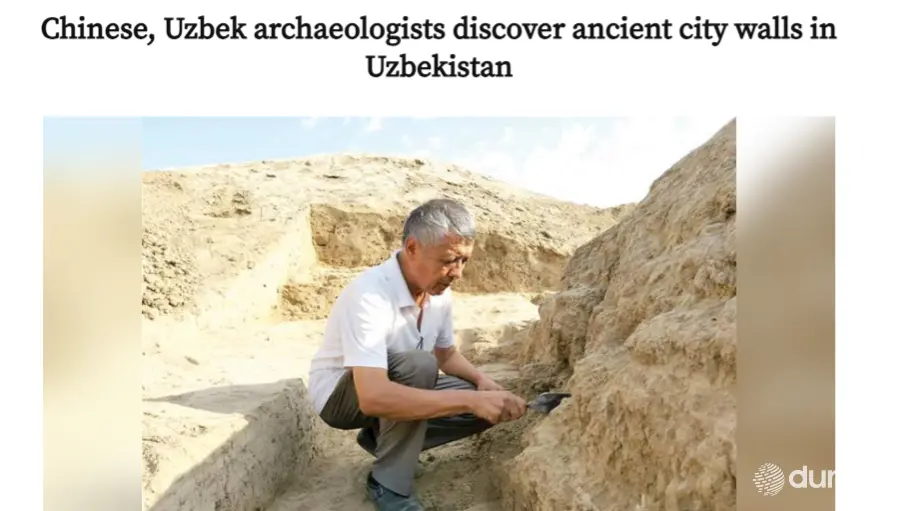
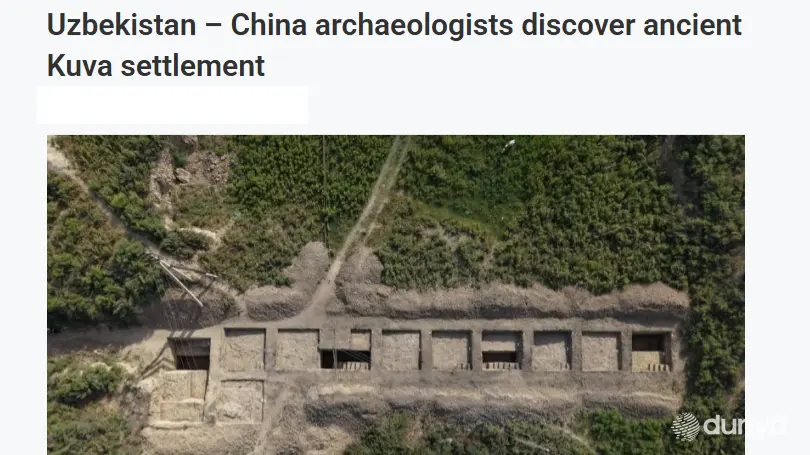
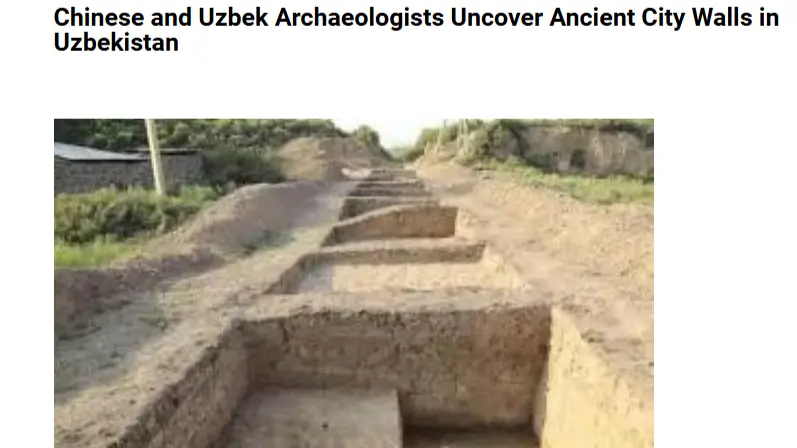
ТASHKENT, January 17. /Dunyo IA/. Several Pakistani digital publications, including “The Nation”, “The Diplomatic Insight”, “The Daily CPEC”, “The World News” and “Pakistan Economic Network”, have reported that Uzbek and Chinese archaeologists have identified ancient sections of the walls of the city of Quva, reports Dunyo IA correspondent.
According to the reports, archaeologists from Uzbekistan and China have discovered traces of ancient defensive walls belonging to the city of Quva in the Fergana Valley. Experts estimate that the findings date from the 3rd century BCE to the 10th century CE.
The discovery was made during the work of the “Luoyang - Fergana” joint expedition. According to expedition participants, the findings provide valuable material evidence for understanding the historical development of one of the cities along the Silk Road and shed light on connections between the East and the West.
“Quva, located in eastern Uzbekistan, covers an area of approximately 110,000 square meters. In ancient times, this site was one of the major hubs of the Silk Road and maintained regular contact with China for over two thousand years. Preliminary analyses indicate that the defensive structures were rebuilt several times across different periods - from the Parthian Empire and the Davon State to the Sogdiana period and the Samanid era,” the articles note.
Liu Bin, head of the Chinese team, said the excavations have revealed a palace, city gates, walls, house foundations, streets and workshops. In 2025, efforts focused on the northern gate and the adjacent moat.
The joint archaeological team was established in 2023 through a collaboration between the Luoyang Institute of Archaeology in Henan Province and Fergana State University. To date, excavations in the area have uncovered traces of palaces, city gates, defensive walls, residential quarters, streets and craft workshops.
Scientists plan to begin systematic excavations of the palace complex next year, aiming to reconstruct the ancient city’s layout and its functions more comprehensively.
Analysis indicates that the walls underwent multiple changes in layout and function over centuries, constructed using both adobe and mud bricks. This confirms that the site was continuously used from the 3rd century BC through the 10th century AD.
“The repeated modifications highlight the enduring vitality and adaptability of this Silk Road hub,” Liu said. He added that the evolving construction techniques provide valuable insights into architectural practices, material selection, and cultural influences across different eras.
“This year, we plan systematic excavations in the palace area to fully clarify the layout and functional zones of the ancient city”, - sources quoted Liu Bin, head of the Chinese delegation, as saying.

Latest News


See all
Read also

“Uzbektelecom” in cooperation with cultural experts, has created a free digital catalog of traditional music samples