Under the chairmanship of the President of Uzbekistan, measures to accelerate major investment projects in the mining industry discussed
March 16, 2026. 20:55 • 6 min
• 142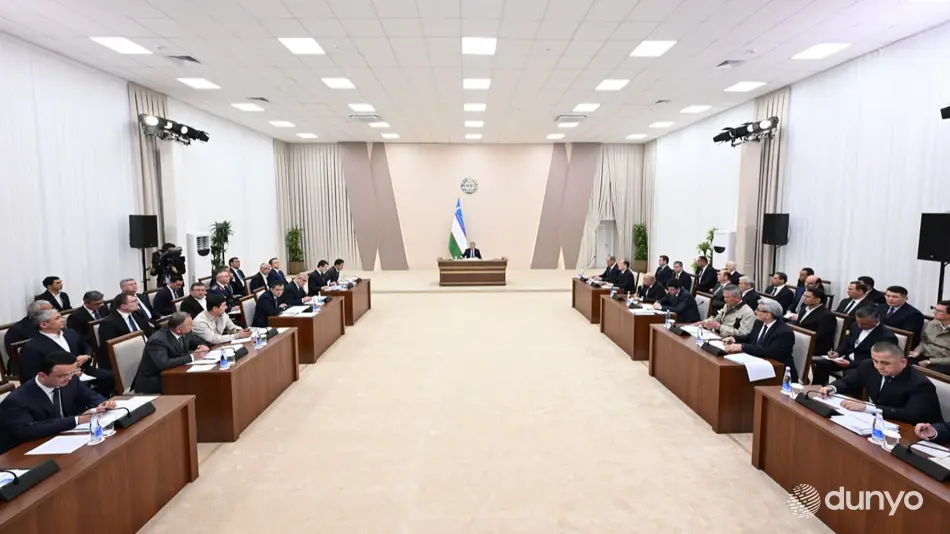
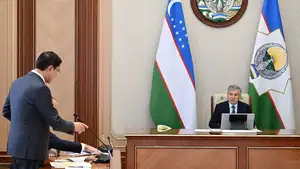
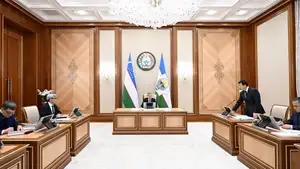
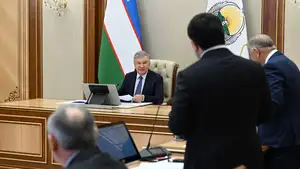
ТASHKENT, March 16. /Dunyo IA/. Today, President Shavkat Mirziyoyev held a meeting to accelerate the implementation of major investment projects in the mining industry as part of his visit to the Almalyk Mining and Metallurgical Complex, reports Dunyo IA correspondent.
According to the press service of the Head of our State, the rapid development of strategic sectors such as information technology, artificial intelligence, robotics, energy, electrical engineering, the chemical and defense industries largely depends on the availability of raw materials such as copper, uranium, lithium, tungsten and other critical metals. The growing global demand for these resources, including the increasing shortage of copper concentrate and the expected rise in prices, makes the issue of accelerating projects in the mining and metallurgical industry even more pressing.
In this regard, it was noted that all available capabilities must be fully mobilized to achieve the targets of increasing gold production in Uzbekistan to 175 tons, silver to 500 tons, uranium to 15 thousand tons and copper to 500 thousand tons by 2030.
It was emphasized that, to achieve this, it is important to implement each major project according to a clear schedule and address issues related to financing, construction, logistics, technological equipment, and staffing in a coordinated manner.
At the meeting, first and foremost, the progress of strategic projects being implemented at the Almalyk Mining and Metallurgical Complex was reviewed. In particular, specific instructions were given to accelerate the next stages of copper-concentrating plant No. 3.
The construction of a new copper smelter, which will serve as a technological continuation of this project, was also considered. Instructions were issued to complete the feasibility study, attract foreign experts, and commence construction as soon as possible.
Based on the future needs of the Almalyk Mining and Metallurgical Complex, particular importance was attached to involving reputable international companies in the development of the feasibility study for copper-concentrating plant No. 4. The need for comprehensive coverage in this document of issues related to water supply, railway and energy infrastructure, environmental requirements, and high-efficiency technologies was emphasized.
It was noted at the meeting that this year the industry plans to attract $2.2 billion in investments across 90 projects, while targets were set for the production of 172.5 thousand tons of copper, 120 tons of gold, 210.5 tons of silver, and 8 thousand tons of uranium.
Alongside this, it was stressed that feasibility studies for a number of promising deposits and sites must be completed within a short timeframe, while effectively utilizing the opportunities provided by the new resolution on simplifying expert review procedures. The Government was instructed to promptly resolve organizational and legal issues related to these projects.
Special attention was also paid to accelerating coal mining and processing projects amid the growing demand for energy resources. Tasks were set to increase coal supplies to the population and industrial enterprises.
Within the activities of the Navoi Mining and Metallurgical Complex, instructions were given on the next stage of expansion of the Muruntau mine, the development of new deposits, the introduction of technologies for extracting gold from complex ores, and the revision of cooperation mechanisms with investors on a number of major projects.
In the metallurgical sector, issues related to increasing production volumes at Uzmetkombinat, ensuring the effective use of the domestic raw material base, expanding the range of competitive products, and establishing the production of sheet metal that meets market demand were considered. Specific measures were identified to ensure the supply of raw materials, diversify the product range, and develop new markets.
The meeting also addressed the work of the Technological Metals Complex. Tasks were set to expand the production of critical metals and complex alloys for industry, as well as to accelerate projects for the production of selenium, tellurium, powder metallurgy products, and other high-value-added products.
Issues related to lowering expenses and reducing costs at industry enterprises were also considered separately. Responsible officials were instructed to develop targeted programs aimed at reducing production costs, lowering energy consumption, promoting the efficient use of resources, and achieving measurable results on a monthly basis.
Attention was focused on expanding the domestic component in public procurement and cooperation. In this regard, responsible officials were given specific instructions to increase the share of local products in projects and procurement to more than $2 billion this year.
Plans were also discussed to intensify geological exploration, identify additional reserves, offer new mining and investment blocks to investors, and bring promising hydrocarbon deposits into economic circulation. Specifically, the task was set to significantly increase the reserves of gold, silver, copper, uranium, and zinc this year
It was noted at the meeting that projects currently being implemented in the industry, with a total value of $22 billion, will create 38,000 new jobs. In particular, there will be a demand for 7,500 engineers and 14,000 mid-level specialists. In this regard, instructions were given to organize the activities of industry-specific universities and technical colleges in line with new requirements, adapt educational programs to modern technologies, widely introduce dual education, and ensure a close link between graduation theses and production tasks.
Tasks were also set to orient university research towards developing practical technological solutions for industrial enterprises, implementing research results into production, establishing training grounds for students, and adapting workshops at industrial enterprises for practical and research activities.
Instructions were given to establish a system for publishing a list of relevant scientific topics as part of new projects. Not only the five industry-specific universities, but also all state and private educational and scientific organizations in the technical field will be able to participate in this research.
At the conclusion of the meeting, the establishment of an Industrial Council, chaired by the President, was announced to ensure systematic monitoring of the implementation of major projects in key industries such as mining, metallurgy, chemicals, and the oil and gas sector. Within this council, monthly work plans will be approved for transforming large enterprises in line with international standards, reducing production costs and energy consumption, deepening raw material processing, increasing the share of local products, digitalizing processes, introducing artificial intelligence, and expanding investment and exports.
Responsible officials were instructed to review the progress of these plans for each enterprise on a monthly basis through critical analysis and on-site visits, promptly resolve existing issues, and submit reports on the results at the end of each quarter.

See all