President of Uzbekistan approves new mechanisms and proposals in social protection
April 17, 2026. 18:47 • 5 min
• 250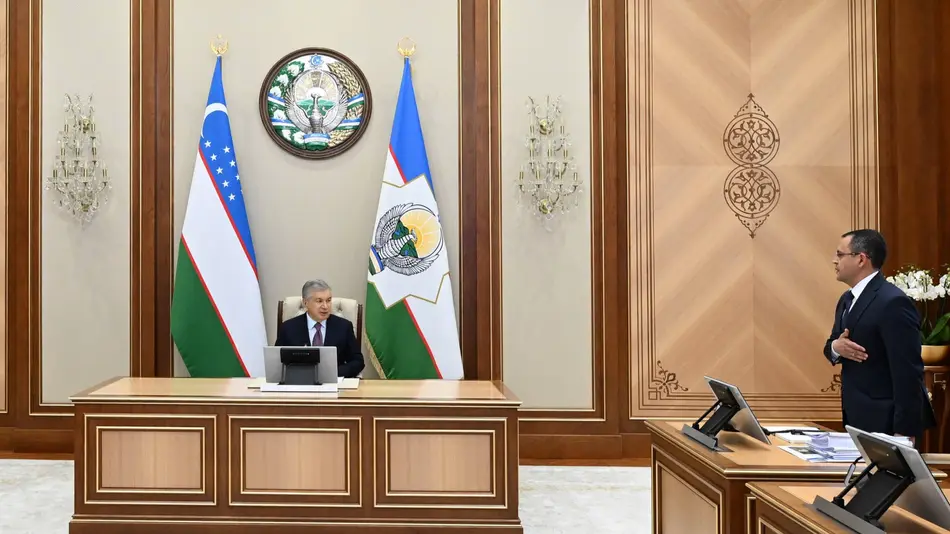
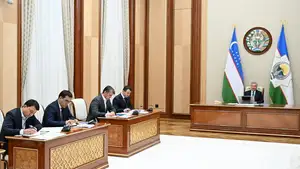
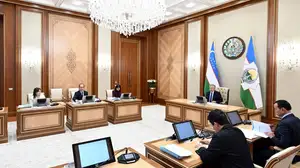
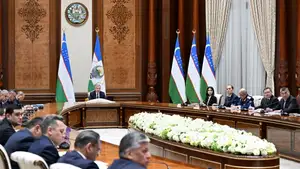
ТАSHKENT, April 17. /Dunyo IA/. President Shavkat Mirziyoyev reviewed proposals to support vulnerable population groups, expand the coverage and improve the quality of social services and strengthen the legislative framework in this area, reports Dunyo IA correspondent.
According to the press service of the Head of our State, in recent years, the country has been implementing large-scale reforms to elevate the social protection system to a new level, ensuring the targeted and transparent delivery of state support to those in need, advancing the digitalization of services, and enabling their proactive provision. Priority attention is being given to comprehensive support for persons with disabilities, individuals requiring constant care, families raising children with disabilities, women affected by violence and providers of social services.
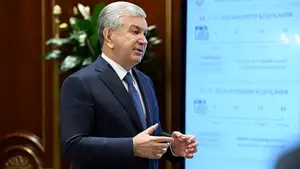
The presentation addressed the comprehensive improvement of the social services system for persons with mental disabilities. It was noted that the primary objective is to ensure their full participation in society, provide integrated services in conditions as close as possible to a family environment, and support their caregivers.
Specifically, a new “Early Intervention” service for children aged 0 to 3 with identified developmental disorders will be gradually introduced by June 1, 2026. Under this service, children will receive correctional and pedagogical support, as well as speech and physical development therapy delivered by specialized educators and therapeutic exercise instructors. The service will be provided by non-governmental organizations through a dedicated electronic register. In addition, the costs of further medical examinations and surgical procedures for children born with congenital conditions will be covered by the State Medical Insurance Fund.
For persons with Group I and II disabilities with mental disorders, new social services will also be gradually introduced in 2026. These include the “Yangi Kun” daycare service, in-home care, the “Madad” small group home support service, and short-term placement under the “Social Respite” format. These services are designed to support families through care and supervision, promote the development of daily living and household skills, and enhance professional and financial competencies.
The new services will be provided on the basis of public-private partnerships by non-governmental organizations that have the necessary competencies and meet the established requirements. This will enable coverage of 8,300 persons with mental disorders as early as 2026, while engaging up to 600 non-governmental organizations and individual entrepreneurs in the provision of social services. The costs associated with the use of these services will be covered through subsidies from the State Social Protection Fund.
In addition, from September 1, 2026, a new monthly care allowance will be introduced for legal representatives caring for persons over the age of 18 diagnosed with profound intellectual disabilities.
The mandate of the Inson Social Service Centers is also being expanded. From June 1 of this year, their staff will become part of guardianship and custody commissions under district and city administrations. They will also carry out ongoing monitoring of the performance of guardians and custodians, the protection of the rights and legitimate interests of such persons, the safeguarding of their property, and cases of abuse and violence against them.
Special attention was also given to the transformation of residential care institutions. Under the proposals, Muruvvat Boarding Homes will be gradually converted into “Gamkhurlik” (Care) Centers. These institutions will no longer function primarily as medical-social facilities, but as socially oriented centers focused on supporting individuals’ integration into society. Plans include engaging residents in sports, creative activities, occupational and work therapy, as well as socio-spiritual programs, developing life skills through a mentor-supervised independent living model, and establishing small, family-like homes.
The presentation also addressed new initiatives to further improve the legislative framework in the field of social protection. In particular, plans include enhancing accountability for disability-based discrimination, ensuring that court decisions are accessible to persons with disabilities, and providing targeted social services and guarantees through the Unified Social Register.
The development of daycare services was also identified as an important area. It is planned to exempt parents of children with disabilities aged 3 to 18 who attend daycare centers from income tax on monthly fees of up to 3 million soums. Entrepreneurs providing such services under public-private partnerships will also be exempt from taxes until 2030. Currently, 396 entrepreneurs are delivering such services, reaching more than 4,400 children with disabilities.
The issue of expanding the categories of citizens eligible for free travel on urban public transport was also considered. In particular, it is proposed to extend this right to persons with Group I disabilities and one accompanying person, as well as to persons equated to war veterans with disabilities of the 1941–1945 period.
The presentation also addressed new mechanisms for ensuring the economic independence of women who have experienced oppression and violence. In particular, it is planned to introduce a procedure whereby they may be registered as job seekers without submitting a separate application, on the basis of a request from an Inson Center, with subsequent assistance in employment and the prompt exchange of information on the results.
Measures to strengthen legislation in the field of protecting children’s rights and countering certain forms of violence against minors were also considered. In particular, it is planned to establish separate administrative liability for the possession of pornographic materials depicting minors with intent to distribute, to apply criminal liability for repeat offenses, and to toughen penalties for committing obscene acts against persons under the age of 16 via the internet and telecommunication networks. It is also proposed to impose custodial sentences for the importation into the republic of pornographic materials depicting minors for the purpose of distribution, as well as for their production, advertising, or display, or for involving a minor as a performer in pornographic acts.
Furthermore, to ensure the reliable protection of the rights of minor witnesses and victims, the institution of legal representation is being introduced, and clear time limits for questioning are being established.
The presentation also included information on projects developed in the Jizzakh region by the reform headquarters, taking into account the comparative advantages of mahallas.
The Head of State approved the proposed measures and initiatives in the field of social protection and signed the relevant legislative acts.

See all