Eldor Aripov: China maintains position as leading trading partner for all five Central Asian countries
October 23, 2026. 16:00 • 3 min
• 75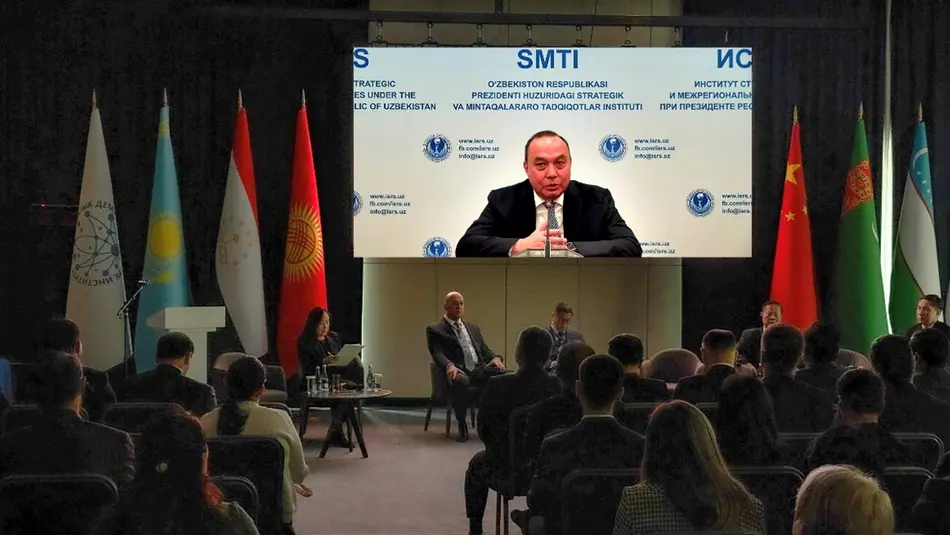
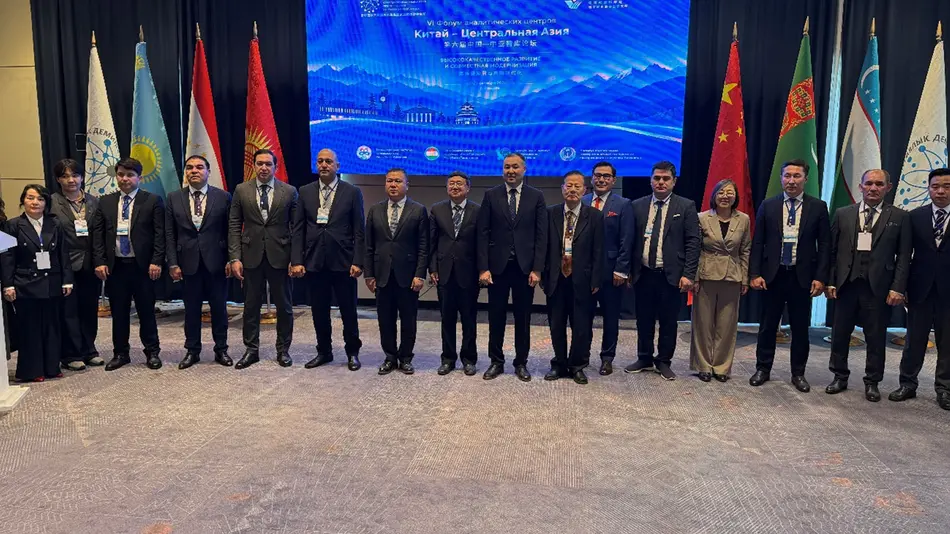
BISHKEK, October 23. /Dunyo IA/. The sixth “China–Central Asia” Think Tank Forum, themed “High-Quality Development and Joint Modernization”, was held in Bishkek yesterday, reports Dunyo IA correspondent.
Forum brought together representatives of leading think tanks, government institutions and expert communities from China and the Central Asian countries to discuss prospects for regional cooperation and practical approaches to joint modernization.
Eldor Aripov, Director of the Institute for Strategic and Regional Studies under the President of Uzbekistan (ISRS), addressed the forum participants via video message. He outlined the key achievements and current priorities of cooperation between China and the Central Asian countries, placing particular emphasis on prospects for further strengthening the partnership.
ISRS Director highlighted the forum’s growing role in advancing regional cooperation. He noted that its inclusion in the outcome documents of two “China–Central Asia” summits demonstrated that the leaders of the participating countries view expert dialogue as an effective instrument of cooperation rather than a mere protocol formality.
Eldor Aripov emphasized that the Astana Declaration and the Treaty on Eternal Good-Neighborliness, Friendship and Cooperation had laid a solid political foundation for the partnership, setting the course for cooperation over the coming decades.
Turning to trade and economic relations, the ISRS Director noted that in 2025, trade between China and the Central Asian countries exceeded $106 billion for the first time, marking a 12% year-on-year increase. China remains the leading trading partner of all five countries in the region.
Uzbekistan–China cooperation is also expanding steadily. Over the past five years, bilateral trade has tripled to nearly $18 billion, while Chinese investment has increased fivefold to $17 billion.
At the same time, Eldor Aripov stressed that the results achieved so far did not mean that all the objectives had been fulfilled. The current structure of trade, he noted, does not yet fully reflect the interests and potential of the partners.
Against this background, the development of transport networks is particularly important, including the construction of the China–Kyrgyzstan–Uzbekistan railway. ISRS Director emphasized that new routes should do more than facilitate transit; they should evolve into fully fledged economic corridors.
He also highlighted the importance of deepening industrial and digital cooperation. This requires, above all, aligning standards, approaches to implementing joint projects and security protocols to establish sustainable economic ties between China and the countries of Central Asia.
Current phase of the partnership should be defined by a shift from expanding volumes to improving quality, from trade in goods to industrial cooperation, and from exchanging projects to sharing management experience.
ISRS Director stressed that modernization is effective only when partners learn from one another rather than simply replicate external models. This places greater responsibility on think tanks, which are expected to compare approaches, identify potential risks at an early stage and propose solutions before the need for them arises.
In this context, Eldor Aripov recalled that President of the Republic of Uzbekistan Shavkat Mirziyoyev has repeatedly emphasized the important role of the expert community in long-term planning.
Concluding his address, Eldor Aripov expressed confidence that substantive and open dialogue would generate new ideas that could subsequently be translated into concrete policy decisions and give fresh impetus to cooperation between China and the Central Asian countries.

Latest News


See all
Read also