Ruhi Ersoy: Reforms accelerate Uzbekistan’s economic, social and cultural development, turning the country into an emerging center of the Turkic world
August 31, 2026. 16:33 • 4 min
• 140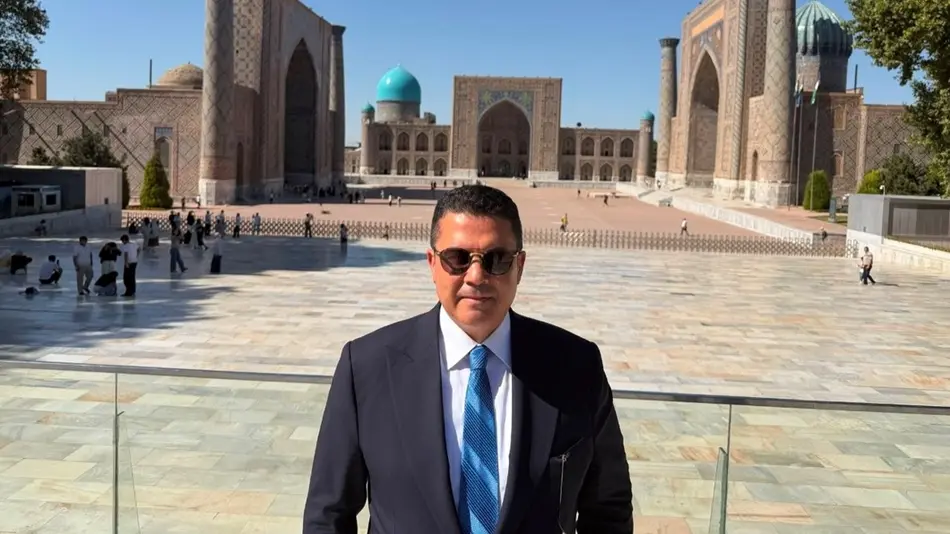
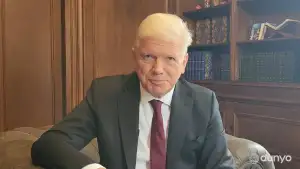
ANKARA, August 31. /Dunyo IA/. President of the Ahmed Javad Research Institute in Ankara, Professor Ruhi Ersoy, sent sincere congratulations and best wishes to the people of Uzbekistan through Dunyo IA on the eve of the country’s 35th anniversary of independence:
— On the eve of the 35th anniversary of independence, Uzbekistan, with more than a thousand years of statehood and civilizational development traditions, is attracting particular attention in the modern world. The reforms carried out in recent years under the leadership of President Shavkat Mirziyoyev are accelerating the country’s economic, social and cultural development, turning Uzbekistan into one of the emerging centers of the Turkic World.
The country is demonstrating its enormous potential through large-scale urban development projects. A clear expression of its ambitious goals and unprecedented scale is the construction of New Tashkent, with $100 billion being invested in its first phase.
Today, one of the most important concepts widely discussed in Uzbekistan is the idea of the Third Renaissance. This concept represents a long-term development strategy aimed at restoring historical memory, strengthening the institutional capacity of the state and ensuring that future generations have the opportunity to live in a more prosperous country.
Looking at the history of Uzbekistan’s development, it becomes clear that this idea has deep and strong historical roots.
The period commonly referred to as the First Renaissance spans the 9th–11th centuries and represents one of the highest and most developed stages of the Turkic-Islamic civilization. Great thinkers and scholars such as Al-Farabi, Al-Biruni, Ibn Sina and Al-Maturidi, who emerged from the scientific centers of Samarkand, Bukhara and Khorezm, enriched not only the regional but also the universal scientific and intellectual heritage, making an enormous contribution to the development of world science.
The Second Renaissance took place during the era of Amir Timur and the Timurids. During this period, Samarkand became one of the world’s major centers of science and culture. The great achievements in state administration, science, art and urban development, as well as the architectural monuments created during that era, continue to impress with their grandeur.
The goal of the Third Renaissance put forward today by President Shavkat Mirziyoyev is viewed as a logical continuation of these two great historical periods of prosperity under modern conditions. The country is once again demonstrating its rich historical and cultural heritage to the world through large-scale efforts to restore, preserve and improve it.
In this regard, the restored and landscaped Imam al-Bukhari Memorial Complex has become one of the greatest achievements of recent years for the Turkic-Islamic civilization.
President Shavkat Mirziyoyev is not limiting his efforts exclusively to economic reforms. Strengthening national identity, preserving cultural heritage, supporting the institution of the family and preserving the culture of the mahalla, which are important foundations of social life, also occupy a central place in the country’s development process.
One of Uzbekistan’s major advantages is its young and energetic population. According to official data, young people account for around 60 percent of the country’s population.
On the one hand, this figure gives the country enormous strength and dynamism; on the other, it places greater responsibility on education, employment and human capital development.
Uzbekistan’s population is expected to approach 50 million by 2050. This will enable the country to become one of the largest human capital centers in the Turkic World.
However, a large young population alone does not constitute an advantage. The main task is to harmoniously combine this enormous demographic potential with quality education and prepare young people to compete successfully in the global environment.
In this regard, one of the key long-term goals should be to shape an image of Uzbek citizens in which they are known abroad for their knowledge, technological competencies and ability to create innovations. In the modern world, the strength of a state is determined not only by the size of its population, but above all by the quality of its educated and skilled human capital.
The rise of Uzbekistan in recent years cannot be assessed solely in the context of the country’s domestic development. Against the backdrop of the further strengthening of the Organization of Turkic States, Uzbekistan occupies a strategic position in the political, economic and cultural integration of the Turkic World.
Throughout history, Uzbekistan has been one of the most important centers of Turkic civilization. Today, it is once again becoming one of the key actors shaping the common future of the Turkic World.

Latest News

See all
Read also
Numan Kurtulmuş: The Third Renaissance in New Uzbekistan is a shared achievement of the Turkic and Islamic worlds

September 1st Proclaimed as Uzbekistan Independence Day throughout the U.S. State of Oregon