Sun Weidong: Historical changes have taken place in Uzbekistan, country is experiencing a period of rapid prosperity and sustainable growth
August 13, 2026. 08:10 • 9 min
• 89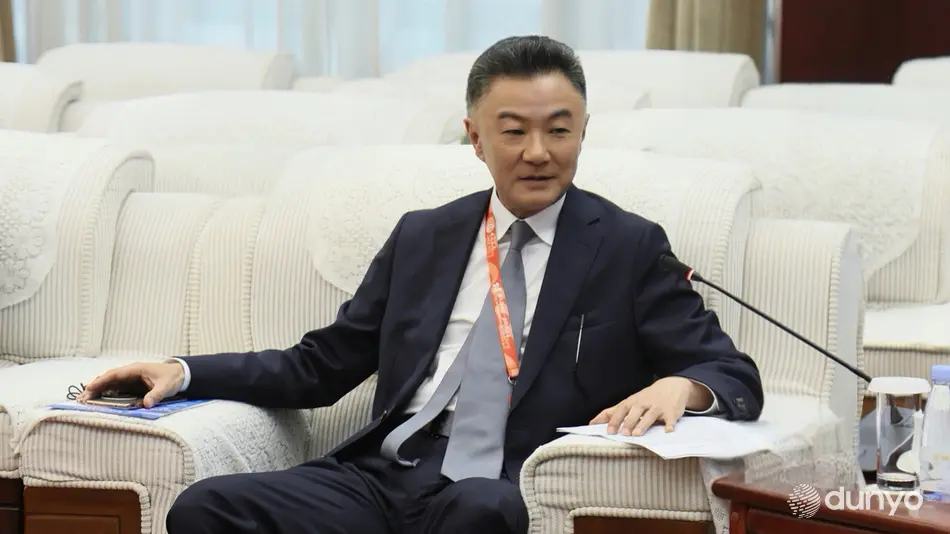
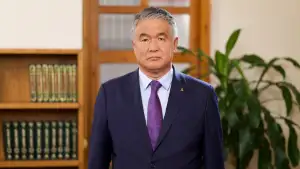
BEIJING, August 13. /Dunyo IA/. Ahead of the 35th Anniversary of the State Independence of Uzbekistan, Secretary-General of the Secretariat of the “Central Asia – PRC” format Sun Weidong, extended his sincere congratulations and good wishes through Dunyo IA:
On the occasion of the 35th Anniversary of the Independence of Uzbekistan, I sincerely congratulate the leadership and people of Uzbekistan. I wish the friendly country peace, welfare and prosperity.
Over the 35 years of Independence, the successes in state-building, socio-economic development, improving the welfare of the population and finding its own path of modernization corresponding to the national conditions of the country are undeniable, opening up increasingly broader prospects for development.
Particularly over the past ten years, historical changes have taken place in Uzbekistan and the country is experiencing a period of rapid prosperity and sustainable growth. Under the leadership of President Shavkat Mirziyoyev, Uzbekistan implements an effective domestic and foreign policy: political reforms are deepening, national development strategies are consistently carried out, economic transformations and opening up to the outside world continue, the investment climate has been significantly improved, “green” transformation is accelerating and the system of public administration is becoming more effective.
Concurrently, Uzbekistan has identified the strengthening of good-neighbourliness and mutual trust in Central Asia as the main priority of its foreign policy and its role and authority at the regional and international levels are constantly increasing. All these key results have laid a solid foundation for building the New Uzbekistan.
Positive effect of Uzbekistan's reforms is clearly reflected in specific statistical indicators. In 2025, Uzbekistan's economic growth was 7.7 percent, the volume of attracted foreign investment reached $43 billion and foreign trade turnover was $81.2 billion. In recent years, the total volume of attracted foreign investment exceeded $150 billion, of which $123 billion were received over the past five years.
In the first half of 2026, Uzbekistan's economic growth reached 8.5 percent, the investment volume amounted to $28 billion and exports totalled $14.4 billion. It is worth noting that against the backdrop of a general slowdown in the global economy, Uzbekistan demonstrates counter-cyclical growth, the pace of which is among the leaders in the world.
China is the largest trade and investment partner for Uzbekistan. In 2025, trade turnover reached $18 billion, increasing by 17.8 percent compared to the previous year. In the first half of 2026, trade turnover amounted to $8.9 billion, a year-on-year growth of 32.8 percent.
Around 6,000 Chinese enterprises operate on the territory of Uzbekistan, and cooperation covers a wide range of sectors: renewable energy sources, oil and gas and chemical industries, textiles, mining, building materials, agriculture, water management, finance, logistics, automotive industry, industrial parks and international contracting.
I am confident that Uzbekistan will maintain a positive development dynamic, confidently advancing along the path of modernization and prosperity and will certainly achieve even newer and more significant achievements.
In the conditions of an increasingly complex and profound transformation of the international situation, Uzbekistan's open, pragmatic, and active foreign policy, aimed at strengthening good-neighbourly ties in Central Asia, fully corresponds to the core interests of the peoples of the region. It helps the countries of Central Asia resist external challenges in the fields of security and development, strengthens the capabilities for collective interaction and independent formation of common regional agendas.
In recent years, the level of mutual trust among the states of Central Asia has significantly increased, ties in political, trade-economic, transport, and humanitarian spheres have expanded and regional integration is moving toward a deeper level.
Mechanism of the Consultative Meetings of the Heads of State of Central Asia plays an indispensable role in this process. In November 2025, the VII Consultative Meeting was successfully held in Tashkent, where key directions for expanding regional cooperation were defined.
Recently, President Shavkat Mirziyoyev made a successful visit to Bishkek. Following the establishment of allied relations between Uzbekistan and Tajikistan, as well as Kazakhstan, a similar treaty was signed with Kyrgyzstan, which confirms the positive dynamic of regional cooperation development in Central Asia.
President of Uzbekistan constantly strives to transform Central Asia into a corner of peace, stability and joint development and makes a significant contribution to promoting the processes of regional interaction. Peace is a necessary foundation for stability, stability is the main guarantor of development and development contributes to achieving more long-term peace and sustainability.
We are pleased to observe that Central Asia is becoming a more cohesive, closely connected and jointly developing region.
This trend has a direct positive impact on cooperation within the framework of the “Central Asia – China” mechanism. Only by maintaining peace, stability, and prosperity in Central Asia can we together nurture an exemplary platform of good-neighbourliness, create a cooperation belt of high-quality development and form a large family of multilateral interaction.
Uzbekistan is an important and active participant in the “Central Asia – China” format, contributing significantly to the formation and development of the platform and the promotion of practical cooperation.
The first and second summits in Xi'an in 2023 and Astana in 2025 became important milestones in the development of the format. In Astana, the heads of China and the five Central Asian states signed the Treaty on Good-Neighbourliness, Friendship and Cooperation in the 21st Century, laying a solid political foundation for centuries-old friendship and long-term partnership.
At the events, President Shavkat Mirziyoyev put forward a number of concrete initiatives aimed at achieving practical results that meet the long-term interests of all participating countries. Among them are the development of a concept for long-term partnership, strengthening trade ties and transport connectivity, and developing cooperation in industry, e-commerce, high technologies, “green” energy, education and science. Currently, under the coordination and assistance of the mechanism's Secretariat, all countries are actively negotiating the implementation of these initiatives, striving to transform them into real joint projects that bring benefits to the peoples of the entire region.
Heads of the six states also identified six priority areas of interaction: unimpeded trade, industrial investment, transport connectivity, “green” mineral resource development, modernization of agriculture and simplification of the movement of citizens. Currently, the countries of Central Asia have entered a new period of accelerated economic growth and industrialization. I believe that expanding and deepening cooperation in the aforementioned areas will create new growth drivers for China and the Central Asian states.
In the field of trade, “Central Asia – China” unimpeded trade platform is already functioning in Nanjing. We invite all Central Asian countries to actively use this platform to align cooperation needs and promote their own high-quality goods to the Chinese market. New forms of trade – digital and services – are dynamically developing and will become a bright new direction for trade interaction in the future. The six countries are also considering the possibility of developing institutional mechanisms for deepening regional trade and economic cooperation and are working out concrete ways to liberalize and simplify trade and investment.
In the investment sphere, the volume of Chinese investments in the countries of Central Asia is constantly growing. In the fields of construction contracting, petrochemicals, solar energy, electric vehicle manufacturing, and digital infrastructure, Chinese capital and technologies are being implemented in concrete projects that contribute to the development of local industry and manufacturing capacities. Due to this, the national production chains of the Central Asian countries are being improved and mutual benefit is achieved.
In the field of transport connectivity, Central Asia is an important transit hub of the Eurasian continent. Many routes of China–Europe freight trains pass through Central Asia and further along the Trans-Caspian Transport Corridor lead to Western Asia and Europe. Concurrently, China opens up access for the countries of Central Asia to the markets of East, Southeast Asia, and the Asia-Pacific region. Currently, construction of the China–Kyrgyzstan–Uzbekistan railway is successfully progressing. Following its commissioning, the transport connectivity of Central Asia with China will significantly strengthen and the capabilities of Central Asian countries to develop international markets will increase.
In the sphere of “green” mineral resource development, China and the countries of Central Asia strive to ensure sustainable green development throughout the entire life cycle of mineral raw materials – from extraction and processing to waste disposal, contributing to the green transformation of Central Asian economies.
Regarding the modernization of agriculture, well-established models of interaction have taken shape and useful experience has been accumulated. Great prospects are opened up by the joint creation of demonstration agricultural parks, breeding of high-yielding plant varieties, supply of agricultural machinery and the development of smart agriculture and farming in arid zones.
In the sphere of humanitarian exchanges, a visa-free regime is in effect between China and Kazakhstan, and China and Uzbekistan, while Kyrgyzstan and Tajikistan have simplified the procedure for issuing electronic visas, which has significantly facilitated friendly travel of citizens. Furthermore, more air routes have been opened between China and the countries of Central Asia and the number of cities with direct air connections and regular flights is growing.
Looking ahead, with the deepening of all reforms, level of modernization of Uzbekistan will invariably rise to a new height. There is every reason to expect that the country will become one of the drivers of regional economic growth, a transit hub for interregional ties, a hub for modern manufacturing and a regional center for innovative scientific research.
Uzbekistan possesses all the necessary conditions to achieve these goals: a strategic geographical position, a consistent policy of reforms and openness, a growing domestic market, rich natural resources and a young population structure.
At the same time, the development of Uzbekistan is inextricably linked to the peace and prosperity of the entire Central Asian region. It is for this reason that the policy of good-neighbourliness and mutual trust pursued by Uzbekistan is of long-term strategic importance.
China and the countries of Central Asia are not just good neighbours, partners, friends, and brothers, but like-minded companions on the path of modernization. We must be guided by the important agreements reached by the heads of our states, actively promote the “spirit of China and Central Asia” and advance joint modernization based on high-quality development.
This year marks the starting point for the implementation of the 15th Five-Year Development Plan of China. The Chinese people are actively opening up new horizons in building a modernization model, striving to achieve the goal of basic socialist modernization by 2035. Based on the alignment of national development strategies, China and the countries of Central Asia must further coordinate specific development plans across all sectors, share resources, support each other and jointly achieve progress.
Secretariat of the “Central Asia – China” format will continue to facilitate the implementation of the summits' decisions, develop practical cooperation and strengthen friendship between the peoples.

Latest News
See all
Read also
International conference dedicated to 35th Anniversary of Independent Uzbekistan to be held in Tashkent on August 14th
Sultan Raev: Experience of New Uzbekistan is valuable for its systemic nature, balance and high adaptability