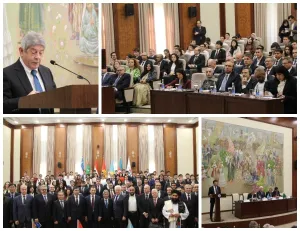
ISRS presents new policy research report on advancing regional cooperation in Central Asia
November 15, 2025. 15:13 • 3 min
• 150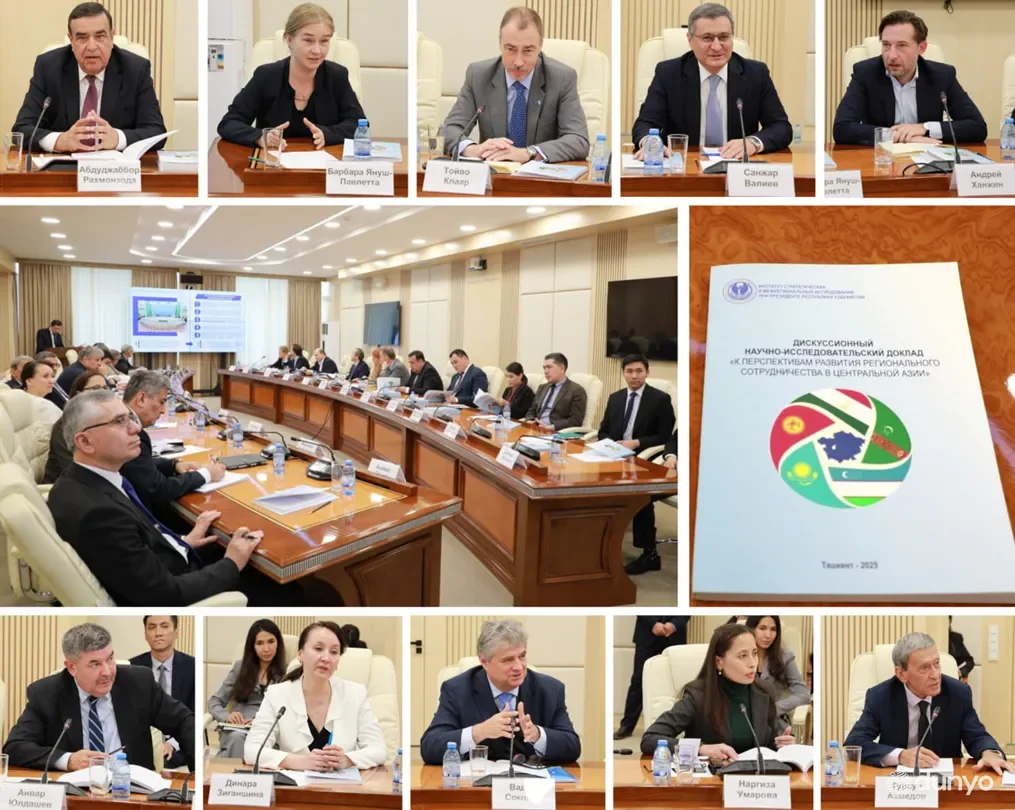
ТASHKENT, November 15. /Dunyo IA/. Institute for Strategic and Regional Studies under the President of Uzbekistan (ISRS) presented a discussion paper titled "Toward Prospects for the Development of Regional Cooperation in Central Asia" on the eve of the seventh Consultative Meeting of the Heads of State of Central Asia, reports Dunyo IA correspondent.

The event was attended by heads and staff of the diplomatic missions of the Central Asian states and the European Union, representatives of international organizations — including the United Nations Regional Centre for Preventive Diplomacy for Central Asia, the Project Offices of the United Nations and the OSCE in Uzbekistan — as well as leading experts from national analytical and academic institutions.
It is worth noting that the report represents the first joint product of the expert community of the Central Asian states.
Prepared in the format of a discussion-oriented research study, it examines the prospects for advancing regional cooperation in Central Asia.
The report reflects the outcomes of discussions held across various expert platforms over the past seven years. The draft was also submitted for deliberation at the 8th Central Asian Expert Forum, which took place on 14–15 August in Tashkent.
The document includes a retrospective analysis aimed at synthesizing previous experience in regional cooperation, as well as a set of proposals for the further development of mutually beneficial collaboration.
The presented report was highly appreciated by the participants of the event. Particular emphasis was placed on the importance and timeliness of the initiative put forward by the Uzbek side.
In particular, the Ambassador of Tajikistan Abdujabbor Rahmonzoda emphasized that "the report represents a profound and systematized study and contains extensive factual material essential for understanding the historical stages of the development of intergovernmental cooperation in Central Asia".
The diplomat expressed confidence that the document would serve as an important foundation for the further development of the region’s intellectual environment. "Such a substantial work should be translated into all the languages of the region’s states and become a reference book accessible to a wide readership," Ambassador Abdujabbor Rahmonzoda concluded.
In turn, the Head of the European Union Delegation, аmbassador Toivo Klaar also highlighted the significance of the prepared report. According to him, regional integration has never been an easy process; it requires patience and time. For the EU, it took 75 years, whereas Central Asia has achieved remarkable results in a relatively short period. In this context, the diplomat noted that Brussels fully supports processes of regional rapprochement in Central Asia and is interested in expanding partnerships with the countries of the region.
Overall, participants acknowledged that the report represents a comprehensive work with numerous practical proposals, which could serve as a starting point for structuring and advancing regional cooperation in Central Asia.
Meanwhile, Barbara Janusz‑Pawletta, Head of the Regional Office of the International Water Management Institute (IWMI) for Central Asia, has stressed the importance of science, youth, and civil-society engagement in regional water‑climate cooperation. She argues that these elements are key to building long-term, mutually beneficial policies and infrastructure for sustainable development and stronger inter‑state collaboration. At the conclusion of the event, experts expressed their interest in continuing collaborative work on further research into the dynamics of regional processes and the preparation of publications in this area.
Latest News
See all
Read also
Alisher Navoi Monument in Osh becomes a new symbol of Uzbek–Kyrgyz friendship
Akramjon Nematov: The drug threat requires a multilateral and comprehensive response
Swiss “PeaceNexus” Foundation Officials praise outcomes of Fergana Peace Forum