
U.S. and Iran Again Exchange New Strikes Despite Ceasefire
July 08, 2026. 12:00 • 3 min
• 1308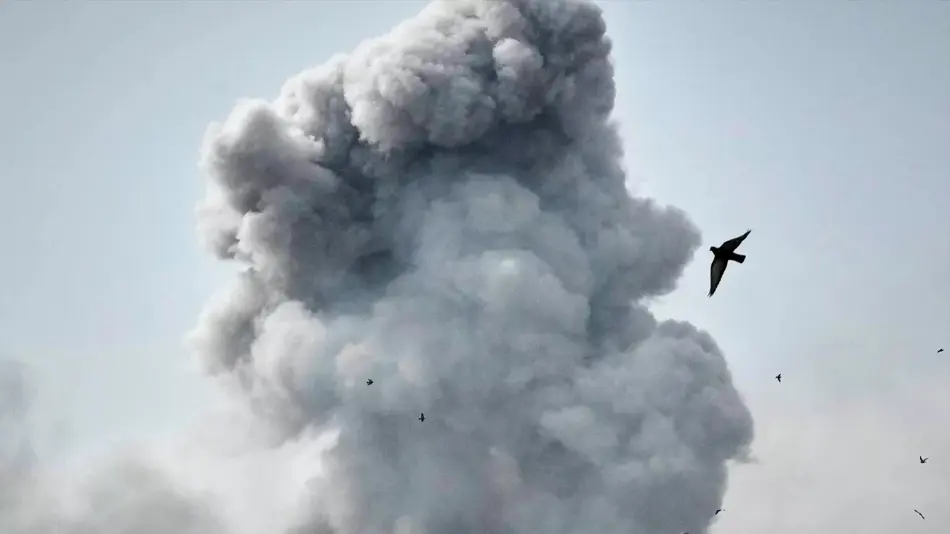
WASHINGTON–TEHRAN, July 8. /Dunyo IA/. The United States has launched a new wave of large-scale strikes against Iran, saying the operation was carried out in response to Iranian attacks on three commercial vessels in the Strait of Hormuz, reports Dunyo IA correspondent, citing The Associated Press.
According to the U.S. Central Command (CENTCOM), Iran’s actions constituted “unprovoked and dangerous” violation of the ceasefire agreement. The U.S. military said its strikes targeted Iran’s air defence systems, command-and-control and communications networks, coastal radar installations, anti-ship defence systems, as well as more than 60 boats belonging to the Islamic Revolutionary Guard Corps (IRGC).
Iran confirmed that the strikes had taken place but did not report any casualties or losses. Iranian media said explosions were heard in Bandar Abbas, on Qeshm Island, and in the coastal city of Sirik.
According to the United Kingdom Maritime Trade Operations (UKMTO), one tanker was struck by a drone and sustained minor damage. Almost simultaneously, reports emerged that a Qatari liquefied natural gas carrier had suffered serious damage after being hit by an unidentified projectile, according to its crew. No further details were immediately available regarding the third vessel.
Iranian media reported that the gas carrier came under attack after ignoring official warnings. Tehran has repeatedly stated that only the shipping route through the Strait of Hormuz designated by the Iranian authorities is considered safe.
Deputy Foreign Minister of Iran Kazem Gharibabadi described the U.S. strikes as “a serious violation” of the agreement reached between the two sides. He said Iran would take decisive measures to safeguard its national interests and security.
Under the MoU signed by Washington and Tehran, the parties were expected to resolve within 60 days issues related to Iran’s nuclear program, the withdrawal of U.S. troops from neighbouring countries, and procedures governing maritime transit through the Strait of Hormuz. No progress in the negotiations has been reported so far.
Following the latest U.S. strikes, Iran launched retaliatory attacks on targets in Bahrain and Kuwait. The renewed exchange of strikes has heightened the risk of the temporary ceasefire collapsing and raised concerns over a new escalation of the conflict in the Middle East.
The latest escalation occurred during the multi-day funeral ceremonies for Iran’s Supreme Leader, Ayatollah Ali Khamenei, who was killed on February 28 in the early days of the war. It had been expected that negotiations on a permanent agreement would resume after the mourning period, but the recent developments have cast doubt on that prospect.
“The era of bullying and extortion is over. It leads nowhere. We don’t fold,” Iranian Speaker Mohammad Bagher Ghalibaf Parliament said.

Latest News





See all
Read also
Saida Mirziyoyeva: Uzbekistan and Türkiye are bound by strong friendship and close cooperation