
World Humanoid Robot Games to be held in Beijing with more than 2,000 robots
August 18, 2026. 17:00 • 3 min
• 143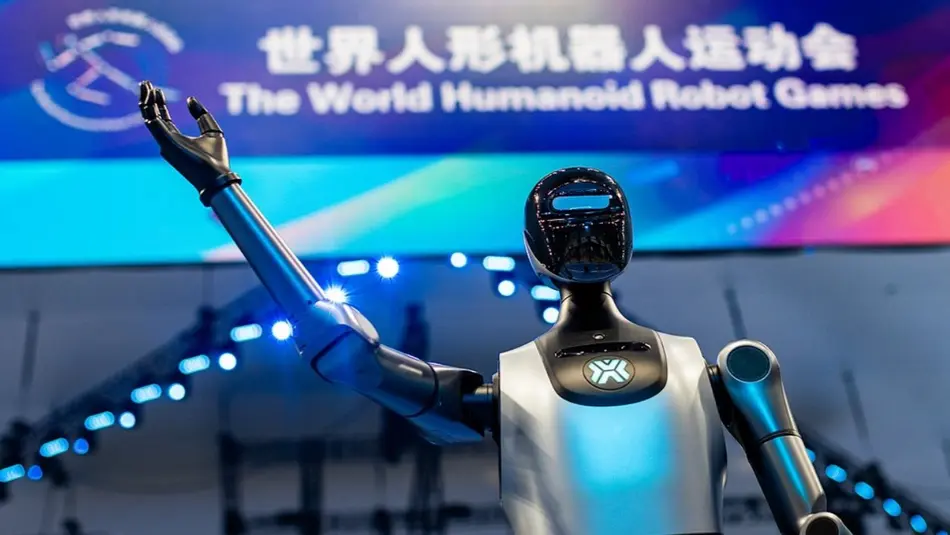
BEIJING, August 18. /Dunyo IA/. The second World Humanoid Robot Games will be held in Beijing from August 22 to 26, with 2,056 humanoid robots representing 666 teams from 16 countries, reports Dunyo IA correspondent, citing China’s Xinhua news agency.
The tournament will take place at the National Speed Skating Oval. Teams from the United States, Germany, Japan, Brazil and other countries will participate. At the same time, the majority of participants will come from China’s robotics industry: 641 teams have entered 1,975 robots developed by 157 companies, universities and research institutions.
Compared with the inaugural Games held in August 2025, the number of robots has increased more than fourfold. At that time, 280 teams and more than 500 humanoid robots from 16 countries took part in the competition.
The program has also been significantly expanded this year. It includes more than 30 disciplines, including newly introduced events such as table tennis, long jump, weightlifting and tug of war.
The competitions are designed to test robots’ capabilities in motion control, structural design and key components. The organizers have also tightened the rules for a number of disciplines: robots must perform tasks autonomously, without remote control.
A separate section of the Games will feature challenges designed to simulate real-world environments. Robots will be required to operate in simulated hotels, factories, residential spaces and logistics facilities. Tasks will include assembly, housekeeping, emergency response and library book sorting.
The organizers therefore intend to assess not only the machines’ sporting capabilities but also their ability to perform practical tasks in challenging environments.
Jiang Guangzhi, Director of the Beijing Municipal Bureau of Economy and Information Technology, said many of the competition rules could eventually be transformed into practical technical standards, helping accelerate the transition of technological developments from testing to industrial applications.
“Once robots master these ‘last-meter’ skills, they can turn medals into orders and move directly from the competition arena to real-world workplaces,” Jiang Guangzhi said.
The current Games are becoming a platform not only for demonstrating the capabilities of humanoid robots but also for assessing their suitability for commercial use. Manufacturers will be expected to demonstrate how effectively the machines can perform real-world tasks with minimal human involvement.
Earlier, it was reported that China plans to produce 100,000 humanoid robots in 2026.

Latest News





See all
Read also