View from Ankara: Uzbekistan stands at the Center of Processes shaping the Future of Central Asia
October 10, 2026. 14:30 • 4 min
• 304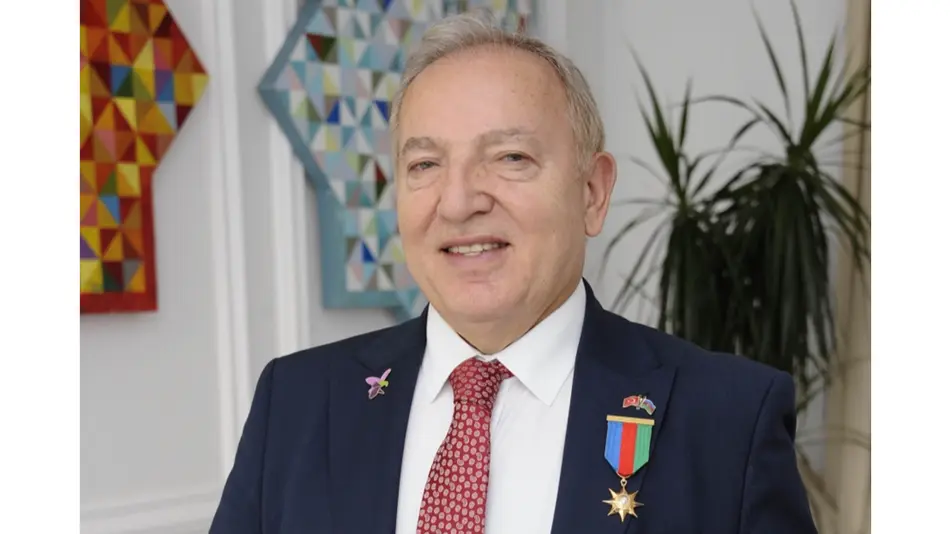
ANKARA, October 10. /Dunyo IA/. Former Ambassador of Türkiye to Azerbaijan Hulusi Kılıç, in an interview with Dunyo IA, commented on the outcomes of the working visit of the President of Uzbekistan to Turkmenistan on October 7–9th:
- In recent years, I find myself increasingly reflecting on the fact that Central Asia is changing before our eyes. What until recently seemed to be separate bilateral relations is today shaping into a broader picture: the countries of the region meet more frequently, dialogue more extensively, and, most importantly, seek common solutions.
This is precisely why I followed the visit of the President of Uzbekistan Shavkat Mirziyoyev to Turkmenistan with particular attention. His itinerary included participation in the meeting of the leaders of Central Asia and Azerbaijan, bilateral negotiations and the session of the Council of Heads of State of the CIS. The intensity of this program speaks volumes about the current role of Uzbekistan in regional diplomacy.
Over the past years, Uzbekistan has consistently advanced the idea that Central Asia must engage more with itself – not only at the presidential level, but also in the areas of business, transport, energy, culture and human contacts. Today, this approach is gradually yielding concrete results.
Content of the speech delivered by President Shavkat Mirziyoyev at the meeting in Avaza is particularly indicative. The President proposed to view regional cooperation through a broader lens than conventional trade and transition toward the creation of joint production and technological chains. The formula “six economies – one product” precisely conveys this concept. It also entails the coordination of transport, energy, digital technologies, and investment mechanisms.
I believe that today it is no longer sufficient to merely speak of the closeness and brotherhood of our peoples. Their true value is manifested when these words are backed by the emergence of roads, trade links, investments, joint ventures and new opportunities for the people.
Transport holds a place of particular importance. From Ankara, it is clearly visible how critical the Middle Corridor is becoming. This is not merely a route between East and West, but an opportunity to expand trade, production, investments, and connectivity with Central Asia. The more efficiently this route operates, the more opportunities will arise for Uzbekistan, Azerbaijan and Türkiye.
However, the significance of the meeting in Avaza cannot be reduced solely to economics. Central Asia is experiencing a period where personal relations between leaders and continuous political dialogue carry immense weight. It is essential to possess the ability to engage in dialogue with one another even when the interests of the countries do not entirely align.
Today, Uzbekistan stands at the center of many processes that define the future of Central Asia. Its relations with Kazakhstan, Kyrgyzstan, Tajikistan, Turkmenistan and Azerbaijan are becoming increasingly intertwined.
For Türkiye, this development is of great interest. We closely monitor how Central Asia strengthens its internal ties and expands contacts with external partners. There is a natural space here for cooperation between Ankara and Tashkent, as well as with other states of the region.
I find particularly resonant the idea that a geography which could once have been perceived as an obstacle is today turning into an advantage. The Caspian, the Caucasus, and Central Asia can become territories through which people, goods, ideas and investments will move toward one another.
Therefore, I perceive Shavkat Mirziyoyev's visit to Avaza not as just another diplomatic meeting, but as part of a broader process. Central Asia is becoming more open, more interconnected and is articulating its interests with increasing confidence.
Ultimately, regional cooperation is measured not by the number of meetings and documents, but by how much easier it becomes for people to communicate, for businesses to trade, for investors to operate, and for countries to solve common problems. It is precisely in this that I see the main significance of the current visit of President Shavkat Mirziyoyev to Avaza.

Latest News

See all
Read also

Industrial Potential of Uzbekistan showcased at International Exhibition in Germany
View from Baku: Uzbekistan demonstrates active role in shaping regional agenda
View from Dushanbe: Central Asia confidently asserts itself as a region of security and trust

View from Japan: Uzbekistan consolidates its status as one of Asia's leading sporting powers